Few dishes embody elegance and simplicity quite like perfectly baked salmon with bright, zesty lemon—a meal that tastes refined enough for special occasions yet remarkably easy enough for busy weeknights. This timeless preparation celebrates the natural richness of salmon while allowing fresh lemon to cut through the fat with perfect balance and brightness. First, it requires minimal ingredients and straightforward technique, making it approachable for home cooks of all skill levels while still delivering impressive restaurant-quality results. Beyond its accessibility, baked salmon with lemon offers remarkable health benefits, delivering omega-3 fatty acids and high-quality protein in one beautiful package. Moreover, the entire dish comes together in under thirty minutes, making it ideal for weeknights when time is limited but quality matters. The true magic of this recipe lies in how it proves that exceptional food doesn’t require complicated preparation—sometimes the finest dishes emerge from respecting quality ingredients and using simple technique to let their natural flavors shine.
Ingredients
This recipe makes 4 generous servings, one salmon fillet per person.
• 4 salmon fillets (6 ounces each), skin-on or skinless based on preference • 3 tablespoons olive oil • 2 lemons, sliced thin • 4 cloves garlic, minced • 1 medium yellow onion, sliced into thin rings • 1 pound fresh asparagus, trimmed • 1 pound baby potatoes, halved • 1 teaspoon dried dill • 1/2 teaspoon dried thyme • 1/4 teaspoon paprika • Salt and black pepper to taste • 1/4 teaspoon garlic powder • Zest of 1 lemon (optional but recommended) • 2 tablespoons fresh parsley, chopped (for garnish) • 2 tablespoons fresh dill, chopped (optional, for garnish) • Cooking spray or oil for the baking sheet • Parchment paper (optional but recommended)
Step-by-Step Instructions
Preparing Your Ingredients
- Begin by removing the salmon fillets from the refrigerator about ten minutes before cooking—bringing them to room temperature ensures even, gentle cooking throughout. Meanwhile, prepare the vegetables by trimming the tough woody ends from the asparagus by bending each spear until it naturally snaps at the tender point. Cut the baby potatoes in half if they’re larger than bite-sized, keeping smaller ones whole.
- Slice one lemon into thin rounds, leaving the skin intact, as these will look beautiful on the finished dish. Next, juice the second lemon into a small bowl—you should have about three tablespoons of fresh lemon juice. Zest the lemon if you haven’t already done so for garnishing purposes.
- Mince the garlic cloves and slice the onion into thin rings. Keep all your prepared ingredients organized near your workspace, as oven preparation happens quickly and you’ll want everything ready to go.
Preparing the Baking Sheet
- Preheat your oven to 400 degrees Fahrenheit. Next, line a large baking sheet with parchment paper or lightly coat it with cooking spray or oil. Parchment paper makes cleanup wonderfully easy and prevents sticking, making it the preferred option for this recipe.
- Arrange the baby potatoes on the prepared baking sheet in a single layer, spreading them across about one-third of the sheet. Drizzle them with one tablespoon of olive oil and sprinkle with a pinch of salt and black pepper. Toss gently to coat evenly.
- Place the baking sheet in the preheated oven and bake the potatoes for about twelve minutes, allowing them to begin softening before the salmon is added. This ensures everything finishes cooking at the same time, creating a perfectly coordinated one-sheet meal.
Preparing the Salmon
- After the potatoes have baked for twelve minutes, remove the baking sheet from the oven. Add the asparagus to the empty space on the baking sheet, drizzling it with half a tablespoon of olive oil and sprinkling with salt and pepper. Toss gently to combine, then push the vegetables to the sides of the sheet.
- Pat the salmon fillets dry with paper towels, as moisture prevents proper browning and seasoning adherence. Place the salmon fillets in the center of the baking sheet, skin-side down if using skin-on salmon, spacing them evenly and not touching.
- In a small bowl, combine the minced garlic, dried dill, dried thyme, paprika, garlic powder, salt, and black pepper. Additionally, drizzle the salmon fillets with the remaining tablespoon of olive oil, then sprinkle the spice mixture evenly over each fillet, gently pressing it onto the surface.
- Arrange the lemon slices on top of each salmon fillet, creating an attractive and flavorful topping. Furthermore, scatter the sliced onion over the salmon and around the pan. In contrast to seasoning only with spices, the fresh lemon and onion add moisture and brightness during cooking.
Baking the Complete Meal
- Drizzle the fresh lemon juice over everything on the baking sheet, ensuring the vegetables and salmon all receive some of the bright citrus flavor. Return the baking sheet to the oven and bake for about twelve to fifteen minutes until the salmon is cooked through and flakes easily with a fork.
- The salmon is properly cooked when it reaches an internal temperature of 145 degrees Fahrenheit, which you can check with an instant-read thermometer inserted into the thickest part of the fillet. However, visual checks work beautifully too—the salmon should appear opaque throughout and flake easily when tested with a fork.
- Remove the baking sheet from the oven and let everything rest for about two to three minutes. This brief resting period allows the juices to redistribute throughout the salmon, ensuring it remains moist and tender.
Finishing and Serving
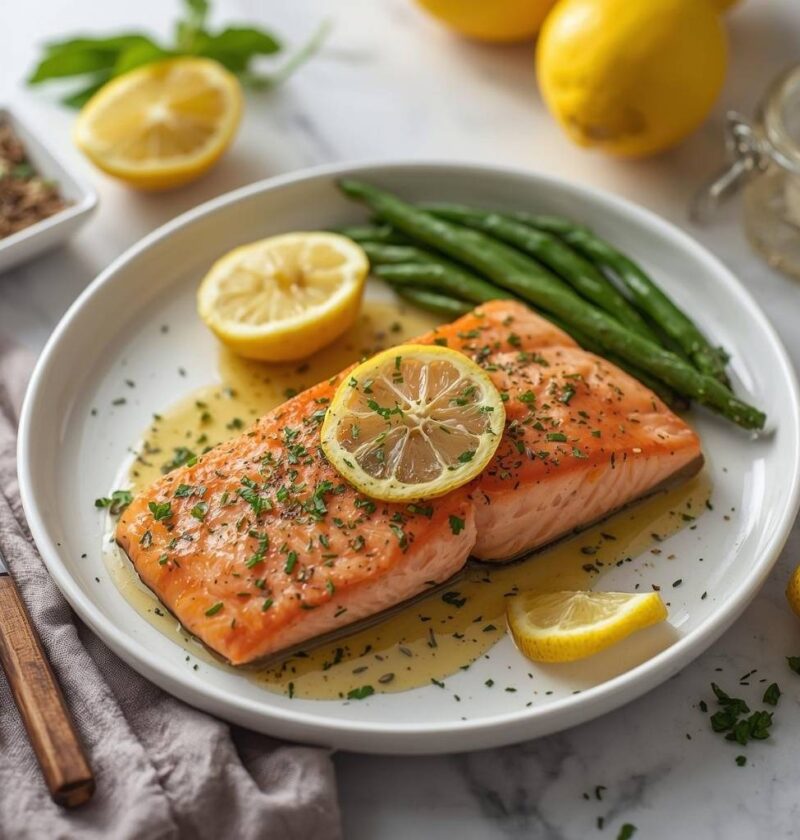
- Transfer each salmon fillet to a serving plate, arranging the roasted vegetables and potatoes alongside it. Additionally, spoon any pan juices that have accumulated over the salmon and vegetables—these flavorful drippings add tremendous taste and moisture. Finally, garnish with fresh chopped parsley and fresh dill if desired, along with additional lemon slices if you prefer extra brightness.
Serving and Storing Tips
How to Serve
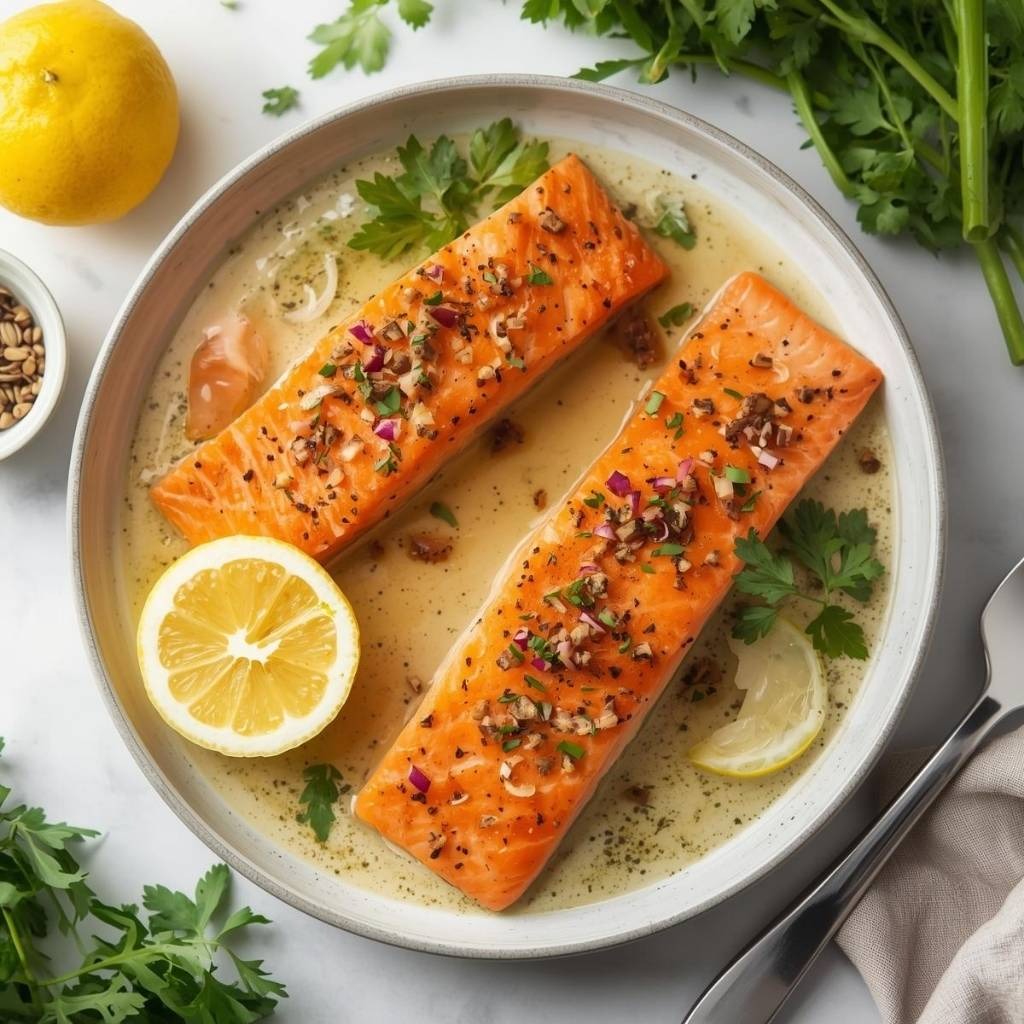
Baked salmon with lemon shines as a complete, elegant meal that requires very little additional accompaniment beyond what’s already on the plate. However, many people enjoy serving it alongside simple additions that complement the delicate fish beautifully. A simple green salad with a light vinaigrette provides wonderful textural contrast without overwhelming the subtle flavors of the salmon. Furthermore, crusty bread or dinner rolls allow guests to soak up any flavorful pan juices. A glass of crisp white wine such as Sauvignon Blanc or Pinot Grigio pairs magnificently with the lemon and salmon combination. Additionally, you might serve it alongside steamed broccoli, roasted cauliflower, or a fresh tabbouleh salad for additional vegetable options. Some people prefer serving it with buttered egg noodles or wild rice for those who want additional carbohydrates.
How to Store
Store leftover baked salmon in an airtight container in the refrigerator for up to three to four days. The salmon remains moist and delicious, though it’s best enjoyed relatively soon after cooking for optimal texture. To reheat from the refrigerator, place the salmon on a baking sheet and warm it gently in a 275-degree Fahrenheit oven for about ten minutes until warmed through. Alternatively, you can enjoy it cold as a salmon salad component or served over greens for a light lunch the next day. Freezing is also an option—allow the baked salmon to cool completely, then wrap it tightly in plastic wrap and aluminum foil. Freeze for up to two months. When ready to eat, thaw overnight in the refrigerator, then enjoy it cold or reheat gently in a low oven, being careful not to overcook as this will dry out the delicate fish.
Helpful Notes and Ingredient Substitutions
Understanding these practical tips will ensure your salmon turns out perfectly every time:
The quality of your salmon makes an enormous difference in the final result, so purchase the freshest, highest-quality salmon you can find at your market. Additionally, ask your fishmonger for recommendations, and if possible, choose wild-caught salmon for superior flavor, though farm-raised salmon works beautifully as well. The salmon should smell clean and slightly briny, never fishy or unpleasant.
For vegetable variations, feel free to customize based on what you have available or prefer eating. Furthermore, you can substitute the asparagus with green beans, sugar snap peas, broccoli, or zucchini without any adjustments to cooking time. In contrast to sticking strictly to the recipe, experimenting with different vegetables allows you to make this dish uniquely yours. Additionally, you can replace baby potatoes with sweet potatoes, regular potatoes cut smaller, or omit them entirely for a lighter meal.
For herb variations, dried oregano, marjoram, or tarragon work beautifully instead of dill and thyme. Additionally, you can use fresh herbs if you have them available—use three times the amount of fresh herbs compared to dried, as fresh herbs are less concentrated. If you don’t have fresh parsley for garnish, chives or additional fresh dill work wonderfully.
Regarding the lemon, fresh lemon juice is absolutely essential—bottled lemon juice cannot replicate the brightness and vitality of fresh citrus. However, if lemon isn’t your preference, you can use orange juice or white wine for similar flavor profiles with different character. Additionally, you can add capers, olives, or sun-dried tomatoes to the pan for interesting variations.
A common mistake is overcooking salmon, which results in a dry, flaky texture that loses its delicate quality. Use an instant-read thermometer for accuracy, aiming for 145 degrees Fahrenheit, and remember that salmon continues cooking slightly after removal from the oven due to residual heat. Another tip is not skipping the patting dry step—moisture on the salmon surface prevents proper browning and seasoning adherence. Finally, ensure your oven is fully preheated before beginning—temperature inconsistencies can result in uneven cooking.
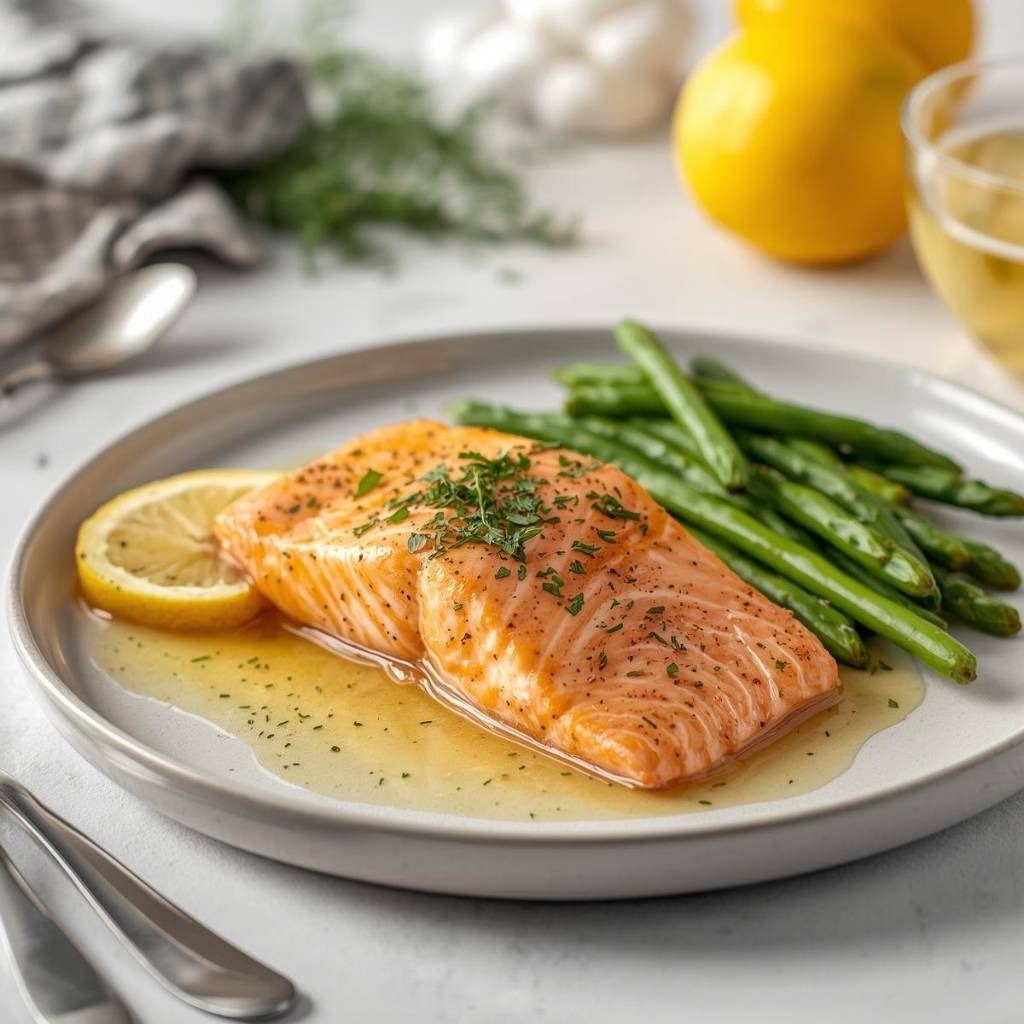
Chef Tips
The secret to perfectly moist salmon lies in respecting the relatively short cooking time and using an instant-read thermometer rather than guessing—remove it from the oven at exactly 145 degrees Fahrenheit for optimal texture and moisture. Additionally, toasting whole spices in a dry skillet before crushing and adding them creates exponentially more flavor than pre-ground spices, though using quality dried herbs as specified in the recipe produces excellent results.
Frequently Asked Questions
Can I use frozen salmon for this recipe? Yes, thaw the salmon overnight in the refrigerator before cooking, then pat it completely dry before seasoning and baking to ensure proper browning and texture.
What if I don’t have asparagus? Green beans, broccoli, sugar snap peas, or zucchini all work beautifully as substitutes and require the same cooking time.
How do I know when salmon is perfectly cooked? Use an instant-read thermometer and remove the salmon when it reaches 145 degrees Fahrenheit in the thickest part; alternatively, it should flake easily with a fork and appear opaque throughout.
Can I prepare this salmon ahead of time? You can prep all vegetables and season the salmon up to one hour in advance, then bake when ready to serve for the best texture and taste.
Is this recipe suitable for meal prep? Yes, though salmon is best enjoyed relatively soon after cooking; store it in an airtight container for up to three to four days and enjoy it cold or reheated gently in a low oven.
Final Thoughts
Baked salmon with lemon represents one of those magnificent dishes that proves simplicity and sophistication are not mutually exclusive—in fact, they often go beautifully together. What makes this recipe truly special is how it celebrates the natural qualities of excellent salmon while using simple techniques and complementary flavors to enhance rather than mask them. Moreover, it teaches valuable cooking principles applicable across cuisines: respecting ingredient quality, understanding proper cooking temperatures, and knowing when less is truly more.
Beyond its elegant simplicity, this dish offers remarkable practical advantages for home cooks seeking healthful, delicious meals that don’t require hours in the kitchen. Additionally, it makes an excellent meal prep option, adapts seamlessly to whatever vegetables you have available, and creates an impressive presentation with virtually no additional effort. The recipe also welcomes creativity—different herbs, citrus fruits, and vegetable combinations allow you to make this dish uniquely yours while maintaining its essential character and appeal.
The satisfaction of serving beautiful, perfectly cooked salmon to your table demonstrates care through thoughtful cooking. Furthermore, watching family and friends savor every bite while appreciating the delicate flavors and elegant presentation reminds you why cooking from scratch remains such a rewarding endeavor. These moments of nourishment and connection represent some of life’s greatest pleasures and make all the cooking worthwhile.
Did you love making this baked salmon with lemon? If you try this recipe, I’d absolutely love to hear about your experience! Please share your results in the comments below, save this recipe to your favorites, pin it to your cooking board, and share it with friends and family who deserve this elegant, healthy, delicious creation. Your feedback and support inspire me to keep creating more accessible, flavorful recipes that bring joy and confidence to your kitchen. Happy cooking!