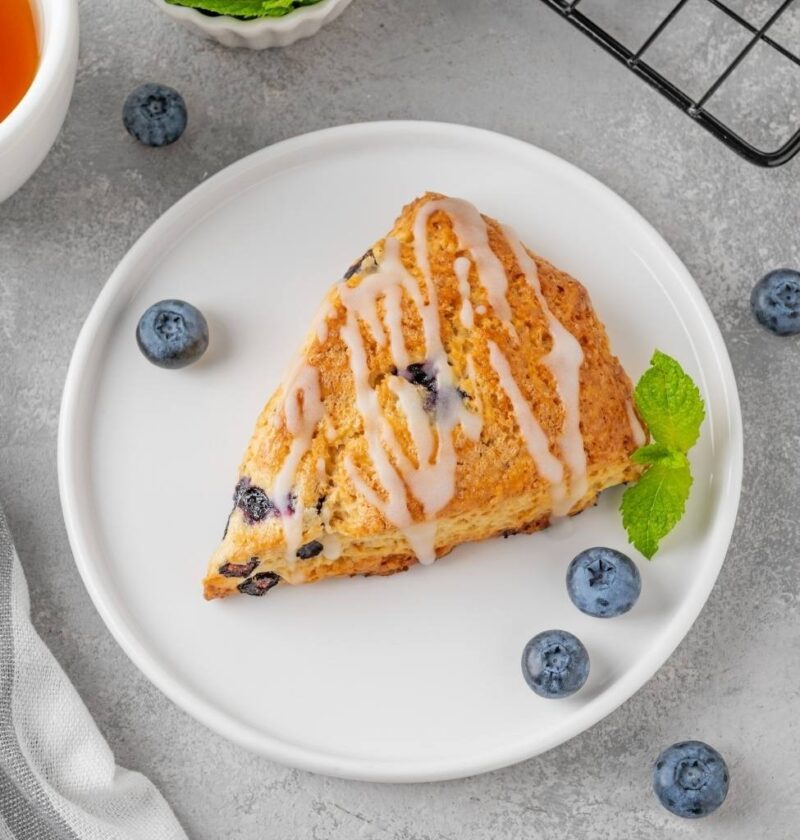
There’s a certain elegance to a warm, freshly baked scone emerging from the oven, its golden exterior giving way to a tender, crumbly interior studded with sweet bursts of blueberry. These delightful treats occupy that perfect space between a biscuit and a cake, making them ideal for breakfast, afternoon tea, or anytime you crave something special yet surprisingly simple to make. What makes blueberry scones truly magical is their versatility—they’re elegant enough to serve at a fancy brunch, yet casual enough to enjoy with your morning coffee in your pajamas. The beauty of this recipe lies in its straightforward approach; with just basic pantry ingredients and fresh blueberries, you’ll create bakery-quality scones that taste infinitely better than anything you could buy. Whether you’re a seasoned baker or someone intimidated by pastry-making, these scones prove that impressive results don’t require complicated techniques or special skills.
Ingredients
Makes: 12 scones
- 2 cups all-purpose flour
- 1/4 cup granulated sugar
- 1 tablespoon baking powder
- 1/2 teaspoon salt
- 6 tablespoons cold unsalted butter, cubed
- 1/2 cup heavy cream, plus more for brushing
- 1 large egg
- 1 teaspoon vanilla extract
- 1 and 1/2 cups fresh blueberries (or frozen, thawed)
- 1 tablespoon lemon zest
- 2 tablespoons turbinado sugar for topping (optional)
Step-by-Step Instructions
- Preheat your oven to 400°F and line a large baking sheet with parchment paper to prevent sticking and ensure even browning. Next, position your oven rack in the upper third so your scones bake evenly from all sides.
- In a large mixing bowl, combine the flour, granulated sugar, baking powder, salt, and lemon zest using a whisk or fork. Stir these dry ingredients together thoroughly, breaking up any lumps of baking powder that might have clumped together.
- Add the cubed cold butter to the dry mixture and use a pastry cutter, two knives, or your fingertips to work the butter into the flour. The goal is to create a texture resembling coarse breadcrumbs with pea-sized pieces of butter visible throughout; this creates the flaky layers that make scones so irresistible.
- In a small bowl, whisk together the heavy cream, egg, and vanilla extract until well combined. However, don’t overbeat the mixture; just stir until uniform and smooth.
- Pour the cream mixture into the flour-butter mixture and gently fold everything together using a rubber spatula. Avoid overmixing, which develops gluten and creates tough, dense scones instead of the tender crumb you’re aiming for.
- Once the dough just comes together, gently fold in the fresh blueberries using a light hand so you don’t crush them or create blue streaks throughout the dough. Additionally, if you’re using frozen blueberries, don’t thaw them fully; they should still be partially frozen so they stay intact during baking.
- Turn the dough out onto a lightly floured work surface and gently pat it into a circle approximately one inch thick. Unlike bread dough, scone dough should never be kneaded; handle it as little as possible to maintain tenderness and flakiness.
- Using a sharp knife or a 2-inch round biscuit cutter, cut the dough into 12 equal portions. For wedge-shaped scones, divide the circle into quarters, then cut each quarter in half; for round scones, use the biscuit cutter and gather scraps gently without reworking them.
- Place each scone on the prepared baking sheet, spacing them about two inches apart to allow for slight expansion without crowding. Brush the tops lightly with additional heavy cream and sprinkle with turbinado sugar if desired for a glistening, crunchy finish.
- Bake for 12 to 15 minutes, until the scones are golden brown on top and a toothpick inserted into the center comes out clean or with just a few moist crumbs. Meanwhile, your kitchen will fill with an aroma that’s absolutely irresistible.
- Remove the scones from the oven and let them cool on the baking sheet for a few minutes. Afterward, transfer them to a wire cooling rack to cool completely before serving.
- Serve your blueberry scones warm or at room temperature, accompanied by clotted cream, whipped cream, jam, honey, or simply on their own.
Serving and Storage Tips
Serving Your Scones
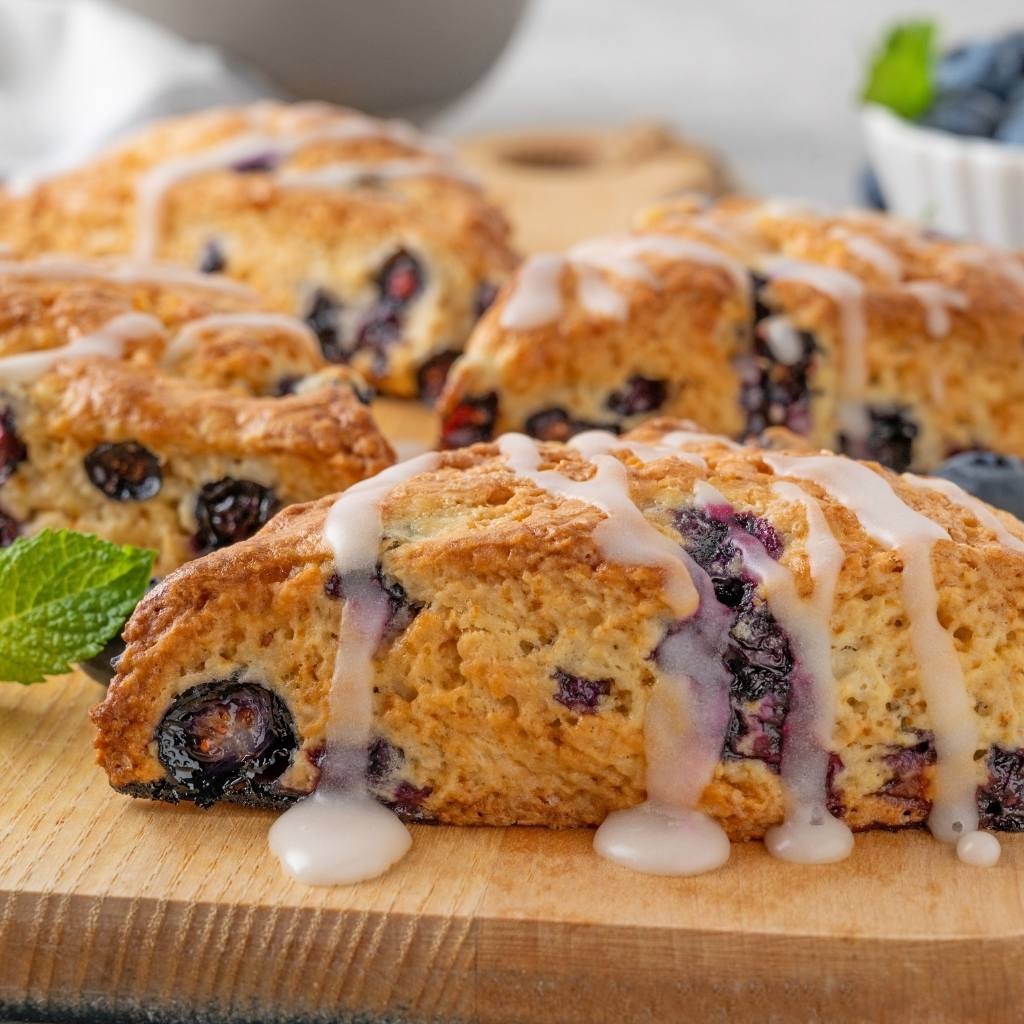
These wonderful scones shine brightest when served warm from the oven, and the ways to enjoy them are wonderfully varied. First, serve them alongside clotted cream and jam for an authentic cream tea experience that feels luxurious yet comforting. Additionally, they pair beautifully with whipped cream and a drizzle of honey for a slightly different but equally delightful presentation. For breakfast, try serving them alongside scrambled eggs and fresh fruit for a complete meal. Furthermore, you can offer them at brunches with lemon curd, fresh berries, and butter for guests to customize their own treats. In contrast to these traditional accompaniments, some people love their scones simply with butter and a strong cup of coffee or tea—there’s no wrong way to enjoy them.
Storage Tips
Next, understanding proper storage keeps your scones fresh and delicious for several days. Store cooled scones in an airtight container at room temperature for up to two days, separating layers with parchment paper to prevent sticking. However, if you want to keep them longer, wrap each scone individually in plastic wrap and freeze for up to one month. To reheat frozen scones, thaw them at room temperature for about 30 minutes, then warm them in a 350°F oven for 5 to 7 minutes until heated through. Additionally, you can refrigerate uncooked scone dough in an airtight container for up to 24 hours before baking, which actually improves flavor development. Alternatively, prepare and shape the scones, freeze them on a baking sheet until solid, then bake directly from frozen, adding just 2 to 3 minutes to the baking time.
Helpful Notes and Tips
Mastering scones becomes significantly easier when you understand a few important techniques that separate good scones from exceptional ones. First, keeping the butter cold is absolutely crucial; if it melts into the flour, you won’t achieve those beautiful flaky layers that make scones special. Next, the key to tender scones is minimal mixing—work quickly and gently, combining ingredients just until barely incorporated. Additionally, don’t skip the lemon zest; it brightens the blueberries and prevents the flavor from becoming one-dimensional or heavy. However, if you want even more pronounced blueberry flavor, reserve a handful of berries to fold in last so they stay whole rather than breaking apart during mixing.
Several substitutions and variations work wonderfully if you want to customize this recipe. You can replace the blueberries with raspberries, blackberries, or even chopped strawberries for different flavor profiles. Furthermore, if fresh blueberries aren’t available, frozen ones produce excellent results—just don’t thaw them fully before using. For a dairy-free version, substitute the butter with cold coconut oil and replace the heavy cream with full-fat coconut milk mixed with a tablespoon of lemon juice. Additionally, you can add a quarter teaspoon of almond extract along with the vanilla for subtle complexity. If you prefer unsweetened scones, reduce the sugar to two tablespoons and skip the turbinado sugar topping.
Avoid common mistakes that can derail your scone-baking success. Overmixing the dough creates gluten development, resulting in tough, dense scones rather than tender ones; mix just until ingredients combine. In contrast, undermixing leaves streaks of flour, so find the balance between these extremes. Additionally, using room-temperature butter melts into the flour and prevents flakiness, so always chill your butter before starting. Furthermore, don’t skip the lemon zest as it prevents blueberry flavor from becoming dull and flat. Finally, resist the urge to open the oven door frequently during baking, as this causes temperature fluctuations that interfere with proper rising and browning.

Chef Tips
First, for scones with exceptional height and structure, avoid pressing the dough too firmly when cutting; use a sharp cutter and press straight down with a quick motion rather than twisting, which seals the edges and prevents rising. Additionally, brushing the tops with an egg wash instead of heavy cream creates even more beautiful golden-brown color and glossy shine that looks absolutely professional.
Frequently Asked Questions
What’s the difference between scones and biscuits? Scones typically contain sugar and are slightly sweetened, while biscuits are savory; scones also tend to have a more cake-like crumb, whereas biscuits are flakier and more bread-like in texture.
Can I make the dough ahead of time? Yes, you can refrigerate shaped, unbaked scones on a baking sheet for up to 24 hours, or freeze them for up to one month and bake directly from frozen, adding a couple extra minutes to baking time.
Why are my scones coming out dense instead of light and fluffy? This usually happens from overmixing the dough, using warm butter instead of cold, or opening the oven door too frequently; handle the dough gently and keep all ingredients cold.
Can I use dried blueberries instead of fresh? Dried blueberries work but will have a concentrated sweetness and chewier texture; if using them, reduce the granulated sugar to two tablespoons to prevent over-sweetness.
Should I brush the scones with egg wash or cream for the best color? Either works, though egg wash creates a more golden-brown, glossy finish; cream produces a more subtle, tender crust, so choose based on your preference.
Final Thoughts
Baking a batch of blueberry scones transforms an ordinary day into something noteworthy, filling your home with warmth and the promise of something delicious. The recipe’s simplicity makes it accessible to bakers of all skill levels, while the elegant results make it feel like you’ve accomplished something special. Whether you’re hosting a formal brunch, treating yourself to a leisurely breakfast, or surprising a loved one with homemade pastries, these scones deliver on every level. Moreover, knowing that you created these bakery-quality treats from scratch brings a satisfaction that store-bought versions simply cannot match.
The beauty of mastering this recipe lies in its versatility and the confidence it builds. Once you understand the basic technique, you can experiment with different berries, swap in various add-ins, or adapt it to your dietary needs. Additionally, scones are one of those baked goods that genuinely improve with practice—each batch teaches you something new about handling dough and timing. Next time you’re craving something that tastes bakery-fresh yet homemade, remember this recipe and treat yourself and everyone around you to something truly wonderful.
Did you love this recipe? Save it, pin it, and share it with your friends and family! Your support means everything to us and helps us create more delicious recipes for you to enjoy. Leave a comment below telling us how your scones turned out—we’d absolutely love to hear from you!