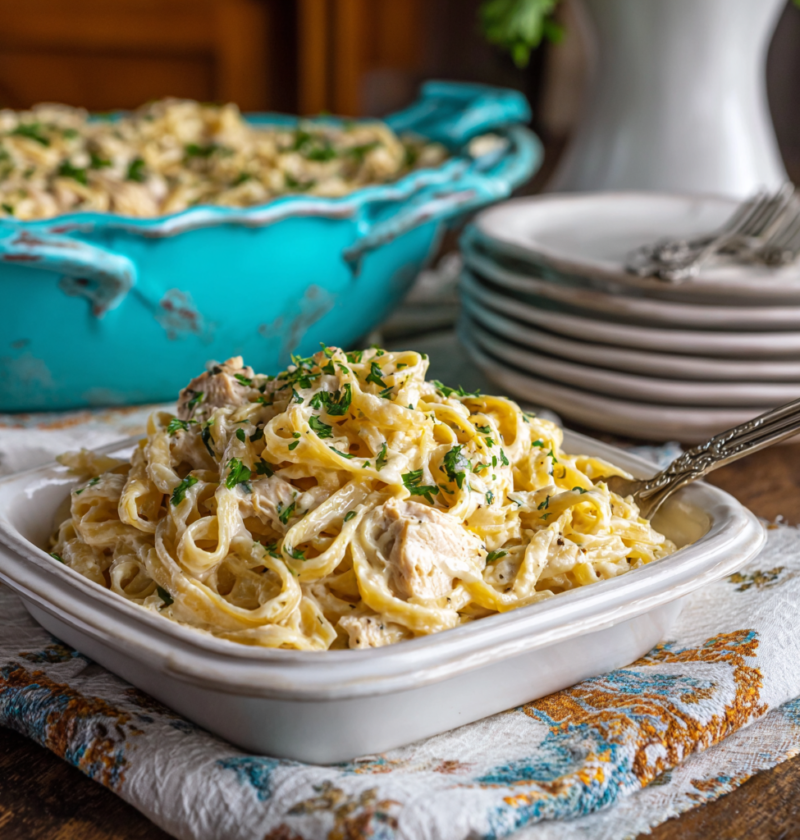
There’s a reason this dish is beloved at fancy Italian restaurants around the world—the combination of tender pasta, succulent chicken, and silky cream sauce is pure elegance on a plate, yet you don’t need to wait for a special occasion or make a reservation to enjoy it. Chicken Fettuccine Alfredo brings together simple, quality ingredients into something that tastes remarkably sophisticated and deeply satisfying, proving that the best meals don’t require complicated techniques or hard-to-find components. This is the kind of dish that makes you feel like an accomplished cook the moment you set it on the table, that impresses guests without revealing how easy it actually was to prepare, and that leaves everyone asking for the recipe. First, what makes this classic so special is how the creamy sauce coats every strand of fettuccine, clinging to the delicate pasta in a way that feels luxurious and indulgent. Next, the addition of properly cooked chicken transforms this from a simple pasta dish into a complete, satisfying meal that nourishes and comforts in equal measure. Additionally, despite its restaurant-quality appearance and taste, this entire meal comes together in about thirty minutes, making it perfect for weeknight dinners when you want something that feels special without the stress. Whether you’re cooking for your family, impressing a date, or preparing dinner for guests, chicken fettuccine alfredo delivers elegant results with remarkable simplicity and genuine home-cooked charm.
Ingredients
Serves: 4 people
• 1.25 pounds boneless, skinless chicken breasts • 1 pound fettuccine pasta • 6 tablespoons butter • 4 cloves garlic, minced • 1 cup heavy cream • 1/2 cup whole milk • 1/2 cup reserved pasta water • 1 cup grated Parmesan cheese (freshly grated is best) • 1/4 cup grated Romano cheese (optional, for extra sharpness) • 2 tablespoons olive oil • 1 teaspoon salt • 1/2 teaspoon black pepper • 1/4 teaspoon white pepper (optional, for delicate flavor) • 1/4 teaspoon nutmeg (just a pinch, for warmth) • 2 tablespoons fresh parsley, chopped • Fresh lemon juice (about 1 tablespoon, optional) • Additional Parmesan cheese for serving • Freshly grated black pepper for garnish
Step-by-Step Instructions
- Remove the chicken breasts from the refrigerator about 15 minutes before cooking to bring them closer to room temperature for even cooking throughout.
- Pat the chicken breasts completely dry with paper towels and season both sides generously with salt and black pepper.
- Bring a large pot of salted water to a rolling boil and add your fettuccine, cooking according to package directions until just al dente.
- While the pasta cooks, reserve 1/2 cup of the starchy pasta water before draining the pasta, then set it aside in a measuring cup.
- Heat the olive oil in a large skillet over medium-high heat until it shimmers and is hot enough to sizzle when the chicken touches it.
- Carefully place the chicken breasts in the hot skillet and cook without moving them for about 5–6 minutes until the bottom develops a beautiful golden crust.
- Flip the chicken breasts and cook the other side for another 5–6 minutes until golden and cooked through to an internal temperature of 165 degrees Fahrenheit.
- Transfer the cooked chicken to a clean cutting board and tent it loosely with foil to keep it warm while you finish the sauce.
- Once the chicken has rested for a few minutes, slice it into bite-sized pieces or leave it in large chunks, depending on your preference for presentation.
- In the same skillet, reduce the heat to medium and add the butter, letting it melt slowly and gently.
- Add the minced garlic to the melted butter and cook for about 30 seconds to 1 minute, stirring constantly until fragrant but not browned.
- Pour in the heavy cream slowly, stirring constantly to create a smooth, luxurious base for your alfredo sauce.
- Add the milk gradually while continuing to stir, which prevents the cream from breaking and creates a silky texture.
- Let the cream mixture simmer very gently for about 1–2 minutes, stirring occasionally, until it’s heated through and beginning to thicken slightly.
- Remove the skillet from heat before adding the cheese, which prevents the sauce from becoming too hot and grainy.
- Add the grated Parmesan cheese gradually, stirring constantly after each addition until it melts completely into the sauce.
- If using Romano cheese for extra sharpness, add it now and stir until fully incorporated and melted.
- Season the sauce with white pepper and a tiny pinch of nutmeg, which adds warmth and depth without being identifiable as nutmeg.
- Taste the sauce and adjust seasonings with additional salt, pepper, or a small squeeze of fresh lemon juice if needed.
- Pour in the reserved pasta water gradually, starting with 1/4 cup and stirring constantly to create a silky consistency that coats the pasta beautifully.
- Add the cooked fettuccine directly to the cream sauce and toss gently but thoroughly, ensuring every strand is coated evenly.
- Return the sliced chicken to the skillet and fold it gently into the pasta, distributing it evenly throughout the dish.
- Divide the chicken fettuccine alfredo among serving plates, twirling pasta onto a fork for an elegant presentation.
- Top each plate with a sprinkle of fresh Parmesan cheese and a crack of freshly ground black pepper.
- Garnish with fresh chopped parsley for color and a touch of herbal brightness.
The Science of Perfect Alfredo Sauce
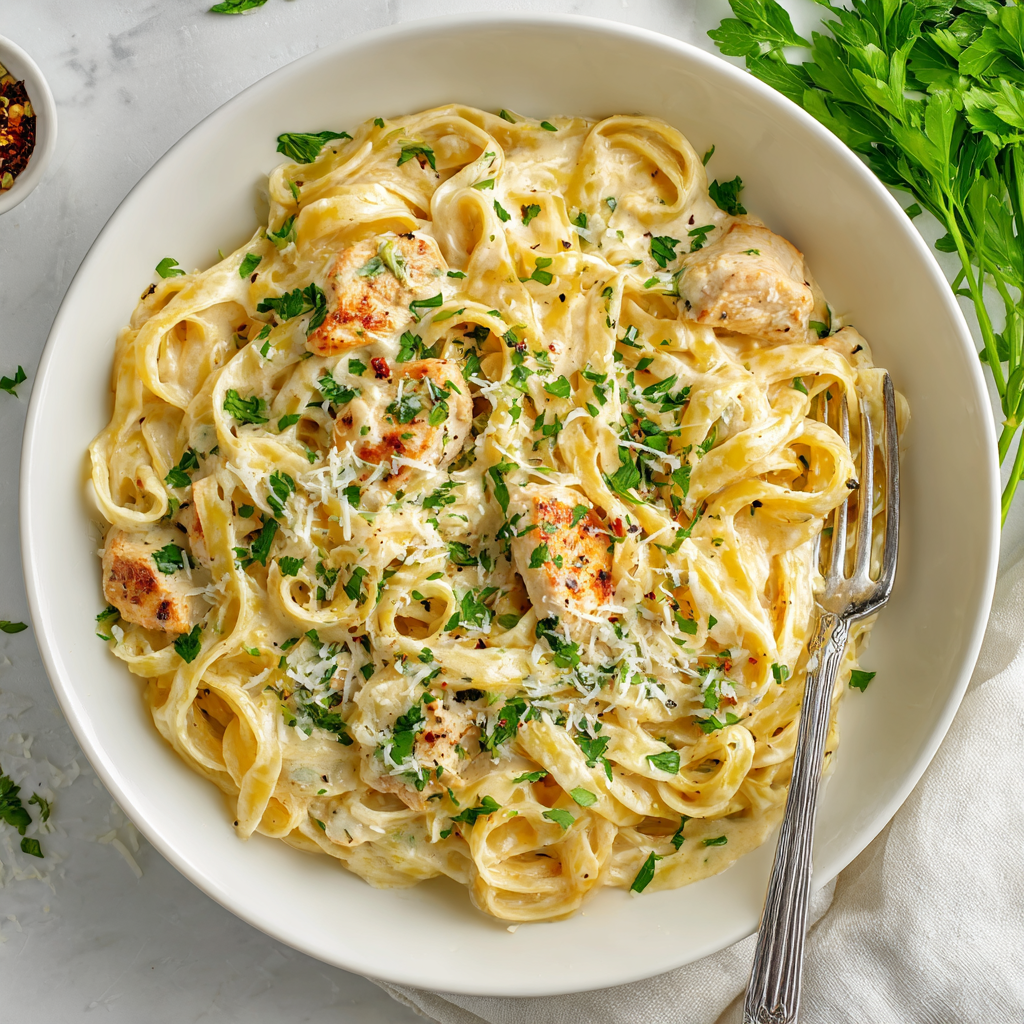
Understanding the delicate chemistry of an authentic alfredo sauce is what separates homemade versions from restaurant quality, and the key lies in temperature control and technique. First, the combination of butter, cream, and cheese creates an emulsion that coats the pasta beautifully when done correctly, but breaks into a grainy, separated mess if the heat is too high. Next, adding cheese off the heat and incorporating it gradually prevents it from clumping or melting unevenly, ensuring a silky, smooth sauce every single time. Additionally, the pasta water’s starch acts as a magical thickening agent and helps bind the sauce components together, creating a luxurious finish that clings to every strand. Meanwhile, the reserved warm pasta water is crucial because cold liquid would lower the temperature of the sauce and potentially cause separation, so it must be warm when added.
Serving and Storing Tips
Serving Suggestions
Serve this chicken fettuccine alfredo with a crisp green salad dressed simply with lemon vinaigrette or a light vinaigrette, which provides refreshing contrast to the richness of the alfredo sauce. Crusty bread is practically essential on the side for soaking up any extra sauce and adding textural contrast to the soft, delicate pasta. For elegant plating, twirl a portion of fettuccine onto a fork and place it in the center of a warmed plate, then arrange sliced chicken on top and drizzle with any remaining sauce. Pair this dish with a dry white wine like Pinot Grigio, Sauvignon Blanc, or Vermentino, which complements the cream and Parmesan beautifully without overwhelming the delicate flavors. Additionally, if you’re serving guests, roasted asparagus or grilled vegetables on the side adds color and sophistication while providing a lighter element to balance the richness. For a lighter presentation, serve smaller portions with extra salad, or incorporate fresh spinach into the dish for added nutrition and a subtle peppery note.
Storage Tips
Refrigerate leftovers in an airtight container for up to 2 days, though this dish is best enjoyed fresh and warm immediately after cooking for optimal creaminess and flavor. When reheating, place the pasta in a skillet over low heat with a splash of cream and a touch of pasta water or milk, stirring gently until heated through and the sauce returns to its silky consistency. Freezing is not recommended for this dish, as the cream-based sauce can separate upon thawing and the chicken may become dry. However, if you do want to prepare ahead, you can cook the chicken and make the alfredo sauce separately, storing them in airtight containers in the refrigerator for up to 2 days before combining with freshly cooked pasta. For maximum flavor and texture, plan to enjoy this meal the same day you make it or within 24 hours for the creamiest, most delicious results.
Helpful Notes and Tips
One essential technique for success is not to overcook the chicken—it should reach 165 degrees Fahrenheit on a meat thermometer but no higher, as beyond that point it becomes dry and tough. Pounding the chicken breasts to an even thickness before cooking helps them cook more uniformly and prevents thick sections from being overdone while thinner sections remain raw. Additionally, letting the cooked chicken rest for a few minutes before slicing allows the juices to redistribute throughout the meat, ensuring it stays tender and juicy.
For a lighter version of this dish, reduce the heavy cream to 1/2 cup and use Greek yogurt or sour cream to add creaminess without all the fat. To make this recipe completely dairy-free, substitute the butter with olive oil and replace the cream and milk with cashew cream or coconut milk, which yields a surprisingly delicious alternative with similar richness. Next, if you’re short on time, you can use rotisserie chicken from the grocery store, shredding it and heating it gently in the sauce at the end, which cuts preparation time significantly.
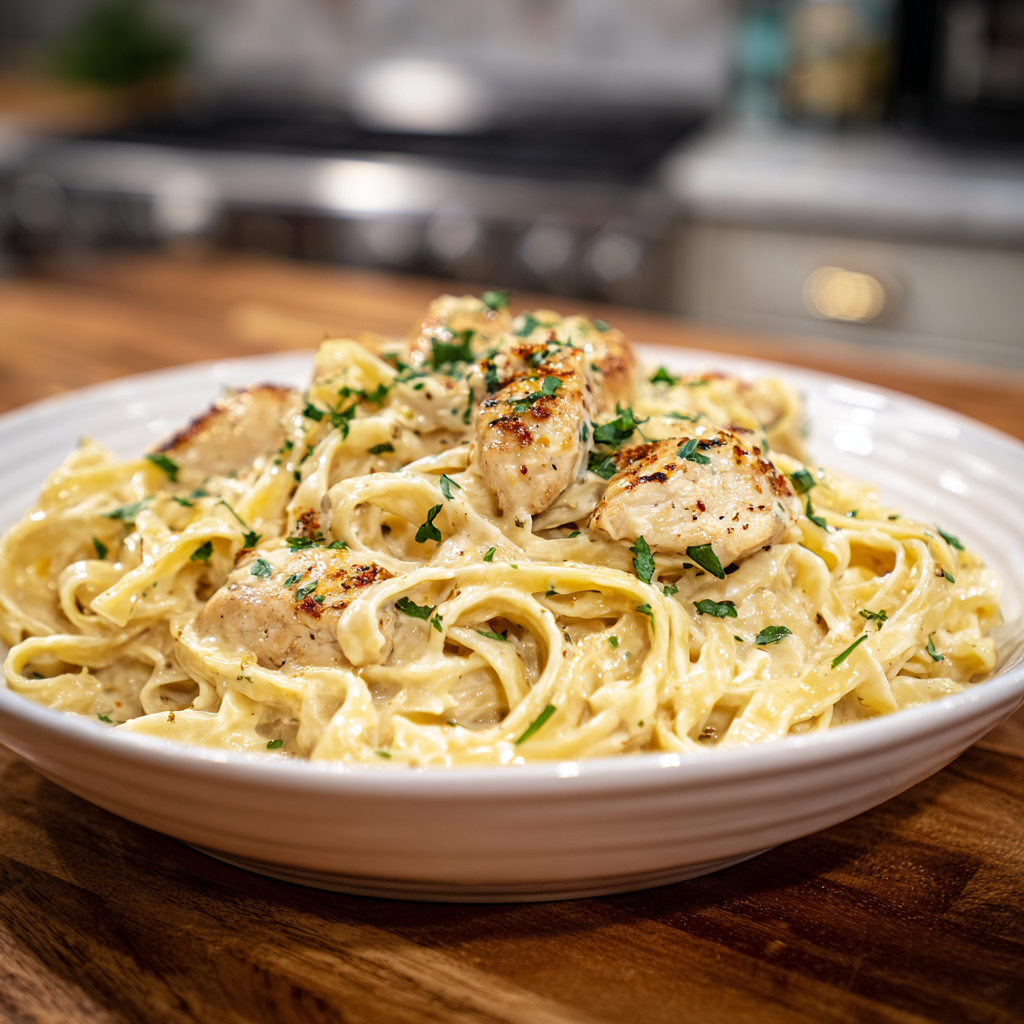
Meanwhile, freshly grated Parmesan cheese is absolutely essential for this recipe since pre-grated versions contain anti-caking agents that prevent smooth melting and create a grainy texture. If possible, purchase a wedge of Parmigiano-Reggiano and grate it yourself just before making the sauce. Furthermore, the quality of your cream makes an enormous difference, so use heavy cream that’s fresh and not ultra-pasteurized for the smoothest sauce.
For extra flavor depth, add white wine to the cream sauce along with a splash of chicken broth, or stir in sun-dried tomatoes for briny sweetness and color. Alternatively, add fresh spinach or sautéed mushrooms during the final minute of cooking for added vegetables without changing the fundamental character. Additionally, if you want to incorporate more ingredients, diced roasted red peppers or caramelized onions both complement alfredo beautifully.
If your sauce seems too thin after adding the pasta, let it simmer very gently for another minute or two to allow some liquid to evaporate and the sauce to thicken naturally. Conversely, if it’s too thick, add reserved pasta water or even a splash of cream one tablespoon at a time until you reach the perfect silky consistency. Additionally, remember that the sauce will continue thickening slightly as it cools, so slightly looser than perfect while cooking is ideal.
Chef Tips
Finish each plate with a final crack of fresh black pepper and a generous pinch of freshly grated Parmesan cheese right before serving, which adds visual appeal and prevents the richness from feeling heavy on the palate. Additionally, use warmed serving plates instead of cold ones, which helps maintain the temperature and creamy consistency of the sauce longer while guests enjoy their meal.
Frequently Asked Questions
Can I use chicken thighs instead of chicken breasts? Yes, chicken thighs work beautifully and stay incredibly moist, though they require about 8–10 minutes per side to cook through completely and may be slightly less elegant when sliced.
What if I don’t have heavy cream? Substitute with half-and-half, whole milk mixed with a bit of butter, or even cashew cream for a dairy-free alternative that works reasonably well.
Can I add vegetables to this pasta? Absolutely—roasted asparagus, sautéed spinach, peas, sun-dried tomatoes, or roasted cherry tomatoes all work wonderfully in this classic dish.
How far in advance can I prepare this meal? You can pound and season the chicken up to 24 hours ahead, but the complete dish is best enjoyed fresh and served immediately after cooking for optimal creaminess.
Is this recipe suitable for meal prep? While it’s best enjoyed fresh, you can cook the chicken and sauce separately and store them for up to two days, then combine with freshly cooked pasta when ready to eat.
Why This Dish Becomes a Favorite
Chicken Fettuccine Alfredo represents the perfect marriage of simplicity and elegance, the kind of dish that becomes a trusted favorite the moment you first make it. First, the creamy, luxurious sauce makes you feel like you’re eating something indulgent and special, yet the ingredient list is remarkably straightforward and contains items most home cooks keep on hand. Next, the speed of preparation means busy weeknights suddenly feel less stressful when you can have restaurant-quality dinner on the table in under thirty minutes. Additionally, this recipe teaches fundamental cooking techniques like properly searing protein, building silky emulsified sauces, and understanding how pasta water transforms a dish.
The beauty of this dish extends beyond just taste and technique—it’s naturally elegant enough for date nights and entertaining, yet comes together quickly enough for Tuesday night family meals when someone asks “What’s for dinner?” The chicken fettuccine alfredo proves that sophisticated, restaurant-quality meals don’t require complicated techniques, fancy ingredients, or hours of preparation. Moreover, it’s adaptable enough to accommodate dietary preferences and ingredient variations without losing its essential character and appeal.
This chicken fettuccine alfredo will quickly become the recipe you reach for whenever you want to impress someone or simply treat yourself to something creamy, luxurious, and utterly satisfying, a dish that proves elegant home cooking is easier and more achievable than you might think.
Did you love making this Chicken Fettuccine Alfredo? We’d absolutely adore hearing about your experience! Did you use any special techniques, add any variations, or make this recipe your own? Please save this recipe to your personal collection, pin it to your Pinterest board for easy access whenever you need an elegant yet achievable weeknight dinner, and share it with friends and family who would enjoy this classic, sophisticated pasta that tastes restaurant-quality yet comes together effortlessly at home. Your feedback, shares, and comments inspire us to keep creating more delicious, achievable recipes that bring joy and sophistication to your kitchen. Thank you for cooking with us today, and we can’t wait to see what wonderful dishes you create next!