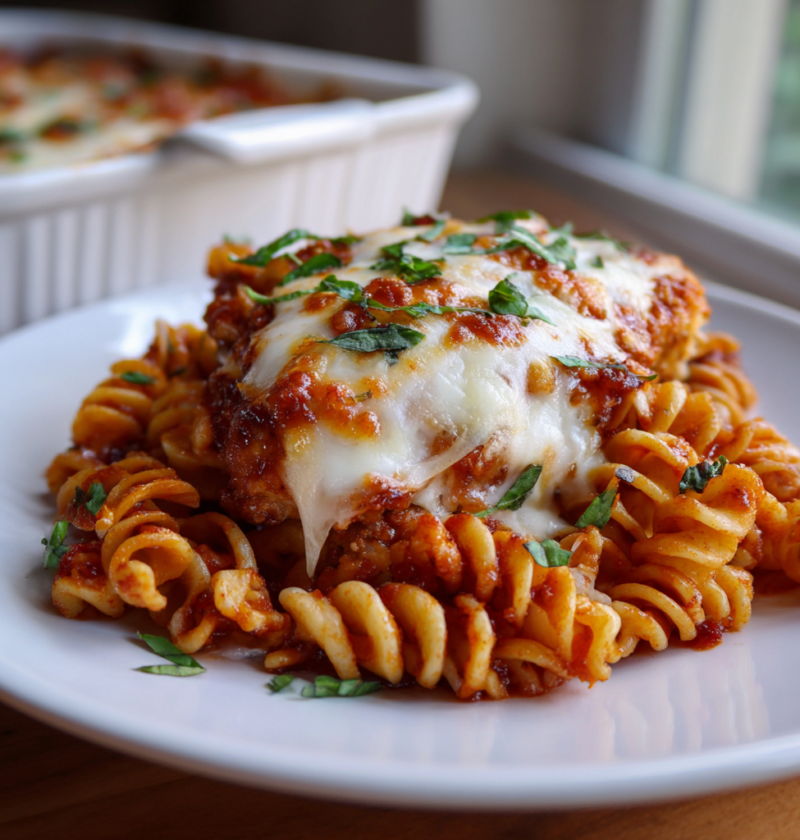
Chicken Parmesan Pasta brings together the beloved Italian-American classic of crispy, golden chicken cutlets with al dente pasta in a luxurious tomato sauce, creating a dish that feels restaurant-quality yet completely achievable in your own kitchen. This stunning combination delivers crispy exteriors giving way to tender, juicy chicken, all enveloped in melted mozzarella and Parmesan cheese, creating layers of flavor and texture that satisfy on every level. What makes this recipe truly special is its remarkable ability to deliver sophisticated, impressive results using straightforward techniques and readily available ingredients that you likely already have at home. The contrast between the crispy breaded chicken, creamy tomato sauce, and tender pasta creates something genuinely greater than the sum of its parts—pure comfort combined with elegant presentation. Whether you’re preparing an impressive dinner for special guests or creating a restaurant-quality family meal that feels a bit more special than usual, Chicken Parmesan Pasta delivers consistent, delicious results every single time. This dish proves that you can create impressive, restaurant-worthy meals without spending hours in the kitchen or requiring culinary training.
Why You’ll Love This Recipe
Next, let me share why home cooks absolutely adore making Chicken Parmesan Pasta. First, the preparation is straightforward and rewarding, delivering impressive results that feel far more complicated than the actual effort required. Additionally, the crispy chicken contrasts beautifully with the tender pasta and rich tomato sauce, creating incredible textural interest in every bite. The combination of melted cheese, aromatic herbs, and tangy tomato creates depth of flavor that tastes like you’ve been cooking all day. Furthermore, this dish comes together in approximately forty-five minutes from start to finish, making it perfect for special weeknight dinners when you want something impressive but don’t have hours to spend cooking. The versatility of this recipe means you can customize the sauce, add vegetables, or adjust seasonings to match your family’s preferences and dietary needs. This is the kind of dish that brings people together and creates memories around the dinner table.
Ingredients
Serves 4 people
• 4 boneless, skinless chicken breasts • Salt and black pepper to taste • 1 cup all-purpose flour • 2 large eggs • 1 tablespoon whole milk • 1½ cups panko breadcrumbs • ½ cup grated Parmesan cheese, divided • 1 teaspoon Italian seasoning • ½ teaspoon garlic powder • ¼ teaspoon cayenne pepper • ¾ cup vegetable oil (for frying) • 1 pound pasta (spaghetti, linguine, or penne) • 3 tablespoons olive oil • 5 cloves garlic, minced • 1 medium onion, finely diced • 28 ounces canned crushed tomatoes • 2 tablespoons tomato paste • 1 teaspoon sugar • ½ cup fresh basil, chopped (divided) • 2 tablespoons fresh parsley, chopped • 1 teaspoon Italian seasoning • ½ teaspoon red pepper flakes • 2 cups shredded mozzarella cheese • ¼ cup reserved pasta water • 1 tablespoon lemon juice • 2 cloves garlic, minced (for sauce)
Step-by-Step Instructions
Prepare the Chicken
First, place the chicken breasts on a clean cutting board and examine them for even thickness. Using a meat mallet or the bottom of a heavy pan, gently pound each chicken breast to an even thickness of approximately half an inch—this ensures even cooking and creates a more tender texture. Season both sides generously with salt and black pepper, allowing the seasoning to penetrate the meat. Set the prepared chicken aside on a clean plate.
Create the Breading Station
Next, set up your breading station with three shallow bowls arranged in a row. In the first bowl, place the flour mixed with a pinch of salt. In the second bowl, whisk together the eggs and milk until well combined—this egg wash helps the breading adhere to the chicken. In the third bowl, combine the panko breadcrumbs, half cup of Parmesan cheese, Italian seasoning, garlic powder, and cayenne pepper, stirring until everything is evenly distributed.
Bread the Chicken
Working with one chicken breast at a time, coat it thoroughly in the flour mixture, shaking off any excess. Subsequently, dip it into the egg mixture, allowing any excess to drip back into the bowl. Finally, place it in the seasoned breadcrumb mixture, pressing gently to ensure the breadcrumbs adhere evenly to both sides. Set the breaded chicken on a clean plate and repeat with the remaining breasts. For extra-crispy results, allow the breaded chicken to rest in the refrigerator for thirty minutes before frying, though this step is optional.
Fry the Chicken
Heat the vegetable oil in a large, heavy-bottomed skillet over medium-high heat until it reaches approximately 350 degrees Fahrenheit—a piece of breadcrumb should sizzle immediately when dropped into the oil. Carefully place the breaded chicken breasts in the hot oil, working in batches if necessary to avoid overcrowding the pan. Cook for approximately four to five minutes on the first side until the coating becomes golden brown and crispy. Flip the breasts carefully and cook for another four to five minutes until the second side is equally golden brown and the internal temperature reaches 165 degrees Fahrenheit.
Drain and Rest
Remove the cooked chicken from the oil and place it on a paper towel-lined plate, allowing any excess oil to drain. Let the chicken rest while you prepare the sauce, keeping it warm by tenting loosely with aluminum foil. The resting period allows the residual heat to continue cooking the interior while the coating remains perfectly crispy.
Prepare the Tomato Sauce
Meanwhile, heat the olive oil in a large saucepan over medium heat. Once the oil becomes fragrant, add the minced garlic and diced onion, stirring occasionally for about three to four minutes until both become soft and translucent. Next, add the tomato paste and cook, stirring frequently, for approximately two minutes—this helps develop deeper tomato flavors and removes the raw tomato paste taste. Subsequently, add the crushed tomatoes, sugar, half of the fresh basil, parsley, Italian seasoning, and red pepper flakes, stirring until everything is well combined.
Simmer the Sauce
Bring the sauce to a gentle simmer over medium heat and cook, stirring occasionally, for approximately fifteen to twenty minutes. The sauce should reduce slightly and develop deeper, more concentrated flavors. Taste and adjust seasoning with additional salt, pepper, or lemon juice as needed—the acid from the lemon brightens the sauce without requiring more salt. Remember that you’ll be adding the chicken on top, which is salty, so season conservatively.
Cook the Pasta
While the sauce simmers, bring a large pot of salted water to a rolling boil. Add the pasta and cook according to package directions until al dente, which means it should have a slight firmness when bitten. Remember to reserve approximately one cup of starchy pasta water before draining—this liquid will help adjust the sauce consistency if needed. Drain the pasta but do not rinse it, as the starch on the surface helps the sauce cling to each strand.
Combine Pasta and Sauce
Add the cooked, drained pasta directly to the simmering tomato sauce, tossing gently but thoroughly until every strand becomes evenly coated. If the sauce seems too thick, add a splash of reserved pasta water and stir to achieve your desired consistency. The pasta should be slightly saucy but not swimming in liquid. Remove from heat and stir in the remaining fresh basil and additional lemon juice if desired.
Assemble and Top
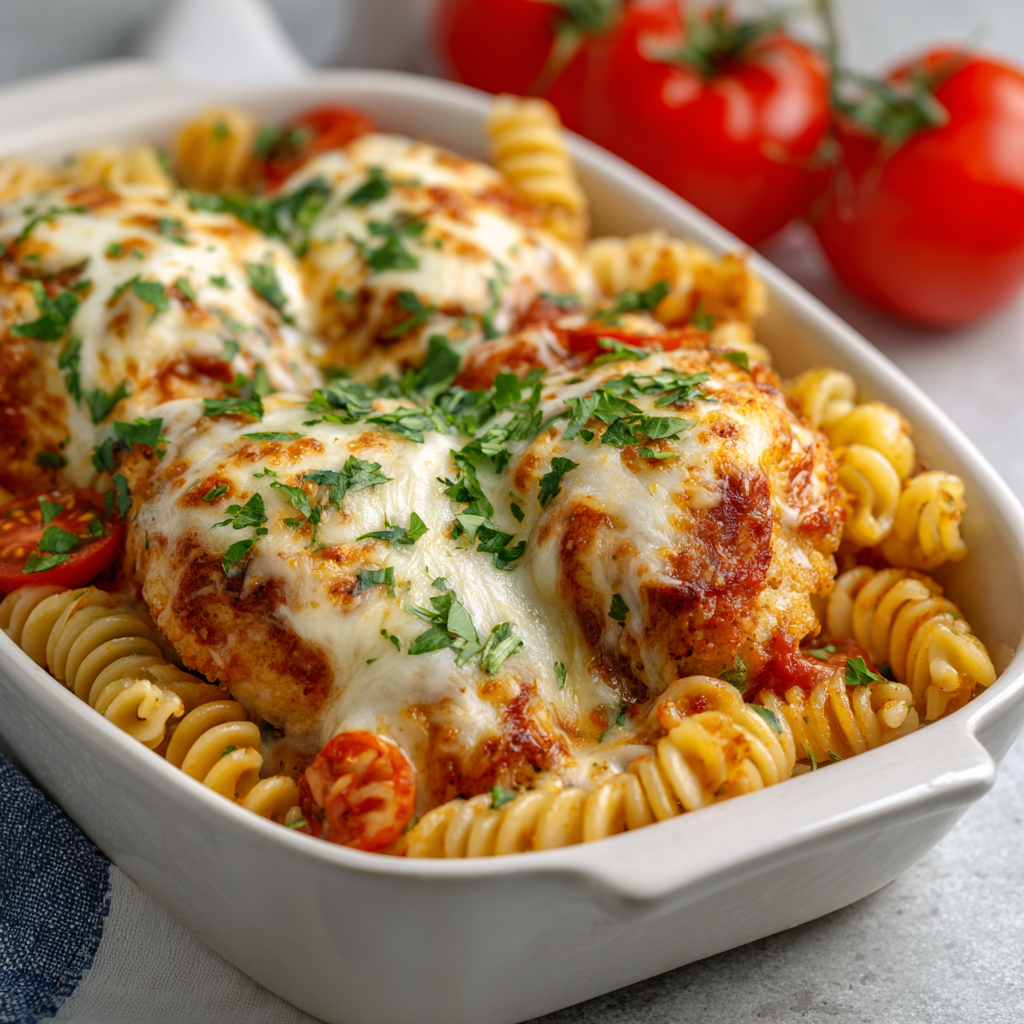
Divide the pasta among serving bowls or plates, creating a nest in the center of each. Top each portion with a golden, crispy chicken breast. Sprinkle the mozzarella cheese over the chicken, then finish with additional Parmesan cheese and fresh basil for garnish. For a more elegant presentation, you can slice the chicken breasts before serving and arrange the slices over the pasta.
Serve Immediately
Serve immediately while the pasta is hot, the chicken is still crispy, and the cheese has just melted into creamy, luxurious perfection. The contrast between the crispy chicken exterior and the warm, saucy pasta creates an unforgettable dining experience.
Serving and Storing Tips
Serving Suggestions
This impressive dish pairs beautifully with a simple arugula salad dressed with lemon vinaigrette, which provides a fresh, peppery contrast to the rich, savory main course. Next, serve alongside garlic bread or crusty Italian bread for soaking up every last bit of the delicious tomato sauce. Additionally, a glass of medium-bodied red wine such as Chianti or Sangiovese complements the crispy chicken and tomato sauce wonderfully. For entertaining, plate individual portions with the chicken breast proudly displayed on top of the pasta, creating an impressive presentation that looks restaurant-quality. This sophisticated dish works equally well for casual family gatherings as it does for formal dinner parties where you want to impress guests.
Storage and Reheating Tips
Store leftover Chicken Parmesan Pasta in an airtight container in the refrigerator for up to three days. To reheat, place individual portions in a skillet over medium heat with a splash of water or broth, stirring gently until warmed through—this takes approximately five to seven minutes. Alternatively, individual portions can be reheated in the microwave, loosely covered, for two to three minutes, though stovetop reheating preserves the chicken’s texture better and prevents the sauce from becoming watery. However, the crispy coating will soften during storage and reheating, so this dish is truly best enjoyed fresh from the pan. The components can also be prepared separately and assembled fresh for another meal—the sauce keeps refrigerated for up to four days, and leftover chicken can be stored separately and reheated gently.
Helpful Notes and Tips
Ingredient Substitutions and Flexibility
One of the greatest advantages of this recipe is its adaptability to different preferences and ingredient availability. First, if you don’t have panko breadcrumbs, regular breadcrumbs work fine, though they won’t achieve quite the same level of crispiness. Additionally, you can use half panko and half grated Parmesan for extra-crispy, flavorful coating. For a lighter version, bake the breaded chicken in a 400-degree Fahrenheit oven for approximately twenty minutes instead of frying, though it won’t be quite as crispy. Furthermore, if you prefer milder flavors, reduce or omit the cayenne pepper and red pepper flakes.
Sauce Variations
Feel free to customize the sauce based on available ingredients and flavor preferences. Next, if you prefer a smoother sauce, blend it with an immersion blender before serving. You can also add sautéed mushrooms, bell peppers, or sun-dried tomatoes to the sauce for additional flavor and nutrition. Additionally, a splash of heavy cream stirred into the sauce at the end creates a richer, more luxurious version that some diners prefer.
Pasta and Protein Options
While spaghetti is traditional, any pasta shape works beautifully in this dish. Furthermore, you can pound out thin cutlets from pork or veal using the same technique for variety. Some home cooks prefer using thin-sliced chicken breast halves instead of whole breasts pounded thin—both methods work equally well.
Time-Saving Tips
Prepare the chicken breasts and sauce ahead of time, storing them separately in the refrigerator until dinner time. Then simply fry the chicken and cook the pasta fresh for assembly. Additionally, you can make the tomato sauce up to two days ahead and refrigerate it, then reheat gently when ready to serve. This makes the actual cooking time when you’re ready to eat significantly shorter and less stressful.
Common Mistakes to Avoid
One frequent error involves overcrowding the skillet when frying the chicken, which lowers the oil temperature and creates greasy rather than crispy coating—fry in batches if necessary. Another common mistake is using oil that isn’t hot enough; always verify the temperature with a thermometer or by testing with a breadcrumb. Additionally, avoid skipping the resting period after frying, which allows the exterior to remain crispy rather than becoming soggy. Finally, don’t allow the sauce to simmer too long, as extended cooking concentrates the acidity and can create an overly tart flavor—thirty minutes maximum is ideal.
Chef Tips for Excellence
First, the secret to perfectly crispy chicken lies in using panko breadcrumbs and maintaining consistent oil temperature throughout frying—use a thermometer to ensure accuracy. Second, let the breaded chicken rest in the refrigerator for at least thirty minutes before frying; this helps the coating adhere better and creates extra-crispy results.
Frequently Asked Questions
Can I bake the chicken instead of frying it? Yes, place breaded chicken on a greased baking sheet and bake at 400 degrees Fahrenheit for approximately twenty minutes until golden; the coating won’t be quite as crispy as fried, but it’s a lighter alternative.
What if my breading falls off during frying? Ensure the egg wash is applied thoroughly and the chicken is well-coated with breadcrumbs; also verify that your oil is at proper temperature, as oil that’s too cool causes coating to separate.
Can I use chicken thighs instead of breasts? Yes, pound them to even thickness just like breasts; they may take slightly longer to fry due to thickness, but they’ll remain juicier and more flavorful.
How do I make this dish dairy-free? Use dairy-free mozzarella and Parmesan alternatives, or simply omit the cheese topping and serve the chicken with marinara and pasta.
Is this recipe suitable for freezing? The pasta portion doesn’t freeze well due to texture changes, but you can freeze the breaded, uncooked chicken and the sauce separately; fry fresh and combine when ready to serve.
Conclusion
Chicken Parmesan Pasta represents the perfect intersection of comfort and sophistication, delivering impressive results using straightforward techniques and readily available ingredients. This dish proves that restaurant-quality meals are entirely achievable in your own kitchen when you combine quality components with proper technique and care. Whether you’re preparing an elegant dinner for special guests or creating an impressive family meal that feels a bit more upscale than usual, Chicken Parmesan Pasta delivers consistent, delicious results that satisfy and delight everyone fortunate enough to enjoy it. The crispy chicken, aromatic tomato sauce, and tender pasta create an experience that goes far beyond basic sustenance—it’s genuinely memorable and delicious.
Now that you have the complete guide to creating beautiful Chicken Parmesan Pasta at home, I’d love to hear about your experience! Did you try this recipe? How did it turn out for you and your family? Please save this recipe to your collection, pin it to your favorite Pinterest board, and share it with friends and family who appreciate elegant yet approachable cooking. Your feedback and shares inspire us to keep developing more delicious recipes that bring joy and incredible meals to kitchens everywhere. Tag us on social media with your beautiful Chicken Parmesan Pasta creations—we absolutely love seeing your culinary successes and hearing how this impressive dish brought warmth, elegance, and happiness to your dinner table!