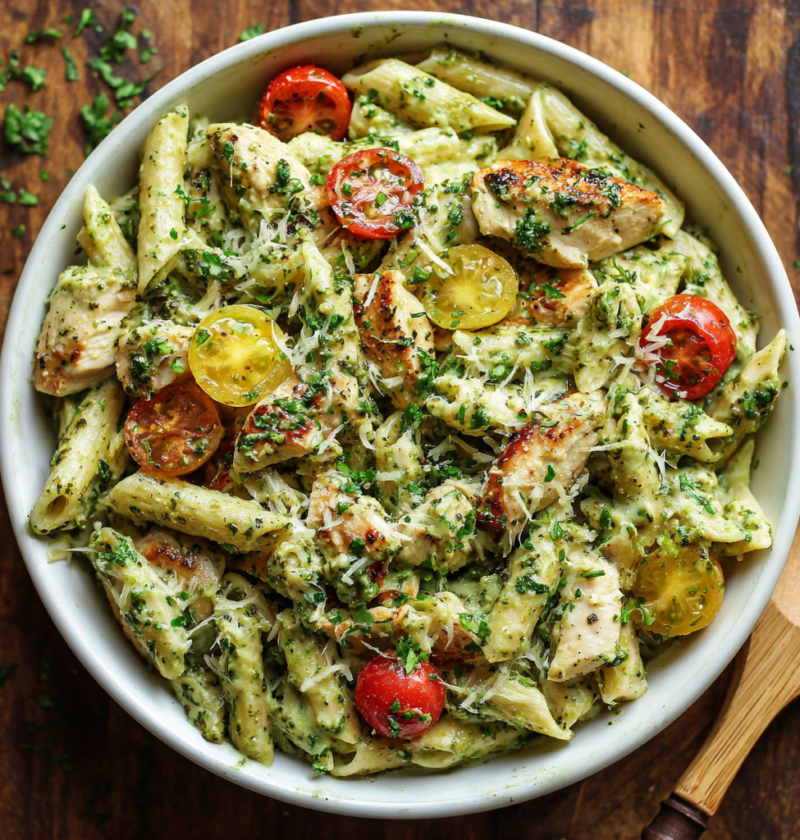
There’s something irresistibly delicious about a pasta dish that combines fresh, vibrant basil with tender chicken and luxurious cream, creating layers of flavor that feel both light and deeply satisfying. Creamy Pesto Chicken Pasta brings together the brightness of homemade pesto, succulent chicken, and silky cream sauce in a way that tastes genuinely restaurant-quality while remaining surprisingly easy to make at home. This is the kind of meal that makes your kitchen smell absolutely incredible, that transforms an ordinary weeknight into something special, and that leaves everyone at your table asking for seconds and requesting the recipe. First, what makes this dish so special is how the fresh pesto maintains its vibrant color and bright flavor despite being combined with cream, creating a sauce that’s both elegant and comforting. Next, the chicken absorbs all those wonderful herbal notes while the pasta becomes a perfect vehicle for the most delicious sauce imaginable. Additionally, this entire meal comes together in under thirty minutes, making it ideal for busy weeknights when you want something that tastes like you’ve spent all day cooking but haven’t actually spent more than half an hour in the kitchen. Whether you’re cooking for your family, impressing guests, or treating yourself to something truly special, creamy pesto chicken pasta delivers impressive results with minimal effort and maximum flavor.
Ingredients
Serves: 4–5 people
• 1.5 pounds boneless, skinless chicken breasts • 1 pound pasta (penne, rigatoni, or fettuccine work beautifully) • 3 tablespoons olive oil, divided • 4 tablespoons butter • 1 medium yellow onion, thinly sliced • 4 cloves garlic, minced • 3/4 cup chicken broth • 1/2 cup heavy cream • 1/2 cup whole milk • 1/2 cup reserved pasta water • 1 teaspoon salt • 1/2 teaspoon black pepper • 1/4 teaspoon white pepper (optional) • 1/2 cup homemade pesto (or high-quality store-bought) • 1/3 cup grated Parmesan cheese • 2 tablespoons pine nuts (optional, for garnish) • 2 tablespoons fresh basil, chopped (optional garnish) • 1/4 cup sun-dried tomatoes, chopped (optional, for brightness)
For the Pesto (if making from scratch): • 2 cups fresh basil leaves, tightly packed • 1/4 cup fresh parsley leaves • 1/3 cup grated Parmesan cheese • 1/4 cup pine nuts • 3 cloves garlic, roughly chopped • 1/2 cup good-quality olive oil • 2 tablespoons fresh lemon juice • Salt and pepper to taste
Step-by-Step Instructions
- If making pesto from scratch, add the fresh basil, parsley, Parmesan cheese, and pine nuts to a food processor and pulse until roughly chopped.
- Add the garlic and pulse again until everything is well combined but still has some texture.
- With the food processor running, slowly drizzle in the olive oil until the pesto reaches your desired consistency.
- Add the fresh lemon juice and pulse once more, then taste and adjust seasonings with salt and pepper as needed.
- Remove the chicken breasts from the refrigerator about 15 minutes before cooking to bring them closer to room temperature, which promotes even cooking.
- Pat the chicken breasts completely dry with paper towels and season both sides generously with salt and black pepper.
- Bring a large pot of salted water to a rolling boil and add your pasta, cooking according to package directions until just al dente.
- While the pasta cooks, reserve 1/2 cup of the starchy pasta water before draining the pasta, then set it aside.
- Heat 2 tablespoons of olive oil in a large skillet over medium-high heat until it shimmers and is hot enough to sizzle when the chicken touches it.
- Carefully place the chicken breasts in the hot skillet and cook without moving them for about 5–6 minutes until the bottom develops a golden crust.
- Flip the chicken breasts and cook the other side for another 5–6 minutes until golden and cooked through to an internal temperature of 165 degrees Fahrenheit.
- Transfer the cooked chicken to a clean cutting board and tent it loosely with foil to keep it warm.
- Once the chicken has rested for a few minutes, slice it into bite-sized pieces or tear it into chunks, depending on your preference.
- In the same skillet, reduce the heat to medium and add the remaining 1 tablespoon of olive oil.
- Add the sliced onion and cook for about 4–5 minutes, stirring occasionally, until it becomes soft and translucent.
- Stir in the minced garlic and cook for another 30 seconds to 1 minute until fragrant but not browned.
- Pour in the chicken broth and let it simmer gently for about 1–2 minutes to allow flavors to combine slightly.
- Remove the skillet from heat and stir in the butter until it melts completely into the broth.
- Pour in the heavy cream and milk slowly, stirring constantly to create a smooth, silky base for the pesto sauce.
- Gently stir in the pesto, making sure it’s well distributed throughout the cream sauce and no streaks remain.
- Return the sliced chicken to the skillet and stir gently to coat it thoroughly in the creamy pesto sauce.
- Add the Parmesan cheese and stir until it melts into the sauce, creating a luxurious finish.
- Pour in the reserved pasta water gradually, starting with 1/4 cup and adding more as needed to reach your desired sauce consistency.
- Taste the dish and adjust seasonings with additional salt, pepper, or pesto as needed.
- Gently fold in the cooked pasta to the sauce, tossing carefully to ensure every strand is coated evenly with the pesto cream.
- Stir in the sun-dried tomatoes if using, which adds brightness and color to the finished dish.
- Divide the creamy pesto chicken pasta among serving bowls.
- Top each bowl with a sprinkle of pine nuts if desired and a small handful of fresh chopped basil for color and aroma.
The Art of Combining Pesto with Cream
Understanding how to merge vibrant pesto with rich cream sauce is the key to creating a dish that feels both fresh and luxurious. First, adding the pesto after the cream is already prepared prevents it from breaking or separating, as the temperature and texture of the cream stabilize the basil oil. Next, stirring gently rather than aggressively helps the pesto distribute evenly without deflating the airiness of the sauce or damaging the delicate basil leaves. Additionally, high-quality pesto makes an enormous difference in the final flavor, so whether you’re making it fresh or choosing store-bought, opt for the best option available. Meanwhile, the cream and milk combine to create a silky base that carries the pesto flavor beautifully without overwhelming the delicate herbal notes that make this dish so special.
Serving and Storing Tips
Serving Suggestions
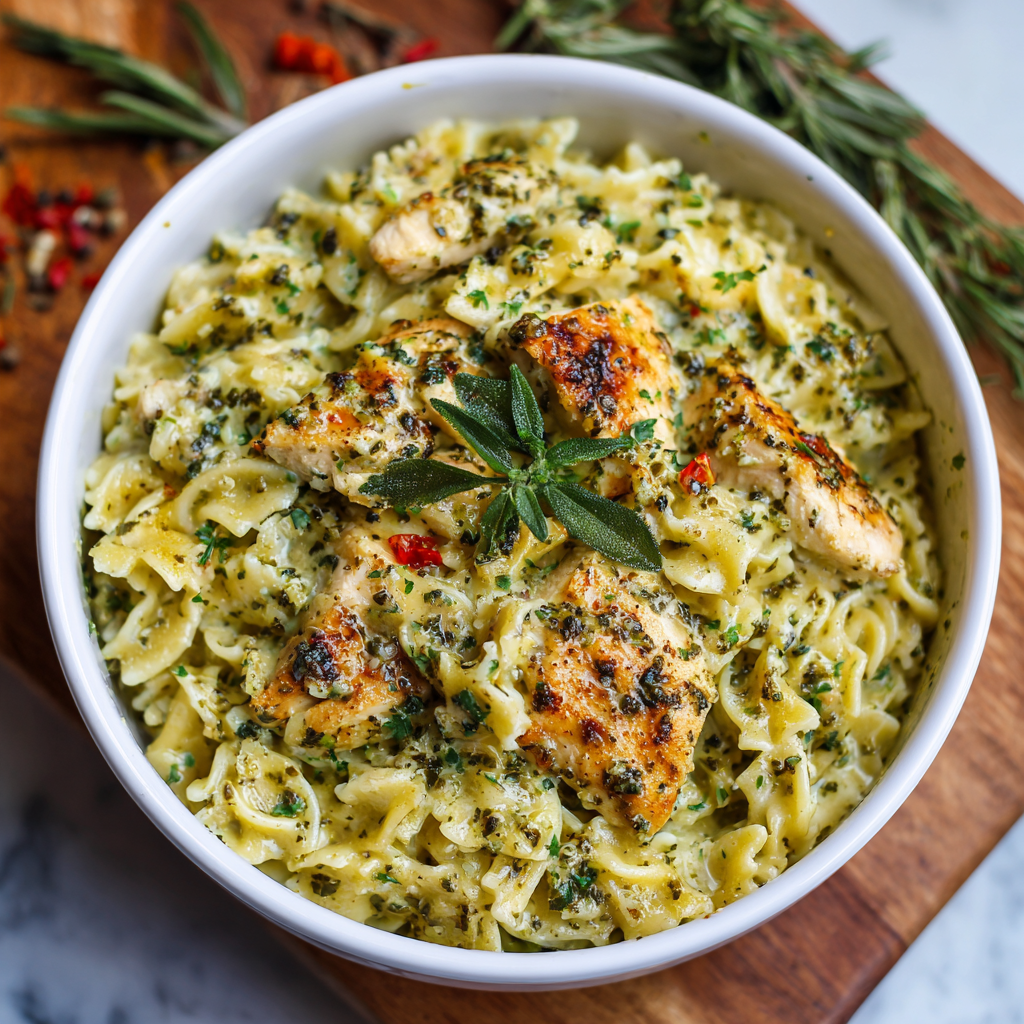
Serve this creamy pesto chicken pasta with a crisp green salad dressed simply with lemon vinaigrette, which cuts through the richness and provides refreshing contrast to all that luxurious cream. Crusty bread is practically essential for soaking up the silky pesto sauce, transforming a simple side into an integral part of the meal experience. For elegant plating, twirl the pasta onto a fork and position it in the center of a shallow bowl, then arrange sliced chicken on top and garnish with fresh basil leaves and a sprinkle of toasted pine nuts. Pair this dish with a crisp white wine like Vermentino, Gavi, or even a light Pinot Grigio, which complements the basil and cream beautifully without overwhelming the delicate flavors. Additionally, if you’re serving guests, roasted cherry tomatoes or grilled asparagus on the side adds color and sophistication while complementing the pesto flavors. For a lighter presentation, serve over zucchini noodles or a mix of regular pasta and vegetables instead of using only traditional pasta.
Storage Tips
Refrigerate leftovers in an airtight container for up to 3 days, though this dish is best enjoyed fresh and warm immediately after cooking to preserve the brightness of the pesto. When reheating, gently warm the pasta in a skillet over low heat with a splash of cream or milk and a touch of pasta water to refresh the sauce without drying it out or darkening the pesto. Freezing is not recommended for this dish, as the cream-based sauce can separate upon thawing and the fresh basil flavor diminishes significantly. However, if you do want to prepare ahead, you can cook the chicken and make the pesto separately, storing them in airtight containers in the refrigerator for up to 3 days before combining with freshly cooked pasta. For maximum flavor and color, plan to enjoy this meal the same day you make it or within 24 hours for the brightest, most delicious results.
Helpful Notes and Tips
One essential technique for success is not to overcook the chicken—it should reach 165 degrees Fahrenheit on a meat thermometer but no higher, as beyond that point it becomes dry and tough. Pounding the chicken breasts to an even thickness before cooking helps them cook more uniformly and prevents thick sections from being overdone while thinner sections remain raw. Additionally, letting the cooked chicken rest for a few minutes before slicing allows the juices to redistribute throughout the meat, ensuring it stays tender and juicy.
For a lighter version of this dish, reduce the heavy cream to 1/4 cup and use Greek yogurt or sour cream to add creaminess without all the fat. To make this recipe completely dairy-free, substitute the butter with olive oil and replace the cream and milk with coconut milk or cashew cream, which yields a surprisingly delicious alternative with similar richness. Next, if you’re short on time, you can use rotisserie chicken from the grocery store, shredding it and heating it gently in the sauce at the end, which cuts preparation time significantly.
Meanwhile, if you don’t have fresh basil available or prefer to skip making pesto from scratch, high-quality store-bought pesto works beautifully in this recipe—simply look for versions with recognizable ingredients and bright color. Furthermore, the amount of pesto can be adjusted to your preference—if you like more herbaceous, pronounced flavors, increase it to 3/4 cup, or reduce it to 1/3 cup if you prefer more subtle basil notes. Additionally, if you want to stretch the pesto further without sacrificing flavor, add an extra tablespoon of butter or olive oil to the mixture before combining with the cream sauce.
For extra flavor depth, add roasted red peppers, fresh spinach, or sun-dried tomatoes to the sauce for color and complexity. Alternatively, incorporate sautéed mushrooms or zucchini for added vegetables without changing the fundamental character of the dish. Additionally, if you want to add protein variety, ground turkey or Italian sausage can substitute for the chicken, though cooking times may vary slightly.
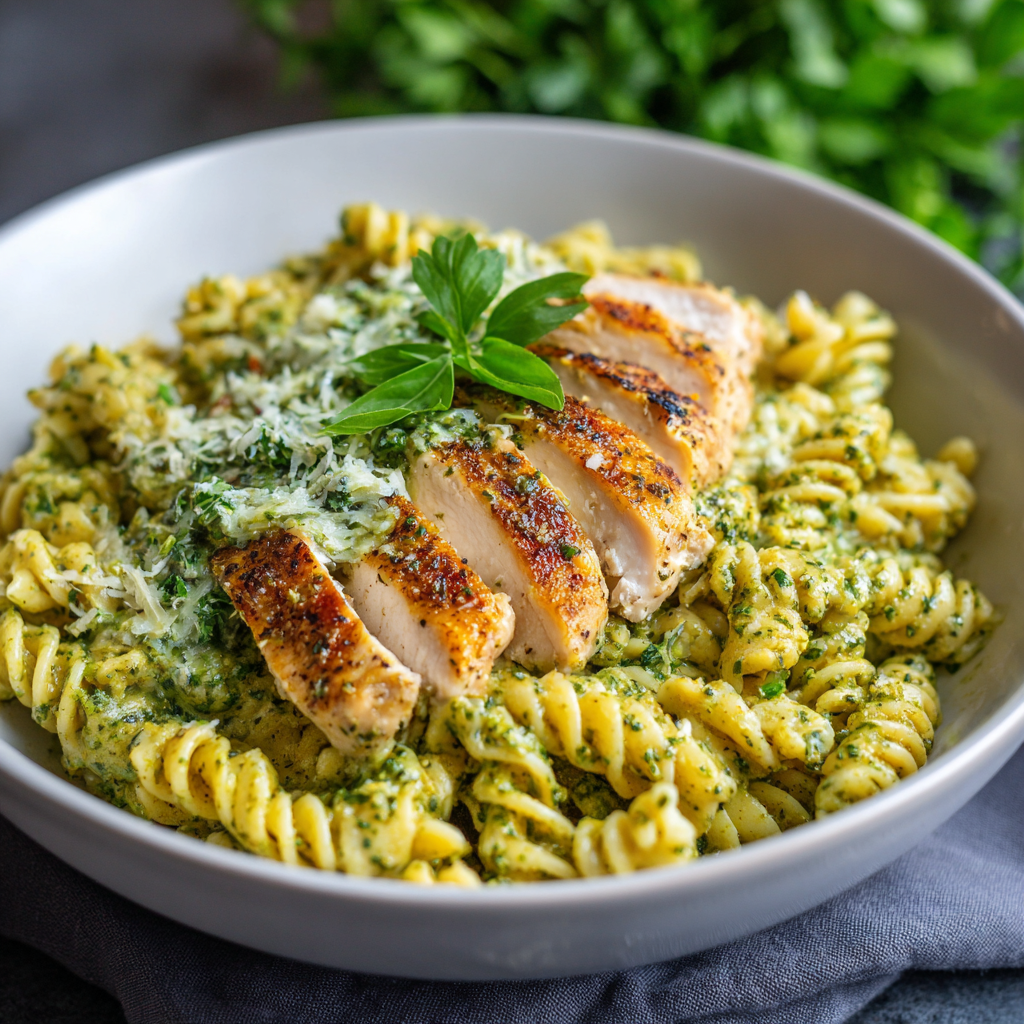
If your sauce seems too thin after adding the pasta, simmer it uncovered for another minute or two to allow some liquid to evaporate and the sauce to thicken naturally. Conversely, if it’s too thick, add reserved pasta water or even a splash of chicken broth one tablespoon at a time until you reach the perfect silky consistency. Additionally, remember that the sauce will continue thickening slightly as it cools, so slightly looser than perfect while cooking is ideal for serving.
Chef Tips
Finish the dish with a final crack of fresh black pepper and a generous handful of freshly chopped basil right before serving, which brightens the flavors and prevents the richness from feeling heavy on the palate. Additionally, toast the pine nuts lightly in a dry skillet just before serving, which enhances their nutty flavor and adds beautiful textural contrast to the creamy, soft pasta.
Frequently Asked Questions
Can I use chicken thighs instead of chicken breasts? Yes, chicken thighs work beautifully and stay incredibly moist, though they require about 8–10 minutes per side to cook through completely.
What if I don’t have pine nuts for the pesto? Walnuts, almonds, or sunflower seeds all work as delicious substitutes with slightly different flavor profiles but equally wonderful results.
Can I add vegetables to this pasta? Absolutely—roasted cherry tomatoes, sautéed spinach, grilled asparagus, or roasted red peppers all complement the pesto beautifully.
How far in advance can I make the pesto? Homemade pesto keeps refrigerated for up to 5 days in an airtight container, though the color will darken slightly over time as the basil oxidizes.
Is this recipe suitable for meal prep? You can cook the chicken and pesto separately and store them for up to three days, then combine with freshly cooked pasta when ready to eat for best results.
Why This Dish Becomes a Favorite
Creamy Pesto Chicken Pasta represents the perfect marriage of fresh, vibrant flavors with luxurious, satisfying textures, the kind of dish that becomes a trusted favorite the moment you first make it. First, the combination of basil, cream, chicken, and pasta creates something that tastes both restaurant-quality and deeply comforting at the same time. Next, the speed of preparation means busy weeknights suddenly feel less stressful when you can have impressive dinner on the table in under thirty minutes. Additionally, this recipe teaches fundamental cooking techniques like properly searing protein, making or using quality pesto, and balancing flavors with cream and herbs.
The beauty of this dish extends beyond just taste and technique—it’s naturally adaptable to whatever you have on hand or whatever dietary needs your guests might have, bending without breaking under creative modifications. Moreover, it feels elegant enough for special dinners and entertaining, yet comes together quickly enough for Tuesday night family meals when someone asks “What’s for dinner?” The creamy pesto chicken pasta proves that sophisticated, restaurant-quality meals don’t require complicated techniques, fancy ingredients, or hours of preparation time.
This creamy pesto chicken pasta will quickly become the recipe you reach for whenever you want to impress someone or simply treat yourself to something bright, fresh, creamy, and utterly satisfying, a dish that proves elegant home cooking is easier and more achievable than you might think.
Did you love making this Creamy Pesto Chicken Pasta? We’d absolutely adore hearing about your experience! Did you make your own pesto or use store-bought, and did you add any special ingredients or make this recipe your own? Please save this recipe to your personal collection, pin it to your Pinterest board for easy access whenever you need an elegant yet approachable weeknight dinner, and share it with friends and family who would enjoy this vibrant, creamy, sophisticated pasta that tastes like restaurant food but comes together effortlessly. Your feedback, shares, and comments inspire us to keep creating more delicious, achievable recipes that bring joy and sophistication to your kitchen and your table. Thank you for cooking with us today, and we can’t wait to see what wonderful dishes you create next!