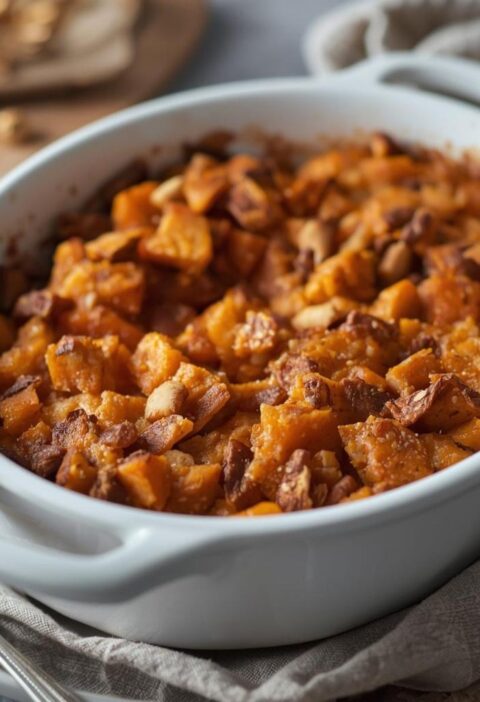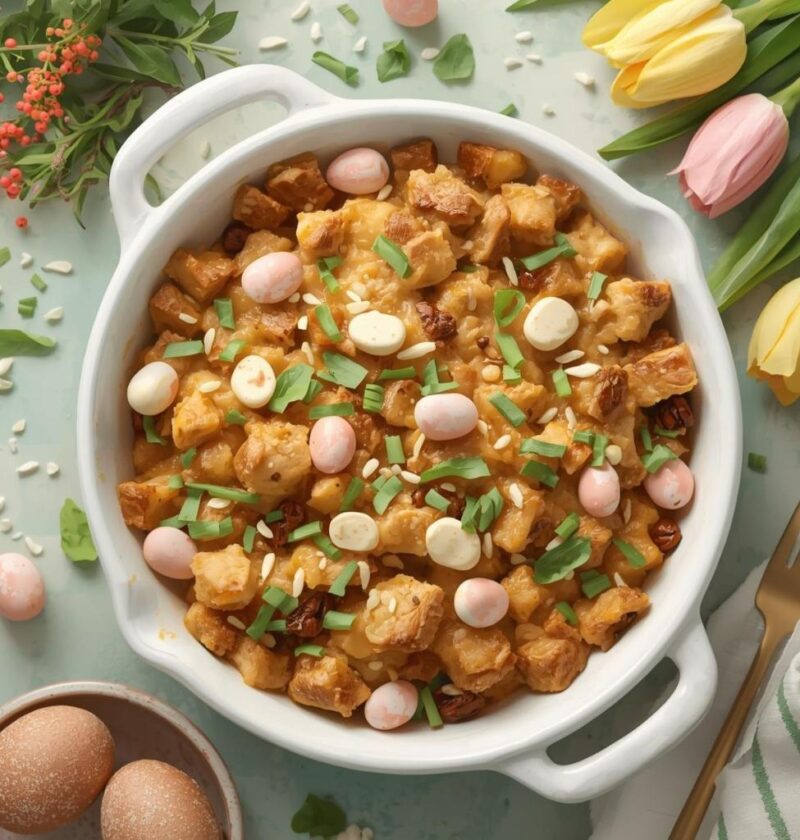
Easter stuffing represents a beloved holiday tradition that transforms simple bread into something truly spectacular through the perfect combination of fresh spring vegetables, aromatic herbs, and a savory broth-infused base. First, this classic preparation celebrates the season with light, fresh ingredients that reflect Easter’s renewal and the arrival of spring while maintaining all the comfort and warmth that make stuffing an essential part of any festive table. The beauty of Easter stuffing lies in its ability to honor tradition while incorporating seasonal ingredients like fresh herbs, tender vegetables, and brighter flavors that differ from heavier autumn versions. Additionally, this dish brings elegance and sophistication to any holiday meal, whether you’re preparing a formal dinner or hosting an intimate family gathering. Easter stuffing works perfectly as an accompaniment to roasted lamb, ham, chicken, or seafood, complementing each protein beautifully without overwhelming delicate spring flavors. Next, you’ll appreciate how this recipe takes approximately 45 minutes from start to finish, making it accessible even when managing multiple dishes during holiday cooking. Furthermore, the versatility of this preparation allows for variations with different vegetables and herbs while maintaining the classic appeal that makes people anticipate this dish year after year. Whether you’re preparing this for a formal Easter celebration or a casual spring gathering, Easter stuffing delivers consistently impressive results that taste elegant, fresh, and genuinely memorable.
Ingredients
Serves: 8-10 people
- 1 pound day-old white or wheat bread, cubed
- 1 tablespoon plus 2 tablespoons unsalted butter, divided
- 1 large sweet onion, finely diced
- 4 stalks fresh celery, finely diced
- 1 cup fresh spring peas or asparagus, cut into small pieces
- 8 ounces fresh mushrooms, finely chopped
- 3 cloves garlic, minced
- 2 cups chicken or vegetable broth, warmed
- ½ cup dry white wine or additional broth
- 3 tablespoons fresh parsley, finely chopped
- 2 tablespoons fresh tarragon, finely chopped (or 1 teaspoon dried)
- 1 tablespoon fresh thyme leaves (or 1 teaspoon dried)
- 1 tablespoon fresh chives, finely chopped
- 1 large egg, beaten
- ¾ teaspoon salt
- ½ teaspoon freshly ground black pepper
- ¼ teaspoon ground nutmeg
- ¼ teaspoon white pepper (optional)
- 3 tablespoons grated parmesan cheese (optional)
- 2 tablespoons panko breadcrumbs mixed with 1 tablespoon melted butter (optional topping)
Preparation and Cooking Instructions
Preparing the Bread Base
First, cut the day-old bread into uniform ½-inch cubes, spreading them on a large baking sheet. Next, place the bread cubes in a 275°F oven for about 8 to 10 minutes to dry them slightly, which allows them to absorb the broth mixture better and prevents the finished stuffing from becoming soggy. Alternatively, if your bread is already quite dry, you can skip this step and proceed directly to the next stage. Transfer the dried bread cubes to a large mixing bowl and set aside until the remaining components are prepared.
Sautéing the Vegetables
Melt 1 tablespoon of butter in a large skillet over medium heat, swirling gently as it foams and turns golden. Once the butter is completely melted and fragrant, add the diced onion and celery, sautéing for about 4 to 5 minutes, stirring occasionally until the vegetables become translucent and fragrant. Next, add the fresh mushrooms and continue cooking for an additional 3 to 4 minutes, stirring occasionally, until the mushrooms release their moisture and begin to brown slightly.
Add the minced garlic and cook for approximately 1 minute, stirring constantly to prevent the garlic from burning and developing bitter flavors. Meanwhile, add the fresh spring peas or asparagus and cook for an additional 2 minutes, allowing the vegetables to heat through while maintaining their bright color and tender-crisp texture.
Building the Flavor Base
Deglaze the skillet by pouring in the dry white wine or additional broth, scraping up any browned bits from the bottom of the pan. These flavorful bits, called fond, add depth and complexity to the stuffing base. Allow the liquid to simmer for about 1 minute until it reduces slightly. Remove the skillet from heat and stir in the fresh parsley, tarragon, thyme, and chives, distributing the herbs evenly throughout the vegetable mixture.
Combining the Ingredients
Transfer the vegetable and herb mixture to the bowl containing the bread cubes, stirring gently to combine. Next, pour the warm broth over the bread and vegetables, stirring carefully until the bread becomes moistened but not soggy. The bread should absorb the broth gradually, creating a cohesive mixture without becoming waterlogged. Add the beaten egg, 2 tablespoons of melted butter, parmesan cheese if using, salt, black pepper, nutmeg, and white pepper if desired. Stir gently but thoroughly until all ingredients are well distributed throughout.
Taste the mixture and adjust seasonings according to your preference, remembering that the flavors will concentrate slightly during baking. Transfer the prepared stuffing to a buttered 9-by-13-inch baking dish, spreading it evenly.
Baking the Stuffing
Preheat your oven to 350°F and position the rack in the center. If preparing the stuffing ahead of time, cover the baking dish with plastic wrap and refrigerate until ready to bake. When ready to cook, cover the baking dish with foil and bake for 25 to 30 minutes until heated through. Next, remove the foil and if using the optional panko breadcrumb topping, sprinkle it over the surface. Return to the oven uncovered for an additional 10 to 15 minutes until the top becomes golden brown and the edges are slightly crispy.
Remove from the oven and let rest for 5 minutes before serving, which allows the stuffing to set slightly and makes serving easier. If desired, garnish with additional fresh parsley and fresh thyme for a beautiful finishing touch.
Serving Tips
Easter stuffing shines as an elegant side dish that complements virtually any springtime protein without overwhelming delicate holiday flavors. First, serve it alongside roasted lamb, which pairs beautifully with the fresh herbs and light, vegetable-forward preparation. Additionally, it accompanies roasted chicken or herb-baked poultry wonderfully, where the bright flavors complement lighter proteins perfectly. Next, try Easter stuffing with baked ham for a traditional flavor combination that never disappoints.
Furthermore, this dish works beautifully with roasted seafood, particularly salmon and white fish, where the fresh herbs and wine notes create harmonious flavor pairings. Meanwhile, Easter stuffing makes a perfect accompaniment to roasted vegetables and grains for vegetarian celebrations that honor spring’s arrival. For formal Easter dinners, Easter stuffing holds a traditional place on the table alongside other spring vegetables, fresh salads, and elegant protein preparations.
Additionally, smaller portions work beautifully as an elegant accompaniment to formal dinner parties where each component deserves careful attention. Furthermore, Easter stuffing complements spring-themed menus that celebrate the season’s renewal and fresh ingredients. Meanwhile, it fits perfectly into holiday spreads where tradition matters alongside appreciation for quality ingredients and careful preparation.
Storage and Make-Ahead Tips
Refrigerator Storage
Allow the Easter stuffing to cool to room temperature before transferring to an airtight glass container for refrigerator storage. It will keep for up to 3 days when stored properly in a covered container. To reheat, place the stuffing in a baking dish, cover with foil, and warm in a 325°F oven for about 15 to 20 minutes until heated throughout. Alternatively, transfer individual portions to microwave-safe dishes, cover loosely, and microwave on medium power for 2 to 3 minutes until warmed.
Freezing Instructions
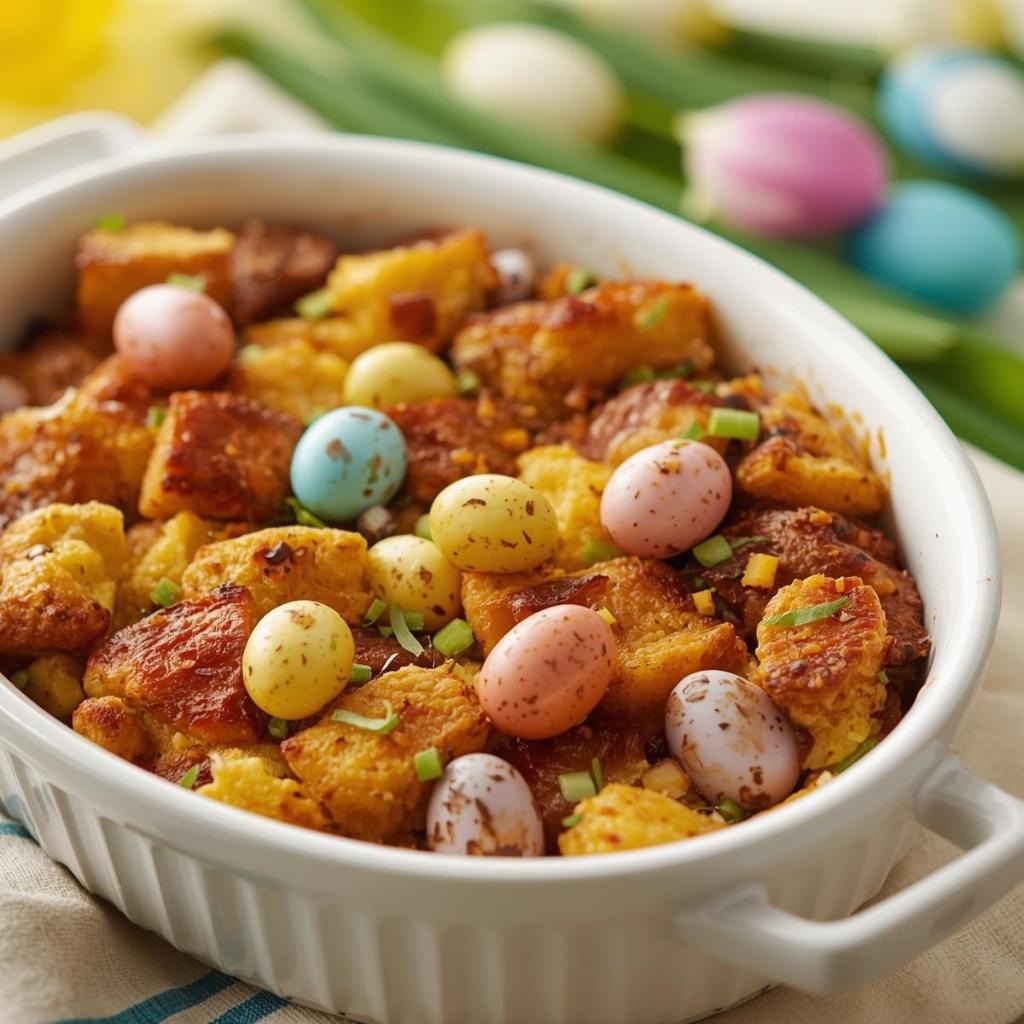
Next, Easter stuffing freezes well for up to 3 months when prepared and stored correctly. Cool the dish completely, then transfer to a freezer-safe container or freezer bag, removing as much air as possible before sealing to prevent freezer burn. When ready to use, thaw overnight in the refrigerator, then reheat gently in a baking dish covered with foil at 325°F for about 25 to 30 minutes until warmed throughout.
Make-Ahead Strategy
Additionally, you can prepare the Easter stuffing up to 24 hours ahead and refrigerate it covered in the baking dish. When ready to bake, simply cover with foil and proceed with the baking instructions, though you may need to add 5 to 10 minutes to the cooking time since the mixture will be cold. Alternatively, you can prepare all components separately and assemble everything just before baking, which takes only about 10 minutes and allows maximum flexibility in your holiday timing.
Helpful Notes and Variations
Bread Selection and Preparation
First, day-old bread works best for stuffing because it has lost some moisture and absorbs the broth mixture more effectively than fresh bread. Meanwhile, a combination of white and whole wheat bread adds textural variety and subtle flavor complexity. Additionally, brioche or egg bread adds richness to the finished dish, though it creates a slightly heavier result than lighter bread varieties. For gluten-free versions, use high-quality gluten-free bread cubed and dried according to package directions.
Vegetable Variations and Seasonal Swaps
If fresh spring peas aren’t available, substitute with frozen peas, which work beautifully year-round. Next, spring asparagus adds tender texture and fresh flavor, though it can be replaced with sautéed zucchini or tender broccoli florets. Additionally, diced carrots add sweetness and color, though they should be cut smaller than other vegetables to cook through properly. Furthermore, leeks provide mild onion flavor and elegant appearance, replacing some or all of the regular onion if desired.
Herb Customization and Fresh Flavors
First, fresh tarragon provides subtle anise notes that complement spring ingredients beautifully, though it can be replaced with additional thyme or dill if unavailable. Next, fresh dill adds bright, herbaceous flavor that’s particularly lovely with seafood-based main courses. Additionally, fresh sage provides earthy depth for those preferring a slightly richer herb profile. Meanwhile, fresh chervil or parsley can be increased if you prefer maximum herbaceous brightness and color.
Add-Ins for Enhanced Flavor
First, add sautéed mushrooms for deeper umami flavor and additional earthiness that grounds the dish. Next, incorporate crispy bacon bits, diced prosciutto, or sautéed sausage for more substantial variations with savory depth. Additionally, toasted nuts like pecans or walnuts add textural contrast and subtle nuttiness. Furthermore, dried cranberries or fresh lemon zest add brightness and subtle sweetness that complements spring flavors beautifully.
Common Mistakes to Avoid
First, avoid using fresh bread, as this absorbs too much liquid and creates mushy, waterlogged stuffing rather than the desired breadlike texture with proper cohesion. Day-old bread provides the correct moisture level. Additionally, do not over-moisten the mixture; the bread should be cohesive but not soggy or wet-appearing. Next, resist overcooking the vegetables before adding them to the bread mixture, as continued cooking during baking can make them mushy and cause their bright colors to fade.
Furthermore, do not skip the resting period after baking, as this allows the stuffing to set and become easier to serve. Finally, ensure the broth is warm when added to the bread, as cold broth takes longer to moisten the bread and can result in uneven texture throughout.
Chef Tips
First, for maximum herbaceous flavor and bright color, chop fresh herbs just before adding to the mixture, as pre-chopped herbs lose volatile flavor compounds and visual appeal through oxidation. Next, to achieve a lighter, fluffier texture, separate the egg and fold in the beaten white at the end, reserving the yolk to mix with the broth for richness without heaviness.
Frequently Asked Questions
Can I prepare Easter stuffing the day before? Yes, prepare it completely, cover the baking dish with foil, and refrigerate overnight, then bake as directed, adding 5 to 10 extra minutes to the cooking time.
What type of bread works best for stuffing? Day-old white or wheat bread works beautifully; avoid fresh bread, which absorbs too much liquid and becomes mushy rather than maintaining proper texture.
Can I make Easter stuffing without wine? Yes, substitute the wine with additional chicken broth or vegetable broth, which provides moisture though the subtle complexity from wine will be absent.
How do I prevent the stuffing from becoming dry? Ensure adequate broth is included in the mixture and don’t overbake; cover with foil during the initial baking period to prevent the top from drying out.
Can I freeze the unbaked stuffing mixture? Yes, assemble the stuffing in the baking dish, cover tightly, and freeze for up to 1 month, then thaw overnight and bake as directed, adding extra cooking time.
Why This Recipe Works
The magic of Easter stuffing lies in understanding how bread, vegetables, and broth interact to create exceptional flavor and texture. First, day-old bread provides the perfect base because it has lost enough moisture to absorb the broth mixture evenly without becoming waterlogged. Additionally, the combination of fresh spring vegetables and aromatic herbs creates bright, seasonal flavors that celebrate Easter’s renewal while maintaining the comfort appeal that makes stuffing beloved.
Furthermore, the warm broth gradually moistens the bread while the vegetables and herbs distribute throughout, creating a cohesive mixture with diverse flavors and textures. Meanwhile, the beaten egg adds richness and helps bind the ingredients together, while the gentle baking creates a dish that’s moist throughout with slightly crispy edges. The optional breadcrumb topping provides textural contrast and visual appeal that transforms the dish from simple to sophisticated.
This recipe respects traditional stuffing while incorporating fresh, seasonal ingredients that reflect spring and Easter celebration. The result is a side dish that feels elegant and special while maintaining the comfort and familiarity that makes stuffing an essential part of holiday meals.
Variations Worth Exploring
Next time you prepare Easter stuffing, consider these creative variations that build on the classic spring foundation. First, try a Mediterranean version by adding sun-dried tomatoes, olives, fresh basil, and pine nuts for complex, Southern European flavors. Additionally, create a seafood variation by incorporating diced shrimp or crab meat for elegant protein-forward stuffing that works beautifully with fish mains.
Furthermore, experiment with a harvest version using dried apricots, toasted almonds, and sage for slightly sweeter depth that works wonderfully with roasted poultry. Meanwhile, try a lemon-herb version by adding lemon zest and juice along with increased fresh herbs for bright, zippy flavors. Additionally, for a Southern-inspired take, add sautéed sausage, corn, and fresh sage for a heartier preparation with regional flair.
Perfect Pairings and Meal Planning
Easter stuffing works beautifully as part of complete holiday meals in numerous combinations. First, pair it with roasted lamb and fresh spring vegetables for a traditional Easter dinner that celebrates the season. Next, serve alongside baked ham and asparagus for classic flavor combinations. Additionally, it complements roasted chicken and fresh salads for lighter celebrations. Furthermore, Easter stuffing works perfectly alongside seafood mains and spring vegetables for elegant presentations.
For holiday gatherings, Easter stuffing deserves prominent placement alongside other springtime sides. Meanwhile, it works beautifully as part of brunch buffets when paired with egg dishes and fresh fruit. Additionally, smaller portions work as elegant additions to formal dinners where each component deserves careful attention and consideration.
Final Thoughts
Easter stuffing proves that seasonal ingredients and thoughtful preparation create truly memorable dishes. The combination of fresh vegetables, aromatic herbs, warm broth, and quality bread transforms into something special that celebrates spring and honors holiday tradition. The entire preparation takes approximately 45 minutes, making it practical for holiday meals without requiring excessive advance planning or complicated techniques.
This classic recipe has remained beloved for good reason: it delivers consistent, impressive results every single time when prepared with attention and care. Whether you’re cooking for family or entertaining guests, Easter stuffing brings freshness, elegance, and genuine satisfaction to the holiday table, making it an indispensable part of springtime celebrations and cherished culinary memories.
Did you love making this Easter Stuffing? If this recipe brought joy to your kitchen and delight to your table, please save this recipe for future use, pin it to your favorite board, or share it with friends and family who appreciate elegant, seasonal vegetable dishes that celebrate springtime traditions. Your support means everything to us and helps us continue creating more amazing recipes that make holiday cooking easier, more enjoyable, and genuinely delicious. We’d love to hear how your Easter stuffing turned out—your feedback inspires us to keep bringing you quality recipes that deliver real, satisfying results every single time you cook.