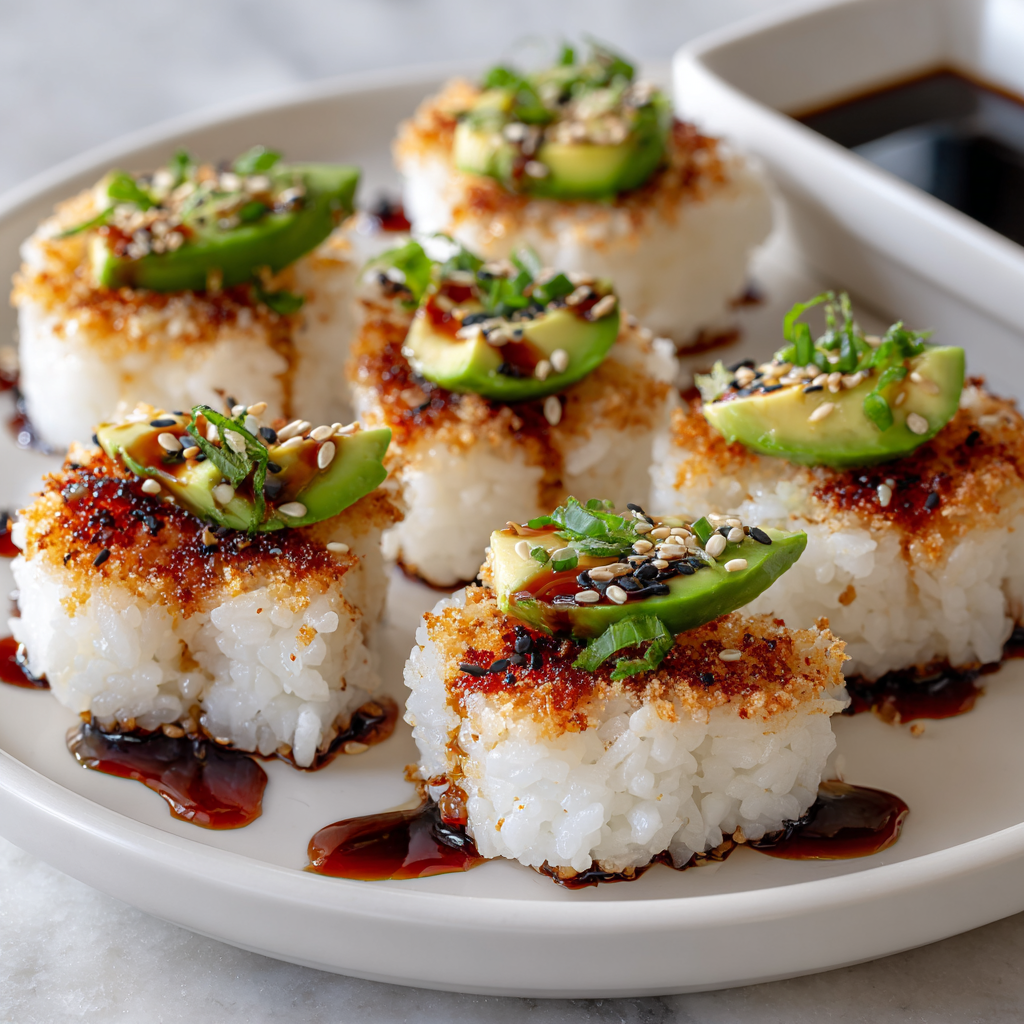
Imagine serving your gameday guests something sophisticated, refreshing, and genuinely unique that transports them to a Japanese izakaya without leaving your living room. These sushi rice bites deliver exactly that kind of culinary magic, combining perfectly seasoned sushi rice with fresh, premium toppings that create an elegant yet incredibly approachable handheld appetizer. Next, what makes this recipe truly special is how it brings the flavors and elegance of sushi to your gameday entertaining spread, offering something completely different from traditional heavy appetizers while maintaining genuine crowd-pleasing appeal. Additionally, these bites come together remarkably quickly once your sushi rice is prepared, requiring minimal cooking skills or special equipment, making them perfect for entertaining when you want impressive results without kitchen stress. Furthermore, the beauty of this recipe lies in its incredible versatility; customize each bite with different toppings to accommodate various guests’ preferences, dietary needs, and flavor desires. Whether you’re looking to impress sophisticated guests, offer something lighter and fresher than typical gameday fare, or discover a new entertaining favorite that brings coastal elegance to your celebration, these sushi rice bites deliver remarkable flavor, visual appeal, and genuine satisfaction.
Ingredients
Makes: 4-6 servings (about 24-30 bites)
For the Sushi Rice
- 2 cups sushi rice (short-grain Japanese rice)
- 2.5 cups water
- 1 piece kombu seaweed (optional but recommended)
- 3 tablespoons rice vinegar
- 2 tablespoons sugar
- 1 teaspoon salt
- 2 tablespoons mirin (sweet rice wine)
For Assembly and Toppings
- Nori sheets (seaweed), cut into small strips
- 1 pound sushi-grade salmon or tuna, diced
- 1 avocado, thinly sliced
- 1 cucumber, thinly sliced or julienned
- 2 tablespoons pickled ginger
- 1 tablespoon wasabi (more or less according to preference)
- 2 sheets nori seaweed, cut into thin strips
- 1 teaspoon sesame seeds (white or black)
- 1 tablespoon fresh cilantro, finely chopped
- 3 green onions, thinly sliced
- 1 teaspoon soy sauce (for drizzling)
- Fresh lemon or lime wedges
For Serving
- Soy sauce in small bowls for dipping
- Pickled ginger
- Wasabi paste in small bowls
- Fresh cilantro sprigs
- Lemon or lime wedges
- Small toothpicks or skewers
Preparation and Cooking Instructions
Preparing Your Sushi Rice
First, rinse your sushi rice thoroughly under cold running water in a fine-mesh strainer, swirling it gently with your fingers until the water runs clear. This step removes excess starch and ensures fluffy, properly textured rice rather than gluey clumps. Next, continue rinsing for approximately three to five minutes until the water is completely clear, which is crucial for perfect sushi rice.
Place your rinsed rice in a rice cooker along with two and one-half cups of water and the kombu seaweed if using. Next, cook according to your rice cooker’s instructions, typically about 15 to 20 minutes. Meanwhile, if you don’t have a rice cooker, place the rice and water in a pot with a tight-fitting lid, bring to a boil, then reduce heat to low and simmer for 15 minutes until all water is absorbed.
Creating Your Rice Seasoning
While your rice cooks, prepare your sushi vinegar seasoning mixture. In a small saucepan, combine your rice vinegar, sugar, salt, and mirin over medium heat. Next, stir gently until the sugar dissolves completely, creating a smooth seasoning sauce. However, avoid letting the mixture boil, as high heat can break down the delicate flavors.
Remove from heat and let the mixture cool to room temperature. Additionally, this cooling step is important because adding hot vinegar to hot rice can create mushy texture rather than the firm, separate grains you desire.
Seasoning Your Rice
Once your rice is cooked, transfer it to a large, shallow bowl or hangiri (traditional wooden sushi bowl) while still hot. Next, pour your cooled vinegar mixture over the rice, beginning to fold it in gently using a wooden rice paddle or spatula, using a cutting and folding motion rather than stirring.
Continue folding gently for approximately three to five minutes until the rice has cooled slightly and the vinegar is evenly distributed. As a result, you’ve created perfectly seasoned sushi rice with individual grains that maintain their structure without becoming sticky or mushy. Furthermore, this folding action creates a light, fluffy texture that’s essential for proper sushi rice.
Let your finished sushi rice cool to room temperature before using it to form your bites. Meanwhile, if you’re in a hurry, you can fan the rice as you fold it to speed up the cooling process.
Forming Your Rice Bites
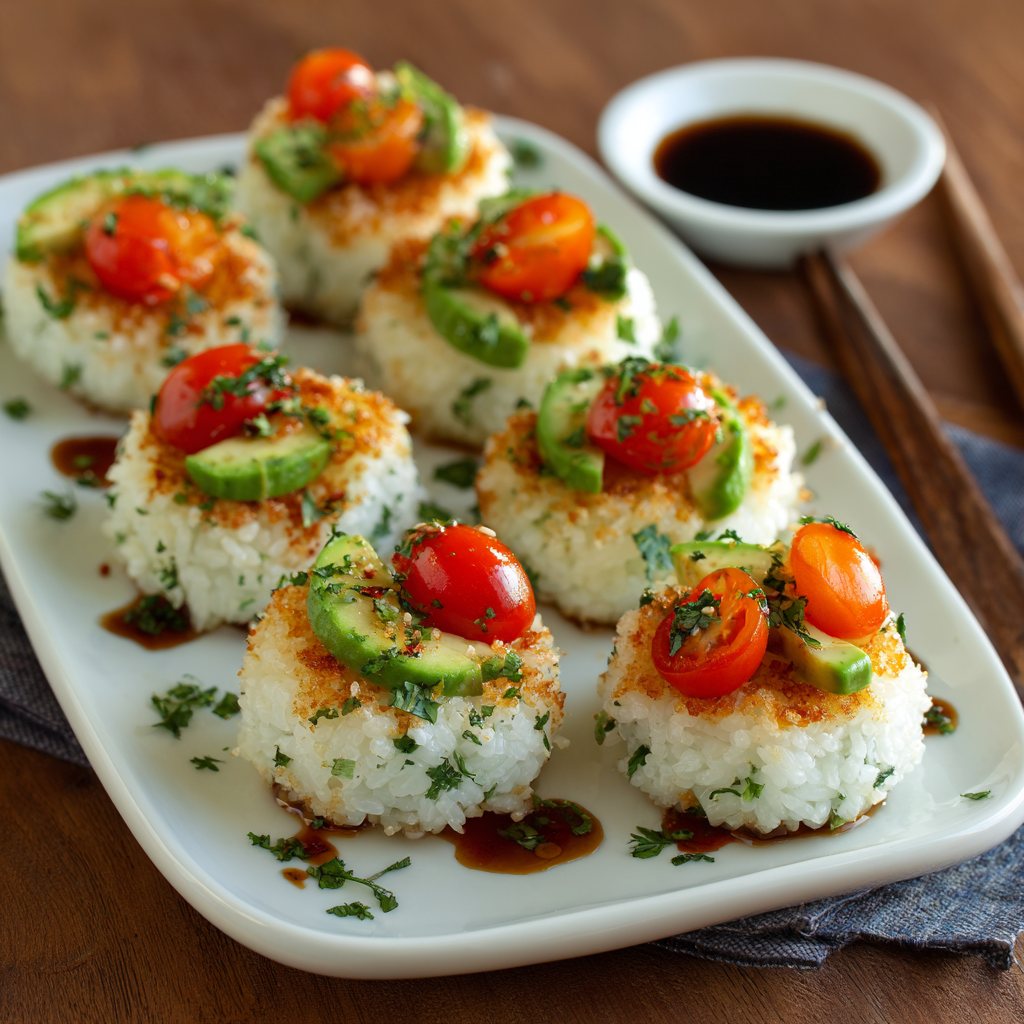
Once your sushi rice has cooled completely, wet your hands slightly with water to prevent sticking. Next, form the rice into small balls approximately the size of a walnut, using about two tablespoons of rice per bite.
Gently press the rice ball between your palms, creating a slightly flattened disc approximately two inches in diameter and one-half inch thick. However, avoid pressing too hard, as this compacts the rice and destroys the fluffy texture you’ve worked to achieve. Instead, use gentle pressure that shapes the rice while maintaining its light structure.
Place your formed rice discs on a platter or baking sheet lined with parchment paper. Next, if you’re working ahead, you can cover them loosely with plastic wrap and refrigerate for up to four hours until you’re ready to top and serve.
Adding Your Toppings
Just before serving, prepare all your fresh toppings and arrange them in small bowls within easy reach. Next, decide on your topping combinations, creating variety across your platter so guests can enjoy different flavor profiles.
For each rice bite, begin by pressing a thin strip of nori around the base of the rice disc, creating an attractive presentation. Afterward, top the rice with your choice of fresh toppings, such as a slice of avocado, a piece of diced sushi-grade fish, or thinly sliced cucumber.
Drizzle with a small amount of soy sauce and add a tiny dab of wasabi if you prefer heat. Meanwhile, sprinkle with sesame seeds and a small amount of fresh cilantro for color and flavor. Furthermore, add thin strips of pickled ginger for brightness and acidity.
Create different topping combinations across your platter to offer variety and visual interest. Next, some bites might feature salmon with avocado, others cucumber with sesame seeds, and still others tuna with pickled ginger. As a result, your platter becomes a beautiful showcase of different flavors and combinations.
Final Presentation
Arrange your finished sushi rice bites on a large, attractive platter or wooden board, creating an eye-catching display that invites guests to grab one or two. Next, position small bowls of soy sauce, wasabi paste, and pickled ginger nearby for dipping and customization.
Garnish your platter with fresh cilantro sprigs, thin strips of nori, and lime or lemon wedges positioned throughout for visual appeal and added brightness. Meanwhile, provide small toothpicks or skewers so guests can easily grab individual bites without using their hands.
Serve immediately while the rice is still at room temperature and the fresh toppings maintain their appealing texture and appearance. Furthermore, these bites are best enjoyed shortly after assembly, though they remain delicious for up to two hours if necessary.
Serving and Storing Tips
Serving Suggestions
Serve these sushi rice bites as an elegant, sophisticated appetizer during your gameday gathering, positioning them on a prominent platter where guests can easily grab them while watching the game. Next, they work beautifully as the centerpiece of a lighter gameday spread alongside fresh fruit, vegetables, and other refreshing options.
Pair them with cold beverages such as sake, Japanese beer, sparkling water with lemon, or crisp white wine for a complete entertaining experience. Additionally, they complement traditional Japanese sides such as edamame or miso soup beautifully if you’re creating a more cohesive Japanese-themed menu.
For gameday entertaining, consider setting up a sushi rice bite bar where guests can build their own combinations with various fresh toppings arranged in small bowls. Meanwhile, this interactive approach adds fun to your entertaining while accommodating various preferences and dietary restrictions.
These bites work equally well as part of a buffet-style spread, an elegant appetizer for more formal entertaining, or a casual family meal. Furthermore, they’re light yet satisfying, making them perfect for guests who want something flavorful without feeling too heavy during an extended gameday event.
Storage Tips
These sushi rice bites are best enjoyed immediately after assembly while the rice maintains its ideal temperature and fresh toppings remain at peak quality. However, you can assemble them up to two hours in advance and refrigerate, though the rice will gradually firm up and become less ideal.
If you’re preparing the rice bites further in advance, form the unseasoned rice bites and refrigerate them for up to four hours, then add toppings just before serving. Next, this approach maintains the texture of both the rice and the fresh toppings while allowing you to prepare ahead.
You can make your sushi rice completely the day before and refrigerate it in an airtight container. Meanwhile, bring it to room temperature before forming and topping your bites, which takes just a few minutes.
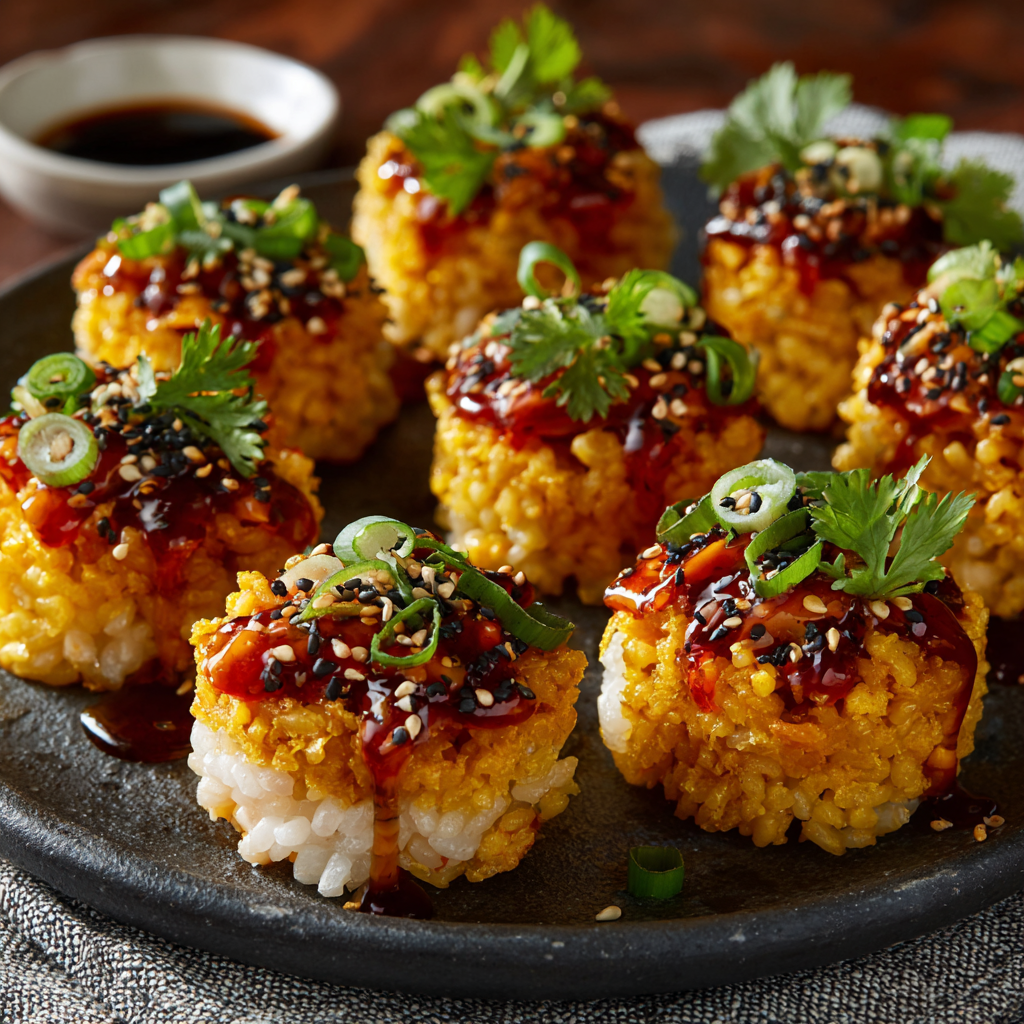
Store any leftover sushi rice in an airtight container in the refrigerator for up to three days. Next, you can reheat it gently in the microwave with a splash of water or use it for sushi rolls, rice bowls, or other applications. Additionally, room-temperature rice from a previous batch works equally well for creating new rice bites with fresh toppings.
Avoid storing the assembled, topped bites for extended periods, as the fresh toppings will begin to deteriorate and the rice will gradually become firm. Instead, store components separately and assemble just before serving for the best overall experience.
Helpful Notes and Tips
Ingredient Substitutions and Variations
If you can’t find sushi rice, short-grain white rice works as a substitute, though it produces slightly different texture. Next, the vinegar seasoning will compensate somewhat for the different rice variety, though traditional sushi rice is definitely recommended for best results.
For a cooked-fish version, use cooked shrimp, crab meat, or grilled salmon instead of raw sushi-grade fish, which makes these bites accessible to those who prefer or need cooked proteins. Additionally, these proteins work equally well and create delicious flavor combinations.
You can customize your toppings completely according to available ingredients and personal preferences. Meanwhile, try mango slices, roasted asparagus, crispy tempura bits, egg (tamago), or spicy mayo for different flavor profiles and textures. Furthermore, different vegetable options such as pickled daikon radish, roasted sweet potato, or steamed broccoli add variety.
For a vegetarian version, focus on fresh vegetable toppings such as cucumber, avocado, pickled ginger, and sesame seeds, creating delicious plant-based combinations. Next, roasted or grilled vegetables such as mushrooms, zucchini, or bell peppers add substance and flavor.
The nori seaweed can be omitted entirely if you prefer, or supplemented with different seaweed options such as arame or wakame for different flavor profiles. Additionally, some cooks skip the seaweed entirely and rely on other toppings for flavor and structure.
Common Mistakes to Avoid
One frequent error is not rinsing the rice thoroughly before cooking, which results in gluey, starchy rice rather than fluffy, separate grains. Instead, rinse for three to five minutes until the water runs completely clear.
Additionally, avoid using hot vinegar mixture on hot rice, which can create mushy texture and prevent proper grain separation. Furthermore, allow your vinegar mixture to cool completely before adding it to the rice for the best texture.
Another common mistake involves using regular white rice instead of sushi rice, which produces different texture and doesn’t achieve the proper firmness for rice bites. Furthermore, sushi rice is readily available in most grocery stores and worth seeking out for authentic results.
Do not use raw fish that isn’t labeled sushi-grade or sashimi-grade, as these grades indicate the fish has been handled properly for raw consumption. Furthermore, always purchase from reputable fishmongers or Asian markets that specialize in sushi-grade fish.
Avoid overfilling your rice bites with toppings, which makes them unstable and difficult to eat. Instead, use a light hand with toppings, allowing the sushi rice to remain the star of the dish with toppings as complementary accents.
Time-Saving Tips
Prepare your sushi rice completely the day before and refrigerate in an airtight container. Next, when you’re ready to serve, bring the rice to room temperature and form into bites, then add fresh toppings just before serving, which takes just a few minutes.
Set up a sushi rice bite bar where you’ve prepared rice bites ahead of time and arranged topping ingredients in small bowls, allowing guests to create their own combinations. Meanwhile, this interactive approach reduces your last-minute work while adding fun to your entertaining.
Purchase pre-prepared sushi rice from Asian markets or high-end grocery stores if you’re short on time, though homemade rice provides superior flavor and quality. Additionally, this shortcut significantly reduces your active cooking time while still delivering impressive results.
Prepare all your topping ingredients in advance, dicing or slicing them into the proper sizes and storing them separately in the refrigerator. Next, when you’re ready to assemble and serve, simply retrieve your pre-prepared components and quickly assemble the bites.
Chef Tips for Success
First, the secret to perfect sushi rice lies in proper rinsing, which removes excess starch and allows individual grains to separate during cooking. Additionally, this rinsing step takes just a few minutes but makes an enormous difference in the final texture and appearance.
Furthermore, using the proper folding and fanning technique while seasoning the rice creates light, fluffy texture that’s essential for authentic sushi rice. Meanwhile, the folding motion combines the vinegar evenly while the gentle handling preserves grain separation.
Next, always use sushi-grade or sashimi-grade fish labeled as such, which indicates it’s been handled properly for raw consumption and is safe to eat raw. Additionally, purchase from reputable sources and keep the fish cold until the moment of use.
For the most impressive presentation, arrange your sushi rice bites on a traditional wooden sushi board or an attractive ceramic platter that showcases the fresh toppings and beautiful colors. Moreover, this presentation elevates the entire entertaining experience.
Frequently Asked Questions
Can I make these sushi rice bites if I don’t have access to sushi-grade fish? Absolutely! Use cooked shrimp, crab meat, grilled salmon, or create a vegetarian version with cucumber, avocado, and sesame seeds instead of raw fish.
What’s the best way to store leftover sushi rice for later use? Store in an airtight container in the refrigerator for up to three days, then use for new rice bites, sushi rolls, rice bowls, or other applications.
Can I make these sushi rice bites completely ahead and refrigerate them until serving? You can refrigerate formed rice bites for up to four hours before adding toppings, which maintains rice texture better than storing assembled bites for extended periods.
How do I serve these bites if I don’t have traditional Japanese serving pieces? Use any attractive platter or wooden board, and serve soy sauce, wasabi, and pickled ginger in small bowls or ramekins for dipping and customization.
Can I make these sushi rice bites without mirin if I don’t have it available? Yes, use a mixture of honey and a touch of extra sugar to replace the mirin, though traditional mirin provides the most authentic flavor and texture.
Final Thoughts
These game day sushi rice bites represent a sophisticated, elegant departure from traditional heavy gameday fare, proving that entertaining can be both impressive and genuinely refreshing without sacrifice. Next, they demonstrate how quality ingredients prepared with proper technique create memorable eating experiences that guests genuinely appreciate and crave.
Furthermore, the combination of perfectly seasoned sushi rice with fresh, premium toppings creates a balanced, satisfying dish that appeals to diverse palates and preferences. The next time you’re hosting a gameday gathering and want to offer something that stands out from typical spreads, remember that these sushi rice bites deliver everything you need: incredible flavor, elegant presentation, customizable toppings, and the kind of sophisticated simplicity that elevates your entire entertaining experience.
So gather your ingredients, prepare your sushi rice with care, and get ready to become the hero of your event with a beautiful platter of these irresistible, fresh, absolutely unforgettable game day sushi rice bites.
Did you love this recipe? If Game Day Sushi Rice Bites has become your new go-to entertaining dish, please save this recipe, pin it to your Pinterest board, and share it with friends and family who would love it! Your support means everything to us and helps us create more delicious recipes that bring people together. Thank you for cooking with us!