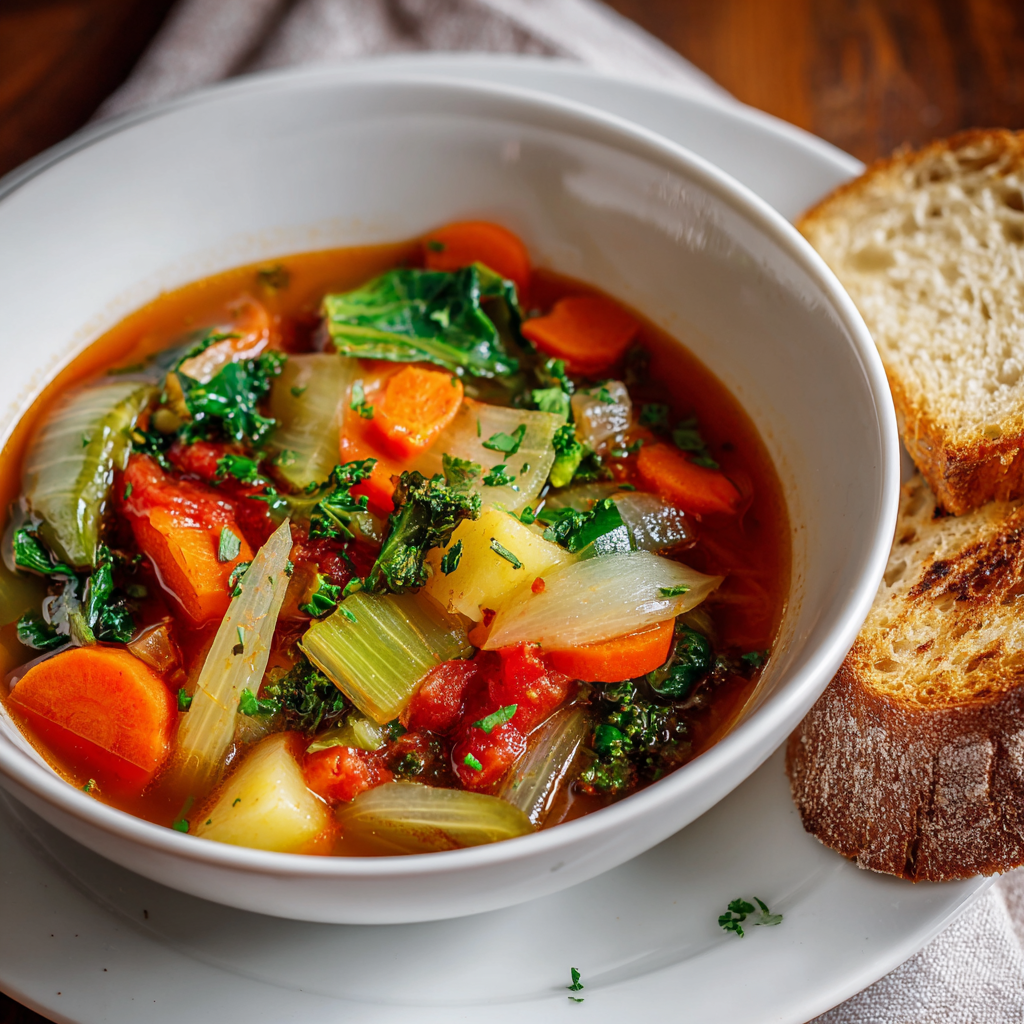
There’s something deeply comforting about a bowl of wholesome vegetable soup that warms you from the inside out. This recipe brings together fresh, colorful vegetables in a flavorful broth that nourishes your body while delighting your taste buds. Perfect for busy weeknights or meal prep Sundays, this soup comes together in under an hour with minimal effort. Whether you’re looking to boost your vegetable intake, need a light yet satisfying meal, or simply crave something wholesome and delicious, this recipe delivers on all fronts. The beauty lies in its simplicity—no complicated techniques, just honest ingredients transformed into something truly special. Best of all, it tastes even better the next day, making it an ideal make-ahead option.
Ingredients
This recipe makes 6 generous servings.
- 2 tablespoons olive oil
- 1 large onion, diced
- 3 cloves garlic, minced
- 3 medium carrots, peeled and sliced
- 2 celery stalks, chopped
- 1 medium zucchini, diced
- 1 cup green beans, trimmed and cut into 1-inch pieces
- 1 can (14.5 ounces) diced tomatoes
- 6 cups vegetable broth
- 2 cups chopped kale or spinach
- 1 teaspoon dried thyme
- 1 teaspoon dried oregano
- 1 bay leaf
- 1 teaspoon salt
- ½ teaspoon black pepper
- ½ teaspoon paprika
- 1 cup corn kernels (fresh or frozen)
- Juice of ½ lemon
Step-by-Step Instructions
- Heat the olive oil in a large pot or Dutch oven over medium heat until shimmering.
- Add the diced onion and sauté for 5 minutes, stirring occasionally, until softened and translucent.
- Stir in the minced garlic and cook for another minute until fragrant.
- Add the carrots and celery, then cook for 5 minutes, stirring frequently to prevent sticking.
- Pour in the vegetable broth and diced tomatoes with their juices, stirring to combine.
- Add the thyme, oregano, bay leaf, salt, pepper, and paprika, mixing everything together thoroughly.
- Bring the mixture to a boil over high heat, then reduce to a gentle simmer.
- Cover the pot partially and let the soup simmer for 15 minutes, allowing the flavors to meld.
- Add the zucchini and green beans, then continue simmering for another 10 minutes.
- Stir in the corn and chopped kale, cooking for an additional 5 minutes until the greens wilt.
- Remove the bay leaf and discard it carefully.
- Squeeze in the fresh lemon juice, stirring well to brighten all the flavors.
- Taste and adjust the seasoning with additional salt and pepper if needed.
- Ladle the hot soup into bowls and serve immediately.
Serving and Storing Tips
Serving Tips
Serve this vibrant soup with crusty whole-grain bread or garlic toast for a complete meal. Additionally, you can sprinkle freshly grated Parmesan cheese or nutritional yeast on top for added depth. For a heartier version, consider adding cooked chickpeas, white beans, or lentils directly into the bowl. This soup also pairs beautifully with a fresh green salad dressed with lemon vinaigrette. Furthermore, it makes an excellent starter for dinner parties or family gatherings when served in smaller portions. During colder months, top each bowl with a dollop of pesto or a drizzle of high-quality olive oil for extra richness.
Storage Tips
Store leftover soup in an airtight container in the refrigerator for up to 5 days. In fact, the flavors continue to develop and deepen as the soup sits, making leftovers even more delicious. For longer storage, freeze the soup in portion-sized containers for up to 3 months. However, keep in mind that some vegetables may soften slightly after freezing and thawing. To reheat, simply warm the soup on the stovetop over medium heat, stirring occasionally, or microwave individual portions in 2-minute intervals. If the soup becomes too thick after refrigeration, add a splash of vegetable broth or water to reach your desired consistency.
Helpful Notes
Feel free to customize this recipe based on what vegetables you have on hand. For instance, diced potatoes, bell peppers, butternut squash, or cauliflower work wonderfully in this soup. Meanwhile, if you prefer a thicker texture, mash some of the cooked vegetables against the side of the pot or blend a portion of the soup before serving. Fresh herbs like parsley, basil, or dill make excellent garnishes that add brightness and color. Moreover, you can easily transform this into a minestrone-style soup by adding small pasta shapes during the last 10 minutes of cooking.
To save time during busy weeknights, chop all your vegetables the night before and store them in the refrigerator. This simple prep step cuts your active cooking time significantly. Additionally, using pre-washed, pre-chopped vegetables from the grocery store can streamline the process even further. If you’re watching your sodium intake, opt for low-sodium vegetable broth and adjust the salt to taste at the end. Conversely, for a richer flavor profile, sauté the vegetables in butter instead of olive oil or add a Parmesan rind to the simmering soup.
One common mistake is overcooking the vegetables, which can result in mushy, unappetizing textures. To avoid this, add quicker-cooking vegetables like zucchini and greens toward the end of the cooking time. Another tip is to cut your vegetables uniformly so they cook at the same rate. Furthermore, don’t skip the lemon juice at the end—it truly brightens the entire dish and balances the earthiness of the vegetables.
Chef Tips
For restaurant-quality depth of flavor, roast half of your vegetables in the oven before adding them to the soup. Simply toss carrots, zucchini, and tomatoes with olive oil, spread them on a baking sheet, and roast at 425°F for 20 minutes. Afterward, add these caramelized vegetables to your soup for a subtle sweetness and complexity that elevates the entire dish.
Another professional trick involves building layers of flavor by deglazing the pot. After sautéing your aromatics, pour in a splash of white wine or sherry and scrape up any browned bits from the bottom of the pot. This technique adds incredible depth and ensures nothing delicious goes to waste.
Why This Recipe Works
The combination of aromatics, fresh vegetables, and herbs creates a symphony of flavors that satisfies without overwhelming. First, the base of sautéed onions and garlic provides a savory foundation that infuses every spoonful with warmth. Next, the variety of vegetables ensures each bite offers different textures and tastes, keeping the experience interesting from start to finish. Meanwhile, the herbs and spices add complexity without requiring exotic ingredients or advanced techniques.
From a nutritional standpoint, this soup delivers an impressive array of vitamins, minerals, and fiber. The colorful vegetables provide antioxidants that support overall health and wellbeing. Furthermore, the low calorie count combined with high fiber content makes this soup incredibly filling and satisfying. As a result, it’s an excellent choice for anyone looking to maintain a balanced diet without sacrificing flavor or satisfaction.
Making It Your Own
One of the best aspects of this recipe is its adaptability to different dietary preferences and restrictions. For vegans, the recipe already fits perfectly without any modifications. However, vegetarians might enjoy adding a sprinkle of cheese or a swirl of cream at the end. Similarly, those following a gluten-free diet can enjoy this soup worry-free, as it naturally contains no gluten-containing ingredients.
To increase the protein content, consider stirring in cooked quinoa, barley, or farro during the last few minutes of cooking. Alternatively, white beans or chickpeas not only add protein but also create a more substantial, meal-worthy soup. For meat lovers, diced cooked chicken or turkey can be added right before serving, transforming this vegetable soup into a heartier main course.

Seasonal variations keep this recipe exciting year-round. During summer months, swap in fresh corn cut straight from the cob, ripe tomatoes, and tender summer squash. In contrast, fall and winter versions might feature butternut squash, sweet potatoes, and hearty greens like Swiss chard. Consequently, you’ll never tire of this versatile recipe because it changes with the seasons.
The Comfort Factor
Beyond nutrition and convenience, there’s an intangible comfort that comes from homemade soup. The aroma that fills your kitchen as this soup simmers creates an inviting atmosphere that welcomes everyone home. Moreover, knowing exactly what ingredients go into your food provides peace of mind that’s hard to find with store-bought alternatives. This transparency allows you to control the sodium, avoid preservatives, and ensure the highest quality ingredients nourish your family.
Sharing a pot of homemade soup also brings people together. Whether you’re serving it to family around the dinner table, bringing it to a sick friend, or meal prepping for the week ahead, soup represents care and thoughtfulness. In many ways, taking the time to make soup from scratch is an act of self-care and love for those you feed.
Budget-Friendly and Sustainable
This recipe proves that eating healthy doesn’t require expensive specialty ingredients or a large grocery budget. Most of the vegetables called for are affordable staples available at any supermarket. Furthermore, this soup provides an excellent opportunity to use up vegetables lingering in your crisper drawer before they spoil. As a result, you reduce food waste while creating something delicious and nutritious.
Buying vegetables in season typically offers the best prices and peak flavor. Local farmers’ markets often provide fresh, high-quality produce at competitive prices while supporting your community. Additionally, frozen vegetables work beautifully in this recipe and are often more affordable than fresh options, especially during off-seasons. Since frozen vegetables are processed at peak ripeness, they retain their nutritional value remarkably well.
Frequently Asked Questions
Can I use chicken broth instead of vegetable broth? Absolutely, chicken broth works perfectly and adds a slightly richer flavor, though it will no longer be vegetarian.
How can I make this soup spicier? Add red pepper flakes, diced jalapeños, or a dash of hot sauce when sautéing the aromatics for a pleasant kick.
Can I make this in a slow cooker? Yes, combine all ingredients except the greens and lemon juice in your slow cooker, cook on low for 6-8 hours, then add greens and lemon before serving.
What if I don’t have fresh vegetables? Frozen mixed vegetables work wonderfully as a time-saving alternative, simply add them during the last 10 minutes of cooking.
Is this soup freezer-friendly? Definitely, portion it into freezer-safe containers leaving some headspace for expansion, and it will keep beautifully for up to 3 months.
Did you love this healthy vegetable soup recipe? If so, please save it to your favorite recipe collection, pin it to Pinterest, and share it with friends and family who might enjoy it too! Your support and feedback encourage us to keep creating and sharing wholesome, delicious recipes that make home cooking easier and more enjoyable. We’d love to hear how your soup turned out, so feel free to leave a comment below sharing your experience or any creative variations you tried. Happy cooking!