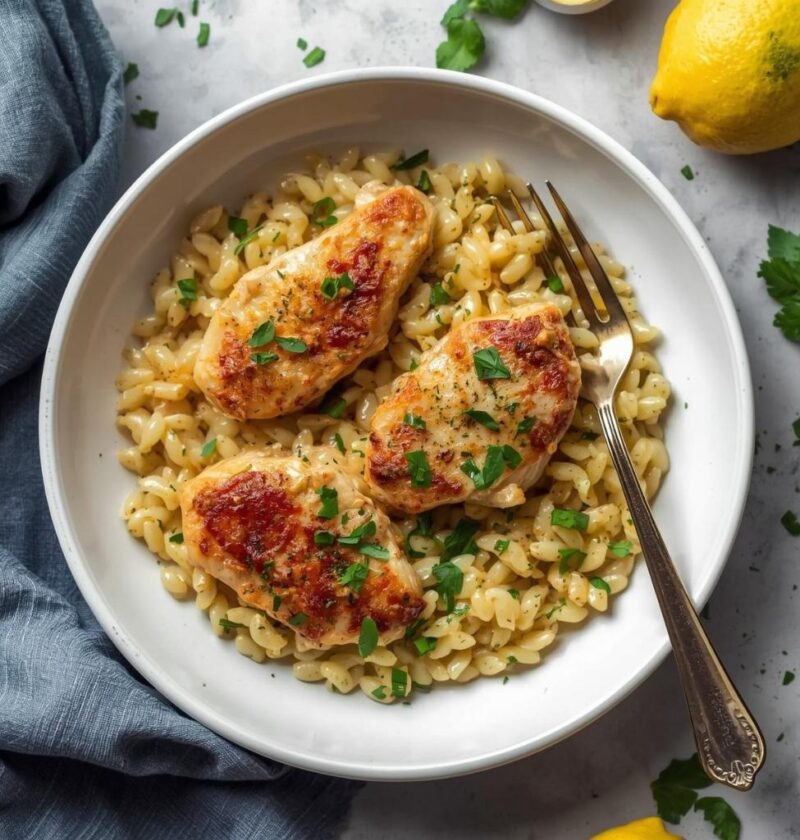
There’s something utterly magical about the bright, zesty combination of lemon and chicken perfectly married with tender pasta in a single, elegant dish. This Mediterranean-inspired masterpiece brings restaurant-quality sophistication to your home kitchen without requiring advanced culinary skills or hard-to-find ingredients. Imagine biting into succulent chicken infused with sunny lemon flavors, nestled among creamy, tender orzo pasta that clings beautifully to every drop of the silky sauce. The beauty of this recipe lies in its remarkable balance: bright citrus notes prevent the dish from becoming heavy, while the tender chicken and pasta make it utterly satisfying and comforting. What makes lemon chicken orzo truly special is how quickly it comes together in approximately thirty-five minutes, perfect for weeknight dinners when you’re craving something that feels special yet manageable. Whether you’re cooking for yourself, feeding a bustling family, or hosting dinner guests who will be absolutely wowed, this dish delivers impressive results that taste homemade and genuine. Best of all, the combination of fresh lemon, aromatic garlic, and simple herbs creates a timeless flavor profile that never goes out of style.
Ingredients
This recipe makes 4 servings.
- 1.25 pounds boneless, skinless chicken breasts, cut into bite-sized pieces
- 2 tablespoons olive oil
- 4 cloves garlic, minced
- 1 medium onion, diced
- 2 cups orzo pasta
- 4 cups chicken broth
- 1/2 cup dry white wine or additional chicken broth
- 1/4 cup fresh lemon juice
- Zest of 2 lemons
- 1 teaspoon salt
- 1/2 teaspoon black pepper
- 1/2 teaspoon garlic powder
- 1 teaspoon dried Italian herbs
- 1/4 teaspoon red pepper flakes (optional)
- 3 tablespoons butter
- 1/2 cup heavy cream or Greek yogurt
- 1 cup fresh spinach
- 1/2 cup grated Parmesan cheese
- 1/4 cup fresh parsley, chopped
- 2 tablespoons fresh basil, chopped (or 1 teaspoon dried)
- Cherry tomatoes for garnish (optional)
- Lemon slices for serving
Step-by-Step Instructions
Preparing Your Ingredients and Seasoning
- Begin by patting the chicken pieces completely dry with paper towels, which promotes excellent browning and develops deeper, richer flavors.
- Mince the garlic finely and set it aside in a small bowl, keeping it separate so you can control when it’s added during cooking.
- Dice the onion into small, uniform pieces about half an inch in size, ensuring even cooking throughout the dish.
- Zest both lemons using a microplane or fine grater, collecting the aromatic yellow portion without the bitter white pith underneath.
- Juice the lemons into a small bowl, straining out seeds, and have it ready for when the recipe calls for fresh lemon juice.
- Combine salt, black pepper, garlic powder, dried Italian herbs, and red pepper flakes in a small bowl if using.
- Have all ingredients measured and arranged before you begin cooking, as everything moves quite quickly once you start.
Browning the Chicken
- Heat the olive oil in a large, deep skillet or Dutch oven over medium-high heat until it shimmers and becomes fragrant.
- Working in batches to avoid overcrowding, add the chicken pieces to the hot oil in a single layer.
- Allow the chicken to cook undisturbed for two to three minutes on the first side, developing a golden-brown exterior.
- Flip the pieces carefully and cook for an additional two to three minutes on the second side until lightly browned.
- Once all chicken has been browned, transfer it to a clean plate and set it aside temporarily for later use.
- The chicken doesn’t need to be fully cooked at this stage; it will finish cooking when everything comes together.
Building the Aromatic Base
- Add the diced onion to the same skillet, which still contains flavorful browned bits from the chicken.
- Stir the onion occasionally for about two minutes until it becomes softened and just begins turning translucent.
- Add the minced garlic to the skillet, cooking for just thirty seconds while stirring constantly to prevent it from burning.
- The garlic should become incredibly fragrant without taking on any brown color, which would make it taste bitter.
Adding Pasta and Liquid
- Pour the dry orzo pasta directly into the skillet with the onions and garlic, stirring constantly for about one minute.
- This toasting step develops the orzo’s nutty flavor and helps prevent it from becoming mushy during cooking.
- Carefully add the chicken broth to the skillet, stirring to combine everything and release any stuck browned bits.
- If using white wine, add it now along with most of the lemon juice, reserving a tablespoon for finishing.
- Return the browned chicken pieces to the skillet, nestle them among the pasta, and stir gently.
- Bring everything to a gentle simmer over medium-high heat, then reduce the heat to medium-low.
- Simmer uncovered for about fifteen to eighteen minutes, stirring occasionally to prevent sticking and ensure even cooking.
Final Touches and Finishing
- After fifteen minutes, check the pasta for doneness by tasting a piece; it should be tender but still have slight texture.
- Meanwhile, check that the chicken is fully cooked through by cutting into the thickest piece; no pink should remain inside.
- If the pasta needs more time, continue simmering for an additional minute or two, checking frequently to avoid overcooking.
- Once the pasta reaches your desired tenderness and chicken is cooked through, reduce heat to low.
- Stir in the butter pieces, allowing them to melt completely and coat the pasta and chicken beautifully.
- Add the lemon zest that you collected earlier, stirring gently to distribute it throughout the dish.
- Slowly pour in the heavy cream or Greek yogurt, stirring gently to create a silky, luxurious sauce.
- Add the fresh spinach in batches, stirring until each addition wilts completely before adding more.
- Once all spinach has wilted into the creamy sauce, taste the dish and adjust seasonings as needed.
- Add the reserved tablespoon of lemon juice for brightness, tasting again to ensure the flavors are balanced perfectly.
- Sprinkle the grated Parmesan cheese into the skillet, stirring gently to incorporate it without overdoing it.
- Remove the skillet from heat and taste one final time, adding more salt, pepper, or lemon juice as desired.
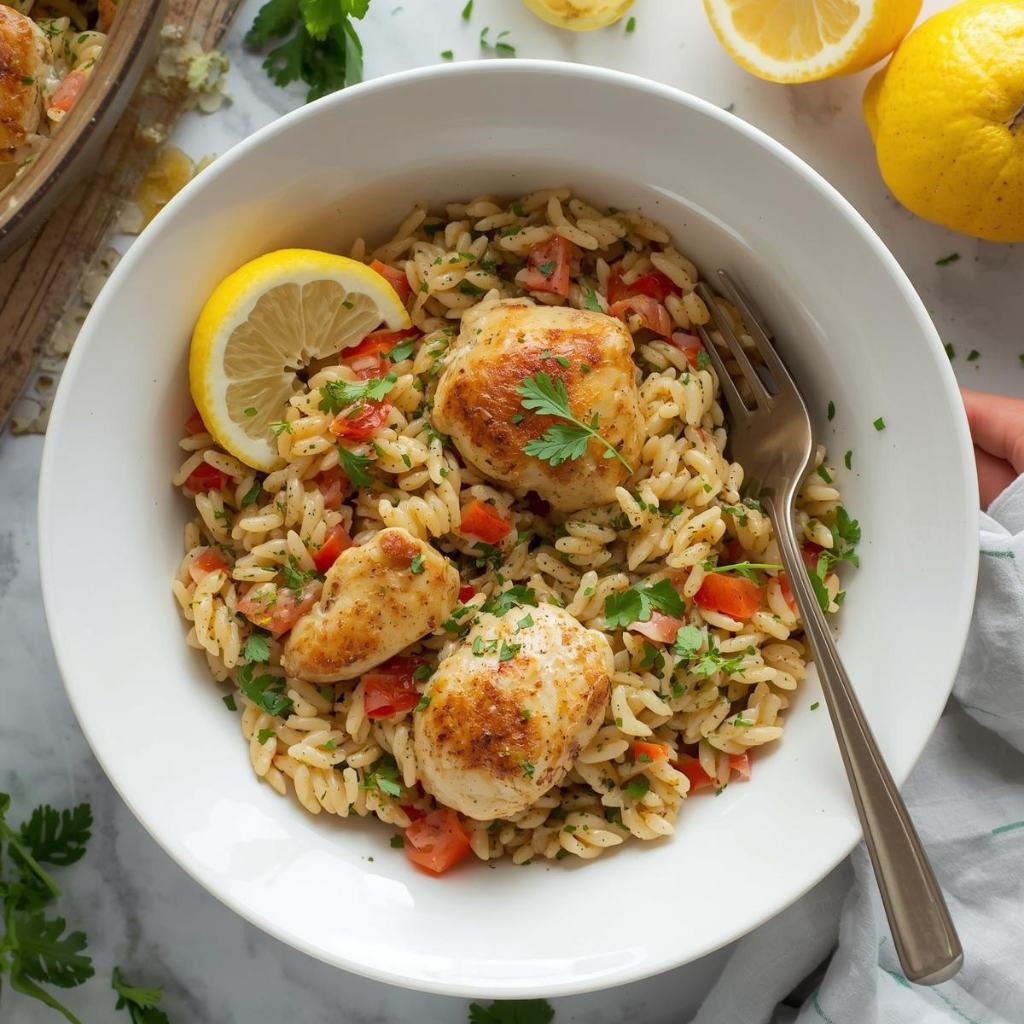
- Garnish generously with fresh parsley and chopped basil, adding brightness and fresh flavor.
- If desired, scatter halved cherry tomatoes on top for color and a burst of acidity that complements the lemon beautifully.
Serving and Storing Tips
Serving Suggestions
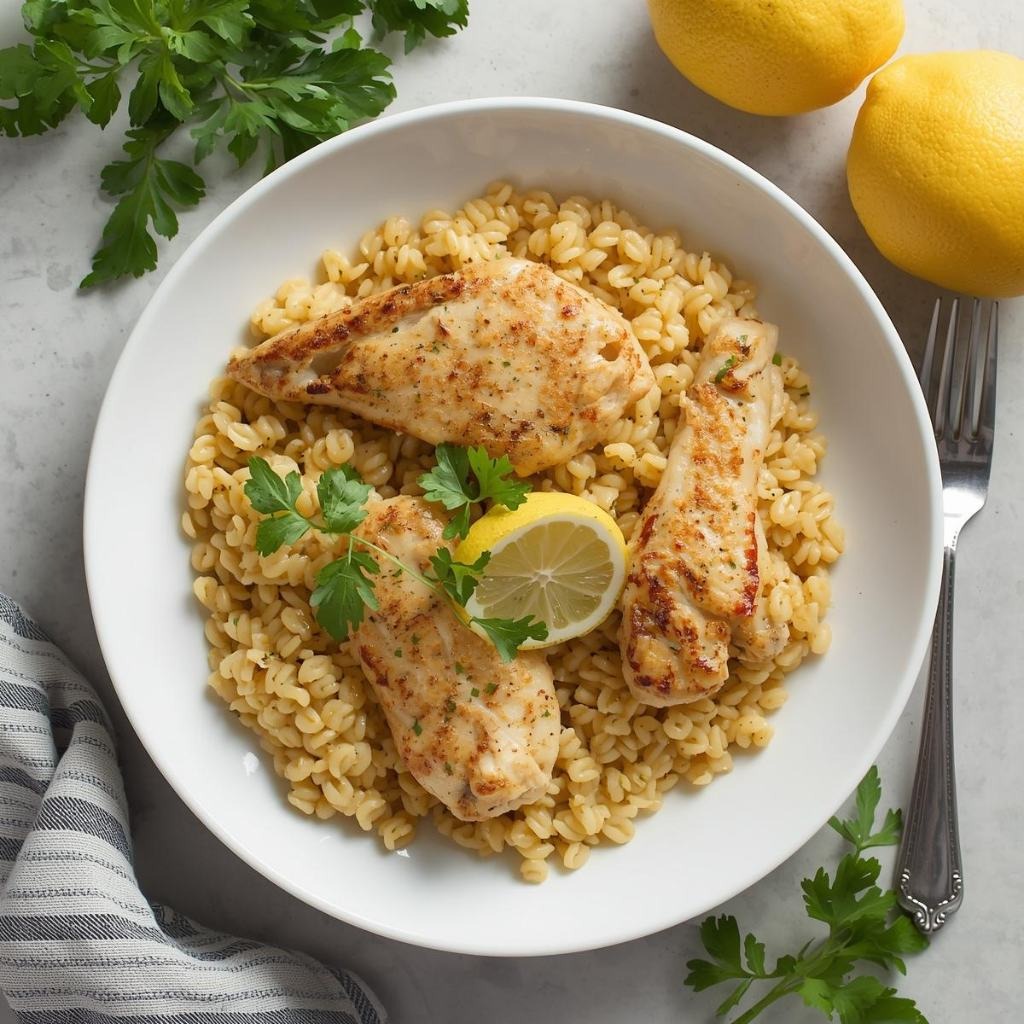
This lemon chicken orzo reaches its absolute peak when served immediately from the skillet while the sauce remains silky and the pasta stays tender. Serve directly from the pot for a casual, family-style presentation that feels warm and inviting. Accompany with crusty bread for soaking up every last drop of the lemony, creamy sauce that coats the pasta. A simple green salad with light vinaigrette provides refreshing crispness that perfectly balances the richness of the creamy dish. Fresh lemon slices arranged on the side allow guests to add extra citrus brightness if they desire. For a more elegant presentation, divide among individual shallow bowls and drizzle with quality olive oil, adding visual appeal and luxurious flavor.
Storage and Reheating
Leftover lemon chicken orzo keeps in the refrigerator for up to three days when stored in airtight containers. The flavors meld beautifully overnight, making this recipe excellent for meal prep and planned leftovers. To reheat, transfer the dish to a pot and warm gently over medium-low heat, stirring occasionally and adding a splash of broth or cream if the sauce seems too thick. Alternatively, microwave individual portions in a covered container for two to three minutes, stirring halfway through. Do not freeze this dish, as the cream-based sauce and tender pasta do not hold up well to freezing and thawing. However, you can freeze the cooked chicken and broth separately, then prepare fresh orzo and sauce when ready to enjoy.
Helpful Notes
First, using fresh lemon juice rather than bottled makes an enormous difference in the final flavor profile; the bright, pure taste of fresh juice cannot be replicated by shelf-stable alternatives. Additionally, the white wine adds a subtle depth that enhances the lemon flavors, but chicken broth works perfectly if you prefer not to cook with alcohol. However, if you do use wine, make sure it’s something you’d actually drink; inexpensive cooking wine often contains additives that negatively impact flavor. Feel free to substitute the heavy cream with Greek yogurt, sour cream, or even half-and-half if you prefer a lighter sauce. Meanwhile, vegetarians can replace the chicken with chickpeas, white beans, or crumbled tofu seasoned with the same spice blend for equally delicious results. The type of orzo you choose matters; risoni-style orzo creates a creamier final dish, while larger pearls of barley-shaped pasta maintain more distinct texture. As a result, choose based on your texture preference. A common mistake involves cooking the pasta too long, resulting in mushy, overcooked texture that falls apart. Instead, aim for tender but still slightly firm pasta that maintains its shape throughout the dish. Another helpful tip involves adding the spinach near the end rather than at the beginning; this preserves its vibrant color and fresh flavor rather than creating a dull, tired appearance. Additionally, grating fresh Parmesan just before adding ensures optimal flavor and prevents clumping, which sometimes occurs with pre-grated versions.
Chef Tips
The secret to silky, restaurant-quality sauce lies in keeping the heat low when adding cream and cheese; high heat can cause the cream to break, resulting in a grainy, unpleasant texture rather than smooth, luxurious creaminess.
Additionally, always finish with acid in the form of fresh lemon juice; this brightens every element of the dish, cutting through the richness of the cream and elevating the entire creation to extraordinary levels.
Frequently Asked Questions
Can I make this recipe without wine? Absolutely! Simply use an additional half cup of chicken broth instead of wine. The dish will be slightly less complex but still delicious and deeply flavorful.
What if I don’t have fresh lemon juice available? While fresh juice provides superior flavor, bottled lemon juice works in a pinch, though you’ll want to increase the amount slightly as its flavor is less bright. However, try to use fresh when possible.
Can I substitute the orzo with a different pasta? Yes, small pasta shapes like ditalini, pastina, or even small shells work wonderfully. Avoid long pasta shapes like spaghetti, which don’t absorb the creamy sauce as beautifully.
Is this recipe suitable for meal prepping? Yes, it stores beautifully in the refrigerator for three days. Reheat gently on the stovetop with a splash of broth, which helps restore the creamy sauce to its original silky consistency.
How can I make this recipe dairy-free? Replace the butter with olive oil, use dairy-free cream or coconut milk instead of heavy cream, and omit the Parmesan or substitute with nutritional yeast for a cheesy flavor.
If you loved this recipe for Lemon Chicken Orzo, we’d be absolutely thrilled if you’d save it to your favorite recipe collection, pin it to your Pinterest board, or share it with a friend who needs an elegant yet easy weeknight dinner solution. Your support means the world and helps us continue creating delicious, accessible recipes that bring joy to your kitchen and dining table! Please let us know in the comments below what you thought of this Mediterranean beauty or share any creative variations you’ve made to make it your own. We can’t wait to hear how this recipe becomes a favorite in your home and inspires your next dinner party!