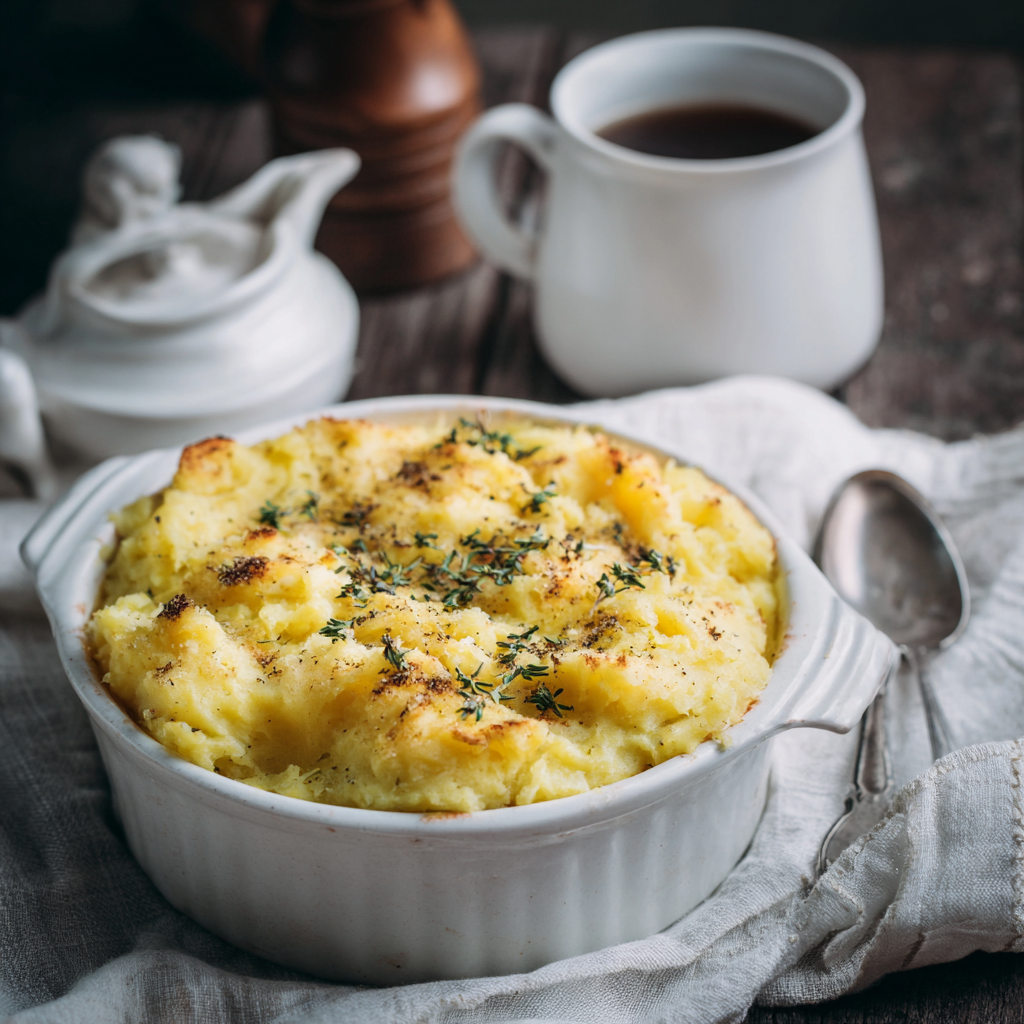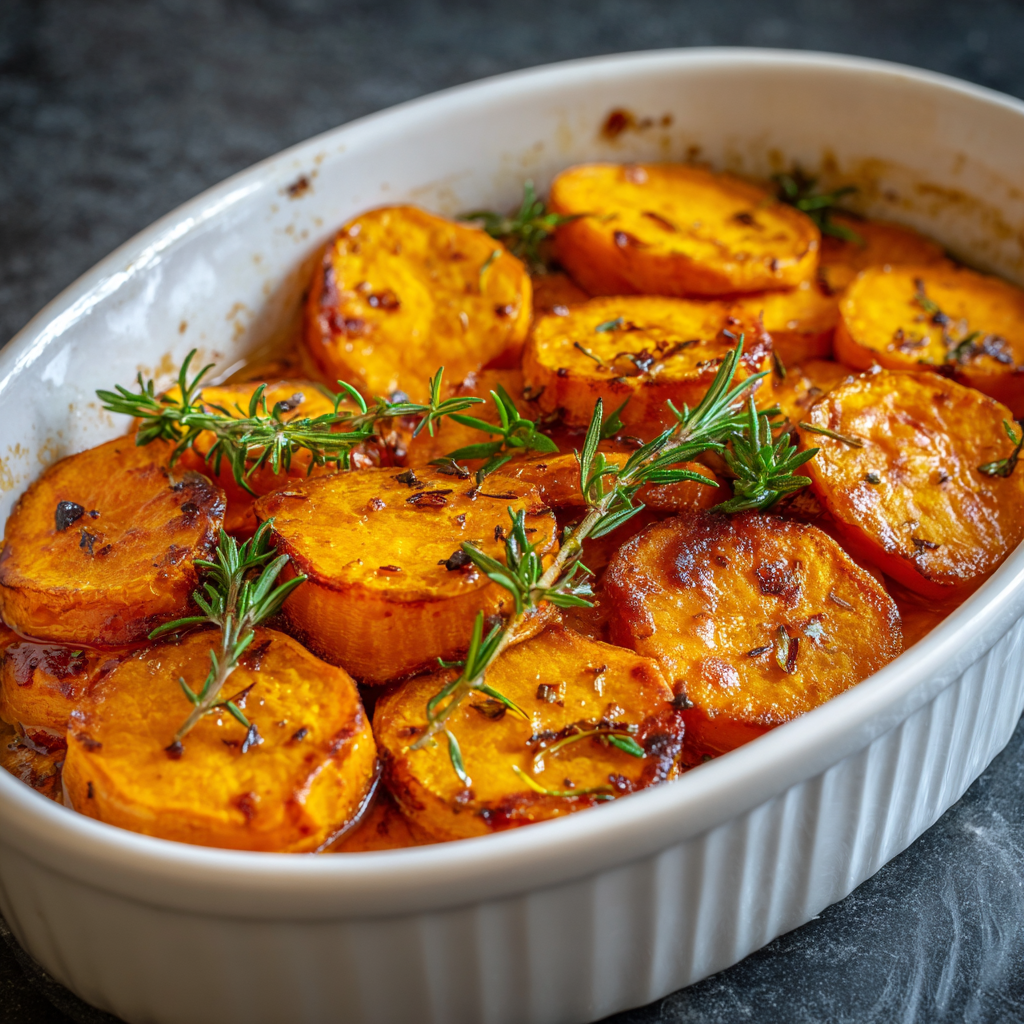
When January rolls around and you’re seeking nourishing foods that feel both comforting and wholesome, these roasted sweet potatoes deliver natural sweetness and satisfying texture that make healthy eating feel like pure pleasure. Golden-brown edges meet tender, creamy interiors in every bite, creating a side dish that’s simple enough for weeknight dinners yet impressive enough for special occasions. What makes this recipe particularly wonderful is how it transforms humble sweet potatoes into something extraordinary using just a handful of basic ingredients and one simple roasting technique that anyone can master. The high-heat roasting caramelizes the natural sugars, intensifying the sweetness while creating those irresistible crispy edges that make it impossible to stop at just one piece. Whether you’re looking for a nutrient-dense side dish to complement your meals, a satisfying base for Buddha bowls, or simply a delicious way to eat more vegetables, these roasted sweet potatoes check every box while supporting your wellness intentions for the year ahead.
Ingredients
This recipe makes 4 servings.
- 2 pounds sweet potatoes (about 3 large), peeled and cut into 1-inch cubes
- 2 tablespoons olive oil
- 1 teaspoon garlic powder
- 1/2 teaspoon smoked paprika
- 1/2 teaspoon ground cinnamon
- 1/2 teaspoon salt
- 1/4 teaspoon black pepper
- 1/4 teaspoon cayenne pepper (optional)
- Fresh thyme leaves for garnish (optional)
- Flaky sea salt for finishing (optional)
Instructions
- Preheat your oven to 425°F and position the rack in the center for optimal heat circulation.
- Line a large baking sheet with parchment paper or lightly grease it with cooking spray to prevent sticking.
- Peel the sweet potatoes using a vegetable peeler, removing all the skin for uniform texture and appearance.
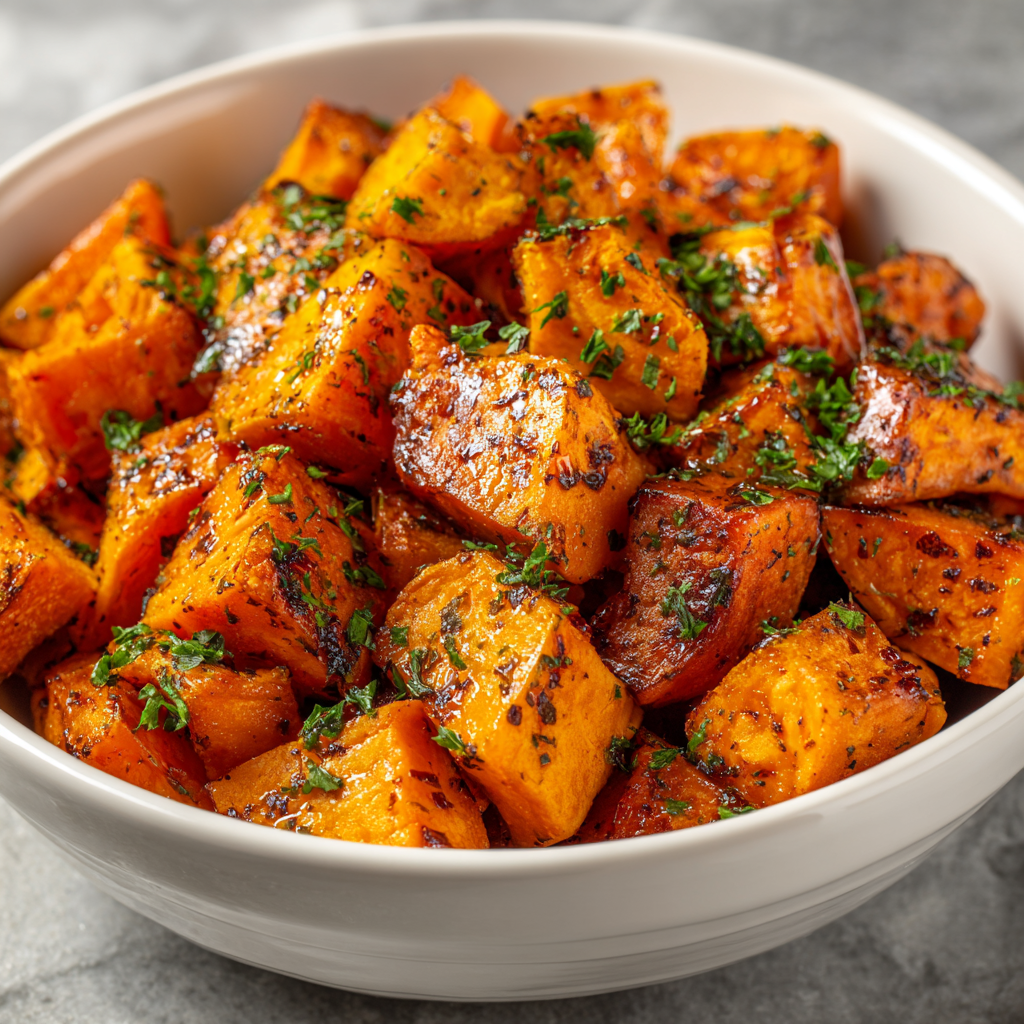
- Cut the peeled sweet potatoes into uniform 1-inch cubes, keeping pieces as similar in size as possible for even cooking.
- Place the cubed sweet potatoes in a large mixing bowl, ensuring there’s enough room to toss them thoroughly.
- Drizzle the olive oil over the sweet potato cubes, making sure to distribute it evenly across all pieces.
- Sprinkle the garlic powder, smoked paprika, cinnamon, salt, black pepper, and cayenne if using over the sweet potatoes.
- Toss everything together using your hands or a large spoon until every cube is evenly coated with oil and seasonings.
- Spread the seasoned sweet potato cubes in a single layer on the prepared baking sheet, making sure pieces aren’t touching or overlapping.
- Roast in the preheated oven for 15 minutes without disturbing them, allowing the bottoms to develop golden-brown caramelization.
- Remove the baking sheet from the oven and carefully flip each sweet potato cube using a spatula to expose new surfaces.
- Return the pan to the oven and continue roasting for another 15 to 20 minutes until the sweet potatoes are tender inside and crispy on the edges.
- Check for doneness by piercing a cube with a fork—it should slide in easily while the exterior remains slightly firm and caramelized.
- Remove the roasted sweet potatoes from the oven and let them rest on the baking sheet for 2 minutes to allow the exterior to crisp further.
- Transfer the sweet potatoes to a serving dish using a spatula, scraping up any caramelized bits stuck to the parchment.
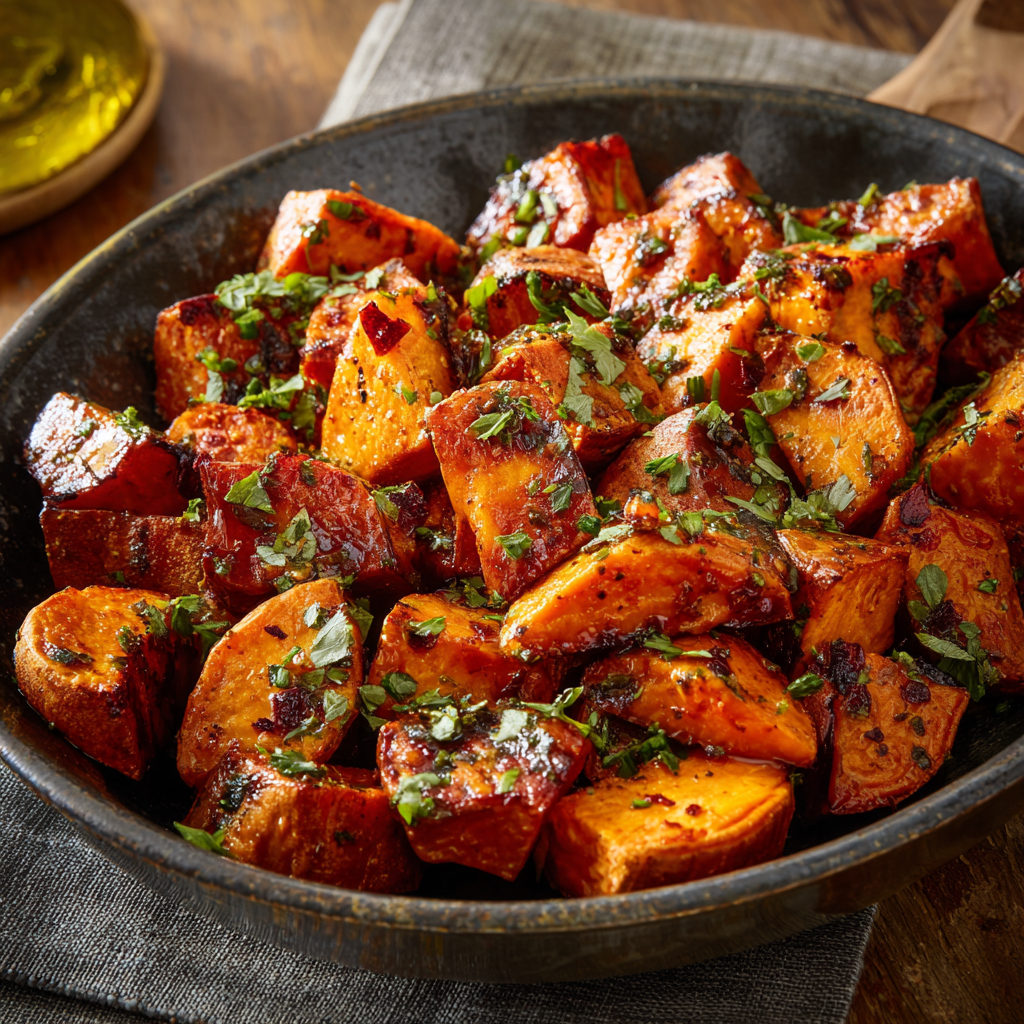
- Garnish with fresh thyme leaves and a sprinkle of flaky sea salt if desired before serving immediately while still hot and crispy.
Understanding Sweet Potato Nutrition
Sweet potatoes rank among the most nutritious vegetables available, providing exceptional amounts of vitamins, minerals, and fiber while remaining relatively low in calories. One medium sweet potato contains over 400% of your daily vitamin A requirement in the form of beta-carotene, which supports eye health, immune function, and skin vitality. Additionally, sweet potatoes provide vitamin C, potassium, manganese, and B vitamins that contribute to energy production and overall wellness.
The complex carbohydrates in sweet potatoes digest more slowly than refined starches, providing sustained energy without the blood sugar spikes associated with processed foods. Furthermore, the fiber content—about 4 grams per medium potato—supports digestive health and creates lasting fullness that helps prevent overeating at subsequent meals. This combination makes sweet potatoes an excellent choice for those managing weight or blood sugar levels while still wanting satisfying, substantial food.
Unlike white potatoes, sweet potatoes contain unique antioxidant compounds including anthocyanins (especially in purple varieties) and chlorogenic acid that provide anti-inflammatory benefits. These compounds may help reduce oxidative stress and support cardiovascular health when consumed as part of a balanced diet. Consequently, incorporating roasted sweet potatoes into your regular meal rotation contributes significantly to your overall nutritional intake while tasting absolutely delicious.
Achieving Perfect Caramelization
High-heat roasting at 425°F creates the ideal environment for caramelizing the natural sugars in sweet potatoes while cooking the interior to creamy tenderness. Lower temperatures result in soft sweet potatoes that steam rather than roast, lacking those coveted crispy edges and deep caramelized flavor. Conversely, temperatures above 450°F can burn the exterior before the inside cooks through, so the 425°F sweet spot delivers optimal results consistently.
Cutting sweet potatoes into uniform cubes ensures every piece finishes cooking simultaneously, preventing some from burning while others remain undercooked. Taking a few extra minutes to carefully cut similar-sized pieces pays dividends in the final result, creating consistency that makes the dish look professional and ensures every bite delivers the same perfect texture. Moreover, the 1-inch size maximizes the ratio of crispy exterior to creamy interior, giving you plenty of those golden-brown surfaces everyone fights over.
Spreading the sweet potatoes in a single layer without crowding prevents steaming and promotes proper browning on all exposed surfaces. When pieces overlap or touch, moisture gets trapped between them, creating soft, pale spots instead of crispy, caramelized edges. If your baking sheet seems crowded, use two pans rather than compromising on this crucial step, as proper spacing makes the difference between mediocre and magnificent roasted sweet potatoes.
Building Flavor with Thoughtful Seasoning
The combination of savory and sweet seasonings creates complexity that elevates simple roasted sweet potatoes into something memorable and crave-worthy. Garlic powder and smoked paprika add savory depth that prevents the dish from tasting one-dimensionally sweet, while the cinnamon enhances the natural sugars without making the potatoes taste like dessert. This balanced approach creates a versatile side dish that pairs beautifully with virtually any protein or main course.
Smoked paprika deserves special mention for the depth it brings to roasted vegetables. Unlike regular paprika, the smoked variety contributes subtle smokiness that makes the sweet potatoes taste like they were cooked over an open flame. This complexity adds interest and sophistication to a simple dish, making it taste more special than the minimal effort required would suggest. Additionally, the beautiful rust-red color from paprika makes the finished dish more visually appealing.
The optional cayenne pepper provides a subtle heat that balances the sweetness and adds another dimension of flavor without overwhelming the dish. Even those who don’t typically enjoy spicy food often appreciate the small amount of cayenne used here, as it contributes warmth and complexity rather than mouth-burning heat. However, feel free to omit it entirely if cooking for young children or those with sensitive palates.
Mastering the Two-Flip Method
Roasting sweet potatoes without flipping creates uneven results with one beautifully caramelized side and several pale, undercooked surfaces. The two-flip method ensures maximum caramelization on multiple surfaces while preventing burning. Initially roasting undisturbed for 15 minutes allows the first side to develop deep golden color and crispy texture, creating those irresistible edges that make roasted vegetables so appealing.
Flipping halfway through exposes new surfaces to the hot pan, creating additional caramelization while giving the first side a chance to crisp further in the dry oven heat. This technique requires patience—resist the urge to check or stir too frequently, as constantly moving the sweet potatoes prevents proper browning and results in disappointing texture. Instead, trust the timing and let the oven work its magic undisturbed.
Using a thin metal spatula makes flipping easier and more effective than wooden spoons or tongs, which can break the tender sweet potato cubes. Slide the spatula under each piece gently, working systematically across the pan to ensure every cube gets flipped. While this takes a few minutes, the payoff in superior texture and flavor makes the effort worthwhile, transforming ordinary roasted vegetables into something truly exceptional.
Exploring Flavor Variations
While the basic recipe delivers fantastic results, sweet potatoes adapt beautifully to countless flavor profiles depending on your preferences and what you’re serving them alongside. For a savory herb version, replace the cinnamon with fresh or dried rosemary, thyme, and a touch of lemon zest that creates a more European flavor profile perfect for pairing with roasted chicken or pork. This variation proves that sweet potatoes don’t always need sweet seasonings to shine.
Mediterranean-inspired sweet potatoes come to life with cumin, coriander, and a drizzle of tahini after roasting, creating Middle Eastern flair that pairs beautifully with grilled meats, falafel, or grain bowls. Alternatively, Asian-inspired sweet potatoes seasoned with sesame oil, ginger powder, and finished with sesame seeds and sliced green onions create an entirely different but equally delicious side dish. These variations demonstrate the vegetable’s remarkable versatility and prevent meal prep boredom.
For holiday meals or special occasions, elevate your roasted sweet potatoes with a drizzle of maple syrup and a sprinkle of pecans during the last 5 minutes of roasting. This slightly sweeter version feels celebratory while still maintaining the healthy character of simple roasted vegetables. Similarly, a balsamic glaze drizzled over the finished sweet potatoes adds tangy-sweet complexity that impresses guests with minimal additional effort.
Maximizing Crispy Edges
Achieving maximum crispiness requires understanding moisture management throughout the roasting process. After cutting, spread the sweet potato cubes on paper towels and pat them dry to remove surface moisture that would otherwise create steam and prevent browning. This simple step significantly improves the final texture, creating crispier edges that contrast beautifully with the tender interior.
Using parchment paper rather than aluminum foil promotes better browning because parchment allows moisture to escape more effectively. Additionally, parchment prevents sticking without requiring excessive oil, keeping the dish lighter and healthier. However, if you want even more caramelization, roast directly on a lightly oiled baking sheet, which creates more intense contact heat and deeper browning, though pieces may stick slightly.
Avoiding the temptation to open the oven door repeatedly maintains consistent temperature and allows proper caramelization to occur. Each time you open the door, the temperature drops significantly, extending cooking time and potentially preventing those crispy edges from forming properly. Trust your timing, flip once at the midpoint, and resist checking until the full cooking time has elapsed for best results.
Serving and Storing Tips
Serving Tips
Serve these roasted sweet potatoes immediately while they’re hot and at peak crispiness for maximum enjoyment and satisfaction. They pair beautifully with virtually any protein—grilled chicken, roasted pork, baked salmon, or plant-based options like tempeh or black beans. The natural sweetness complements savory main dishes while adding color, nutrition, and textural contrast that rounds out the meal perfectly.
For breakfast or brunch, top roasted sweet potatoes with a fried egg, avocado slices, and a sprinkle of feta cheese for a nourishing bowl that provides lasting energy. Alternatively, incorporate them into grain bowls with quinoa, leafy greens, chickpeas, and tahini dressing for complete, satisfying lunches that fuel your day. These versatile sweet potatoes work equally well as a side dish, meal component, or base for creative combinations.
Transform leftovers into entirely new meals by adding them to salads, tacos, or breakfast burritos throughout the week. The sweet potatoes maintain good flavor even when served cold over mixed greens, making them practical for meal prep and quick lunches. Additionally, they can be mashed and used as a base for veggie burgers or mixed into soups for added nutrition and natural sweetness.
Storage Tips
Store leftover roasted sweet potatoes in an airtight container in the refrigerator for up to 5 days, though the texture will soften somewhat after storage. To restore some crispiness when reheating, spread them on a baking sheet and warm in a 400°F oven for 8 to 10 minutes rather than using the microwave, which creates sogginess. This extra step brings back much of the original texture and makes leftovers nearly as enjoyable as fresh.
When meal prepping, slightly undercook the sweet potatoes by about 5 minutes so they don’t become mushy when reheated later in the week. This strategic undercooking ensures they maintain better texture after storage and reheating, making your meal prep portions more enjoyable. Furthermore, store the sweet potatoes separate from any wet components like sauces or dressings to prevent them from becoming soggy prematurely.
Freezing roasted sweet potatoes works reasonably well for up to 3 months, though expect some texture changes upon thawing. Cool completely before transferring to freezer-safe bags or containers, removing as much air as possible to prevent freezer burn. Thaw in the refrigerator overnight, then reheat in the oven rather than the microwave for best results, adding a light drizzle of oil before reheating to restore some crispiness.
Helpful Notes
Leaving the skin on creates a more rustic presentation and saves preparation time while adding extra fiber and nutrients. If you prefer this approach, scrub the sweet potatoes thoroughly under running water to remove any dirt, then cut into cubes with the skin intact. The skin becomes pleasantly chewy when roasted and many people find it adds appealing texture and earthier flavor to the finished dish.
For perfectly uniform cubes, cut each sweet potato in half lengthwise, place the flat side down for stability, then slice into planks before cutting the planks into cubes. This methodical approach creates more consistent pieces than haphazard cutting and makes the process faster and safer. Additionally, uniform pieces look more professional and appetizing when plated, elevating the visual appeal of your meal.
Japanese sweet potatoes with purple skin and white flesh offer a less sweet, chestnut-like flavor that some people prefer over traditional orange varieties. These roast beautifully using the same method and create interesting visual variety when mixed with orange sweet potatoes. Similarly, purple sweet potatoes add stunning color and contain even higher levels of antioxidants, making your side dish both beautiful and exceptionally nutritious.
Common mistakes include overcrowding the pan, using insufficient heat, or cutting pieces too small, which causes them to dry out before developing proper caramelization. Additionally, skipping the oil entirely prevents browning and creates dry, unappealing sweet potatoes that stick to the pan. While you want to minimize oil for health reasons, the small amount used here is essential for achieving the texture and flavor that make this dish so crave-worthy.
Chef Tips
Professional chefs often toss roasted sweet potatoes with a tiny drizzle of honey or maple syrup immediately after removing them from the oven, which creates an extra glossy finish and intensifies sweetness without adding much sugar. This technique takes the dish from homestyle to restaurant-quality with minimal effort.
Another expert trick involves adding a tablespoon of cornstarch to the oil and seasoning mixture before tossing with the sweet potatoes, which creates an extra-crispy coating that stays crunchy even longer after roasting. This approach mimics the texture of fried sweet potatoes while using minimal oil and keeping the dish healthy.
Frequently Asked Questions
Can I roast sweet potatoes without oil? Yes, though they won’t get as crispy; use cooking spray or roast at 450°F and watch carefully to prevent burning while achieving some caramelization.
Why are my sweet potatoes mushy instead of crispy? You likely overcrowded the pan or used too low a temperature; ensure pieces don’t touch and roast at 425°F for proper caramelization.
Do I need to peel sweet potatoes before roasting? Not necessarily—scrubbed skin adds fiber and nutrients and becomes pleasantly chewy when roasted, though peeling creates a more refined presentation.
Can I prepare these ahead of time? Cut and season sweet potatoes up to 4 hours ahead and store covered in the refrigerator, then roast just before serving for optimal texture.
What’s the difference between sweet potatoes and yams? True yams are completely different vegetables; what Americans call yams are usually orange sweet potatoes, while actual yams are starchier and less sweet.
Embracing Wholesome, Nourishing Foods
Starting your year with simple, nutritious foods like roasted sweet potatoes reinforces your commitment to nourishing your body with real, whole ingredients. This humble vegetable proves that healthy eating doesn’t require exotic superfoods or complicated recipes—sometimes the most beneficial foods are the ones that have sustained humans for thousands of years. When you prepare vegetables with care and proper technique, they become genuinely crave-worthy rather than something you force yourself to eat for health reasons.
The practical advantages of mastering basic roasting techniques extend far beyond sweet potatoes to include virtually every vegetable you might want to cook. Once you understand the principles of high heat, proper spacing, and minimal flipping, you can apply these methods to Brussels sprouts, carrots, cauliflower, broccoli, and countless other vegetables. This fundamental skill transforms you into a more confident cook capable of creating delicious, healthy sides without recipes or second-guessing.
Did these New Year Roasted Sweet Potatoes become your go-to healthy side dish? If you loved how the crispy edges contrasted with the creamy interior, how the simple seasonings enhanced the natural sweetness, and how easy they were to prepare and customize, we’d be absolutely thrilled if you could save this recipe for your weekly meal planning, pin it to your favorite healthy recipes board, or share it with friends who want to eat more vegetables without sacrificing flavor. Your support and enthusiasm mean everything to us and inspire us to keep creating and sharing recipes that make wholesome eating accessible, delicious, and completely satisfying for everyone. Tell us in the comments which seasoning variation you tried and what you served alongside your sweet potatoes—we love hearing about your culinary adventures and healthy eating successes!