
When January arrives and you’re looking to reset with nourishing plant-based meals, nothing satisfies quite like a big pot of hearty chili loaded with vegetables, beans, and bold spices that warm you from the inside out. This vegan chili delivers all the rich, savory comfort of traditional versions while being packed with fiber, plant protein, and colorful vegetables that support your wellness goals beautifully. What makes this recipe truly exceptional is how it creates deep, complex flavors through layered spices and umami-rich ingredients that prove vegan food can be incredibly satisfying and crave-worthy. The combination of multiple bean varieties, aromatic vegetables, and perfectly balanced seasonings creates texture and taste that even devoted meat-eaters enthusiastically devour. Whether you’re fully committed to plant-based eating or simply incorporating more meatless meals into your routine, this chili provides comfort food satisfaction without any animal products or feelings of deprivation. Best of all, it comes together in one pot, feeds a crowd, freezes beautifully, and actually tastes better the next day as the flavors continue developing and deepening.
Ingredients
This recipe makes 8 servings.
- 2 tablespoons olive oil
- 1 large yellow onion, diced
- 1 red bell pepper, diced
- 1 green bell pepper, diced
- 1 medium zucchini, diced
- 8 ounces mushrooms, finely chopped
- 4 cloves garlic, minced
- 3 tablespoons chili powder
- 2 tablespoons ground cumin
- 1 tablespoon smoked paprika
- 1 teaspoon ground coriander
- 1 teaspoon dried oregano
- 1/2 teaspoon cayenne pepper (adjust to taste)
- 1 1/2 teaspoons salt
- 1/2 teaspoon black pepper
- 2 cans (15 ounces each) black beans, drained and rinsed
- 1 can (15 ounces) kidney beans, drained and rinsed
- 1 can (15 ounces) pinto beans, drained and rinsed
- 2 cans (14.5 ounces each) diced tomatoes with juice
- 1 can (15 ounces) tomato sauce
- 3 tablespoons tomato paste
- 2 cups vegetable broth
- 1 cup frozen corn kernels
- 2 tablespoons soy sauce or tamari
- 1 tablespoon apple cider vinegar
- 1 tablespoon maple syrup (optional)
- 2 bay leaves
- Fresh cilantro, chopped (for garnish)
- Sliced avocado (for serving)
- Diced red onion (for serving)
- Lime wedges (for serving)
- Vegan sour cream or cashew cream (for serving)
Instructions
- Heat the olive oil in a large Dutch oven or heavy-bottomed pot over medium-high heat.
- Add the diced onion and bell peppers, sautéing for 5 to 6 minutes until softened.
- Stir in the diced zucchini and chopped mushrooms, cooking for 6 to 8 minutes.
- Continue cooking until the mushrooms release their moisture and it evaporates, concentrating their flavor.
- Add the minced garlic and cook for 1 minute, stirring constantly until fragrant.
- Sprinkle in the chili powder, cumin, smoked paprika, coriander, oregano, cayenne, salt, and black pepper.
- Toast the spices for 1 to 2 minutes while stirring constantly to release their aromatic oils.
- Add the tomato paste and stir it into the vegetables and spices for 1 minute.
- Pour in the black beans, kidney beans, and pinto beans, stirring to combine.
- Add the diced tomatoes with their juice and the tomato sauce.
- Pour in the vegetable broth and stir everything together thoroughly.
- Add the frozen corn, soy sauce, apple cider vinegar, maple syrup if using, and bay leaves.
- Bring the chili to a boil over high heat, stirring occasionally.
- Reduce the heat to medium-low and cover the pot, leaving the lid slightly ajar.
- Simmer for 30 to 40 minutes, stirring every 10 minutes to prevent sticking.
- Check the consistency—if too thick, add more broth; if too thin, simmer uncovered longer.
- Remove and discard the bay leaves.
- Taste and adjust seasonings, adding more salt, chili powder, or cayenne as desired.
- For even thicker chili, mash some beans against the side of the pot and stir.
- Remove from heat and let the chili rest for 5 minutes before serving.
- Ladle into bowls and top with cilantro, avocado, red onion, lime juice, and vegan sour cream.
Creating Meaty Texture Without Meat
The secret to satisfying vegan chili lies in creating substantial texture and umami-rich flavor that replicates the heartiness traditionally provided by ground beef. Finely chopped mushrooms serve this purpose brilliantly, contributing meaty texture and savory depth that makes the chili feel substantial rather than just vegetable soup with beans. As mushrooms cook, they release moisture that then evaporates, concentrating their glutamate-rich flavor that triggers the same satisfaction receptors as meat. Furthermore, their dark color and tender-yet-firm texture blend seamlessly with beans and vegetables, creating cohesive chili rather than obviously missing components.
The three-bean combination provides textural variety, complete protein, and visual interest that makes this chili more complex and satisfying than single-bean versions. Black beans offer firm texture and earthy flavor, kidney beans provide classic chili taste and meaty bite, while pinto beans contribute creaminess that helps thicken the chili naturally. Together, these beans supply approximately 15 grams of protein and 15 grams of fiber per serving, creating exceptional fullness and sustained energy that supports weight management and overall wellness goals.
Soy sauce or tamari adds crucial umami depth that many vegan dishes lack without animal products. This fermented ingredient contributes savory complexity and saltiness that rounds out the flavor profile, making the chili taste richer and more developed than it would without this secret ingredient. Additionally, tomato paste cooked briefly with the spices creates concentrated tomato flavor and helps build the thick, rich base that defines great chili. These umami-boosting techniques transform simple ingredients into remarkably satisfying comfort food.
Building Bold, Layered Flavors
The generous spice blend in this recipe creates complexity and depth that proves vegan food can be incredibly bold and exciting. Chili powder provides the characteristic earthy heat and color, while cumin adds warm, slightly nutty notes that define Southwestern flavor profiles. Smoked paprika contributes depth and subtle smokiness that mimics the complexity traditionally achieved through cooking meat or adding bacon. Meanwhile, coriander adds citrusy brightness, and cayenne provides adjustable heat that you can customize to your preferences.
Toasting the spices before adding liquids represents a crucial technique that dramatically intensifies their flavors. This brief cooking in hot oil releases essential oils and aromatic compounds that would otherwise remain locked inside the dried spices, creating exponentially more vibrant, complex taste. As a result, your chili develops restaurant-quality depth despite using the same basic spices most home cooks already have in their pantries. This professional technique takes just minutes but elevates your chili from good to genuinely exceptional.
The combination of diced tomatoes, tomato sauce, and tomato paste creates layered tomato flavor with ideal consistency. Diced tomatoes provide texture and fresh tomato taste, tomato sauce contributes body and smoothness, while tomato paste adds concentrated richness and helps thicken the chili naturally. Using all three forms rather than just one creates more complex, satisfying results. Additionally, the acidity from tomatoes balances the earthiness of beans and spices, creating better overall flavor harmony.
Enhancing Depth with Secret Ingredients
Apple cider vinegar added near the end brightens all the flavors and makes them taste more vibrant and defined. This finishing acid cuts through the richness and brings everything into sharp focus without tasting vinegary. The vinegar’s acidity also helps balance the natural sweetness of vegetables and any sweetener used, creating complexity that prevents the chili from tasting one-dimensional. This professional technique transforms good chili into great chili with just one simple ingredient.
The optional maple syrup might seem unusual, but it serves an important purpose in balancing the acidity and bitterness that can develop in tomato-based dishes. Just a tablespoon adds subtle sweetness that rounds out harsh edges without making the chili taste sweet. This technique is commonly used in professional kitchens to create more harmonious, balanced flavors. However, if you’re watching sugar intake or prefer less sweet foods, you can omit it entirely without significantly affecting the final result.

Soy sauce contributes glutamates that create savory depth and umami richness naturally lacking in plant-based dishes. This fermented ingredient acts as a flavor amplifier that makes everything taste more intense and satisfying. For those avoiding soy, coconut aminos or additional vegetable broth with extra salt provides similar results, though the flavor will be slightly different. These umami-building ingredients ensure your vegan chili tastes just as hearty and satisfying as traditional versions.
Serving and Storing Tips
Serving Tips
Serve this vegan chili hot in deep bowls for a satisfying meal that warms you completely on cold January evenings. The chili works beautifully as a complete dinner on its own, providing balanced nutrition from protein, complex carbohydrates, vegetables, and healthy fats. For those wanting more substance, serve it over baked sweet potatoes, brown rice, quinoa, or with cornbread on the side for classic comfort food pairings.
Setting up a toppings bar transforms this chili into an interactive meal that accommodates different preferences and dietary needs. Offer sliced avocado or guacamole for creamy richness and healthy fats, diced red onion for sharp crunch, fresh cilantro for brightness, lime wedges for acidic pop, and vegan sour cream or cashew cream for cooling contrast. Additionally, consider providing crushed tortilla chips, sliced jalapeños, nutritional yeast for cheesy flavor, or hot sauce for heat lovers who want extra spice.
This chili pairs wonderfully with simple side salads that add freshness and crunch to balance the rich main dish. A crisp green salad with citrus vinaigrette, fresh coleslaw, or sliced cucumber and tomato salad all complement the chili’s bold flavors beautifully. For beverages, water with fresh lime, unsweetened iced tea, Mexican beer, or margaritas create festive pairings that turn simple chili dinner into special occasions worth celebrating.
Storage Tips
Store leftover chili in airtight containers in the refrigerator for up to 5 days, where the flavors actually improve significantly as they meld together overnight. The beans continue absorbing the seasoned liquid, creating even more delicious results the next day. This characteristic makes vegan chili ideal for meal prep—cook once on Sunday and enjoy healthy lunches or dinners throughout your busy week without additional cooking beyond simple reheating.
When reheating refrigerated chili, warm it gently on the stovetop over medium heat, stirring occasionally and adding a splash of vegetable broth or water if it has thickened too much. Alternatively, microwave individual portions in 2-minute intervals, stirring between each burst to ensure even heating. The chili will definitely thicken during storage as beans continue absorbing liquid, so don’t hesitate to add liquid to restore your preferred consistency.
Freezing this vegan chili works exceptionally well for longer storage up to 4 months. Cool the chili completely before transferring it to freezer-safe containers, leaving about an inch of headspace to allow for expansion. For maximum convenience, portion the chili into individual servings before freezing, which allows you to thaw only what you need rather than defrosting the entire batch. Thaw frozen chili overnight in the refrigerator, then reheat as you would fresh leftovers for healthy meals that taste homemade in minutes.
Helpful Notes
Making this chili in larger batches requires minimal additional effort and provides ready-made healthy meals for weeks. Simply double the recipe using your largest stockpot, then portion the cooled chili into containers for easy meal prep. This strategy removes decision fatigue and reduces temptation to order takeout when you’re tired and hungry, making it significantly easier to stick with wellness goals even during your busiest weeks.
For those following specific dietary requirements, this chili adapts easily to various protocols without sacrificing flavor or satisfaction. The recipe is already vegan and vegetarian, naturally gluten-free when using tamari instead of soy sauce, and can be made oil-free by water-sautéing the vegetables instead of using olive oil. Additionally, it’s naturally low in fat and high in fiber, making it appropriate for various health-focused eating plans.
Customizing vegetables based on what you have available or what’s in season makes this recipe endlessly adaptable. Sweet potatoes, butternut squash, eggplant, cauliflower, or additional bell peppers all work beautifully as additions or substitutions. However, maintain similar total vegetable quantities to preserve the ideal chili consistency. Too many vegetables makes it more like vegetable stew, while too few creates thin, bean-heavy results that lack complexity.
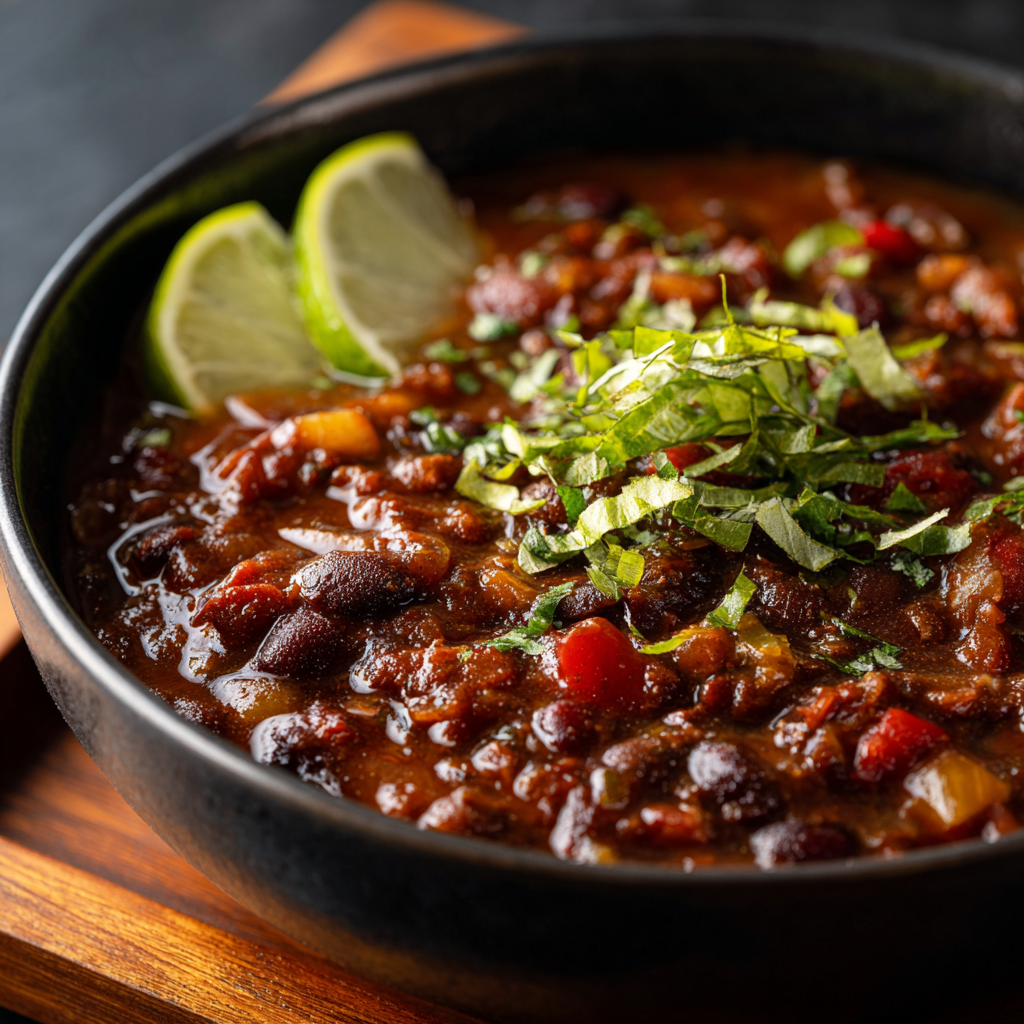
Common mistakes that create bland vegan chili include under-seasoning, skipping the mushrooms, or not allowing adequate simmering time for flavors to develop. Always taste and adjust seasonings before serving—vegan dishes often need more salt and spices than meat-based versions to achieve comparable depth. Take time to properly cook the mushrooms until their moisture evaporates, and give the chili at least 30 minutes of simmering to allow flavors to meld together properly.
Chef Tips
Professional chefs understand that patience during the mushroom-cooking stage makes enormous difference in final flavor and texture. Resist the urge to rush this step—let the mushrooms release all their moisture and then continue cooking until it evaporates completely. This concentration creates intense umami flavor that permeates the entire pot of chili. Additionally, finely chopping the mushrooms rather than using large pieces helps them integrate seamlessly and creates better distribution throughout every spoonful.
Another expert technique involves reserving some beans and adding them during the final 10 minutes of cooking rather than at the beginning. This creates textural variety with some beans that are soft and integrated into the sauce and others that remain firmer and more distinct. This simple adjustment prevents the chili from becoming monotonous in texture and makes each bite more interesting and satisfying.
Frequently Asked Questions
Can I use different types of beans?
Absolutely, chickpeas, white beans, or mixed beans all work beautifully; choose varieties you enjoy or use what you have in your pantry.
How do I make this chili spicier?
Increase the cayenne pepper, add diced jalapeños with seeds, use hot chili powder, or stir in your favorite hot sauce to taste.
Can I make this in a slow cooker?
Yes, sauté vegetables and spices first, then transfer everything to a slow cooker and cook on low for 6 to 8 hours or high for 3 to 4 hours.
Why doesn’t my vegan chili taste as good as regular chili?
You likely need more salt, spices, and umami-rich ingredients like soy sauce, mushrooms, and tomato paste—vegan dishes require bolder seasoning.
What can I use instead of mushrooms if I don’t like them?
Try finely chopped walnuts or pecans, cooked lentils, or plant-based ground meat alternatives for similar texture and substance.
Embracing Plant-Based Comfort Food
Starting the new year with more plant-based meals doesn’t mean sacrificing comfort, flavor, or satisfaction. This vegan chili proves that food made entirely from plants can be just as hearty, delicious, and crave-worthy as traditional versions while offering remarkable health benefits and supporting environmental sustainability. When you prepare a large pot of this aromatic, satisfying chili, you’re demonstrating that healthy eating and genuine enjoyment aren’t mutually exclusive—they’re perfectly compatible.
The practical advantages of vegan chili extend well beyond health benefits to include impressive affordability that makes plant-based eating accessible regardless of budget. Beans, vegetables, and spices cost significantly less than meat while providing superior nutrition and fiber that support wellness goals. Furthermore, vegan chili stores and reheats beautifully, making it perfect for meal prep that saves both time and money throughout busy weeks when convenience often leads to less healthy choices.
Did this New Year Vegan Chili convert you into a plant-based chili enthusiast? If you loved how hearty and satisfying it was despite containing no meat, how the bold flavors kept you coming back for more, and how it proved vegan food can be genuinely delicious, we’d be thrilled if you could save this recipe for regular rotation, pin it to your plant-based eating Pinterest board, or share it with friends exploring healthier eating. Your support and enthusiasm inspire us to continue creating and sharing recipes that make plant-based eating delicious and accessible for everyone. Tell us in the comments what toppings you loved and whether this chili has changed your perspective on vegan food—we love hearing about your plant-based journey!