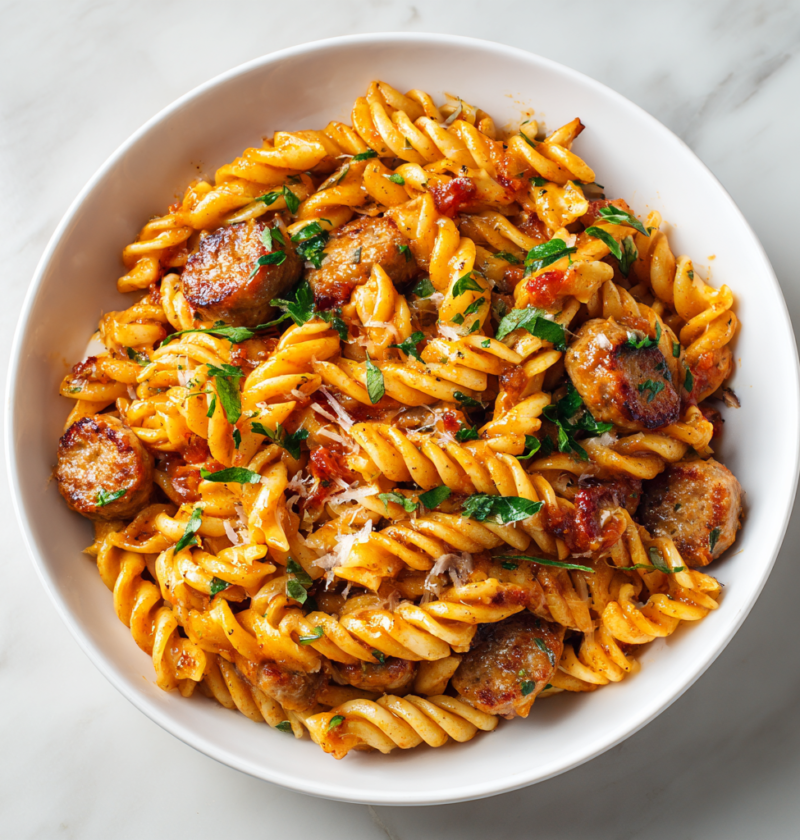
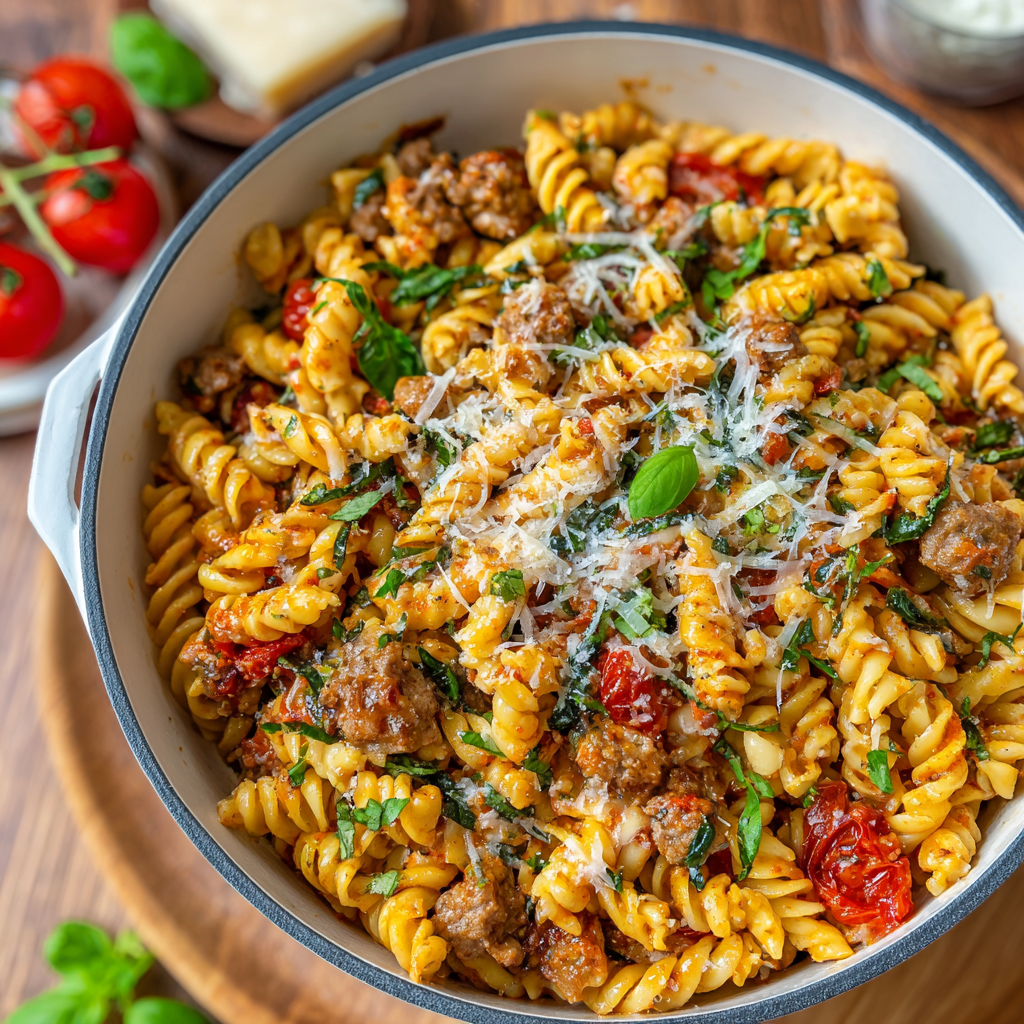
There’s something wonderfully liberating about a meal that comes together entirely in one pot, transforming what could be a complicated cooking process into something beautifully simple and utterly stress-free. One Pot Sausage Pasta brings together smoky Italian sausage, tender pasta, and a savory tomato-based sauce all in a single vessel, creating a complete dinner that tastes like you’ve spent hours stirring and tending when reality is far more forgiving. This is the kind of dish that fills your kitchen with incredible aromas, delivers impressive results without demanding extensive prep work, and leaves you with minimal cleanup so you can actually enjoy your meal instead of spending an hour at the sink. First, what makes this recipe so special is how the pasta cooks directly in the sauce, absorbing all those wonderful flavors and creating a dish that’s somehow more cohesive and delicious than when components are prepared separately. Next, the sausage renders its flavorful fat into the sauce, infusing every strand of pasta with rich, savory depth that tastes like pure comfort. Additionally, this entire meal comes together in about thirty minutes, making it perfect for busy weeknights when time is precious and stress levels are high. Whether you’re cooking for your family on a Tuesday night or feeding guests who appreciate no-fuss home cooking, one pot sausage pasta delivers restaurant-quality results with the kind of simplicity that makes you feel like a confident, capable cook.
Ingredients
Serves: 4–6 people
• 1 pound Italian sausage (hot or sweet, casings removed if in links) • 1 pound pasta (penne, rigatoni, or fusilli work beautifully) • 2 tablespoons olive oil • 1 medium yellow onion, diced • 4 cloves garlic, minced • 1 can (28 ounces) crushed tomatoes • 1 can (6 ounces) tomato paste • 3 cups chicken or vegetable broth • 1 teaspoon dried Italian seasoning • 1/2 teaspoon dried oregano • 1/2 teaspoon dried basil • 1/4 teaspoon red pepper flakes (optional, for heat) • 1 teaspoon salt • 1/2 teaspoon black pepper • 1/4 cup fresh parsley, chopped • 1/3 cup grated Parmesan cheese • 2 tablespoons fresh basil, torn (optional, for garnish) • 1 tablespoon balsamic vinegar (optional, for depth)
Step-by-Step Instructions
- Heat the olive oil in a large pot or Dutch oven over medium-high heat until it shimmers and is hot enough to sizzle when the sausage touches it.
- Add the Italian sausage to the pot, breaking it apart with a wooden spoon as it cooks for 6–8 minutes until deeply browned and cooked through.
- Transfer the cooked sausage to a clean plate using a slotted spoon, leaving behind as much flavorful fat as possible in the pot for building the sauce base.
- In the same pot with the rendered sausage fat, add the diced onion and cook for about 4–5 minutes, stirring occasionally, until it becomes soft and translucent.
- Stir in the minced garlic and cook for another 30 seconds to 1 minute until fragrant but not browned.
- Add the tomato paste to the pot and stir constantly for about 1–2 minutes to caramelize it slightly and deepen the flavor.
- Pour in the crushed tomatoes, chicken broth, Italian seasoning, oregano, basil, salt, black pepper, and red pepper flakes if using.
- Stir everything together thoroughly to combine all ingredients and ensure the tomato paste is fully incorporated.
- Return the cooked sausage to the pot and stir it into the sauce.
- Bring the mixture to a gentle boil, then add the uncooked pasta directly to the pot, stirring to ensure all pieces are submerged in the liquid.
- Reduce the heat to medium and let the pasta simmer uncovered for about 12–15 minutes, stirring occasionally to prevent sticking and ensure even cooking.
- Check the pasta at the 12-minute mark by tasting a piece—it should be tender but not mushy, and the liquid should be mostly absorbed.
- If the pasta is not yet tender, continue cooking for another minute or two, checking frequently to avoid overcooking.
- If there’s still too much liquid when the pasta is tender, let it simmer uncovered for another minute or two to allow the excess to evaporate.
- Remove the pot from heat and stir in the fresh parsley.
- Add the balsamic vinegar if using, which adds subtle depth and helps balance the acidity of the tomatoes.
- Taste the dish and adjust seasonings with additional salt, pepper, or red pepper flakes as needed.
- Let the pasta rest in the pot for about 2–3 minutes before serving, which allows the sauce to thicken slightly and flavors to settle.
- Divide the one pot sausage pasta among serving bowls.
- Top each bowl with a sprinkle of grated Parmesan cheese and fresh torn basil if desired.
Why This One-Pot Method Works Brilliantly
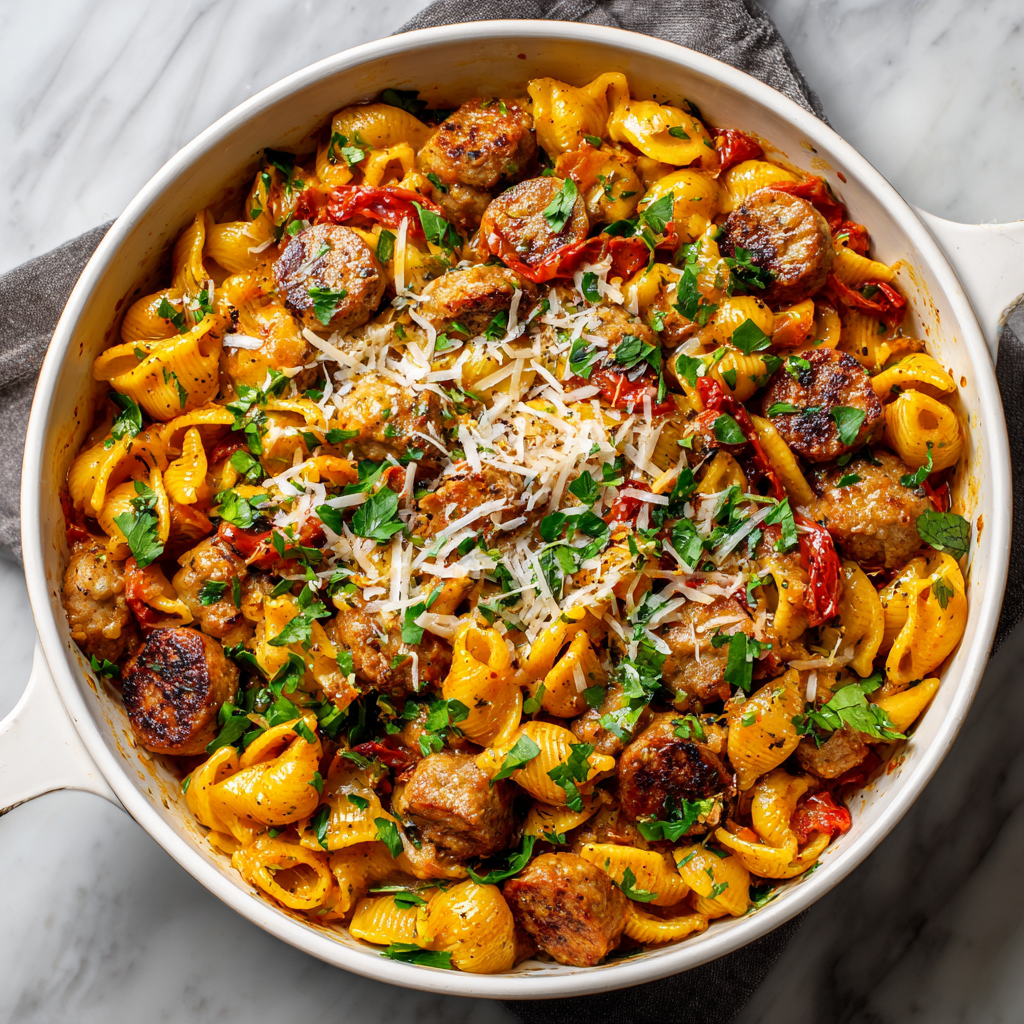
The magic of cooking pasta directly in the sauce lies in understanding how starch and liquid work together to create something greater than the sum of their parts. First, when pasta cooks in broth rather than plain water, the starchy cooking liquid becomes flavorful, meaning nothing is wasted and every element contributes to the final dish. Next, the pasta releases its starch into the sauce as it cooks, naturally thickening it without requiring extra cream or flour, creating a silky consistency that clings beautifully to each piece. Additionally, the sausage fat that renders into the sauce coats everything, creating richness and depth that’s hard to achieve when components are prepared separately. Meanwhile, cooking everything in one vessel means fewer dishes to wash and more time to enjoy your meal, which is honestly one of the best parts of this approach.
Serving and Storing Tips
Serving Suggestions
Serve this one pot sausage pasta with a fresh green salad dressed simply with lemon vinaigrette or Italian dressing, which cuts through the richness and provides refreshing contrast to the savory, meaty sauce. Crusty bread is practically essential for soaking up every last drop of that incredible sauce, transforming a simple side into an integral part of the meal. For a heartier presentation, top each bowl with extra Parmesan cheese, a drizzle of quality olive oil, and a pinch of fresh red pepper flakes for those who like heat. Pair this dish with a medium-bodied red wine like Chianti, Barbera, or even a lighter Pinot Noir, which complements the sausage and tomato beautifully without overwhelming the palate. Additionally, if you’re serving guests, adding a composed salad with mixed greens, roasted vegetables, and fresh mozzarella on the side creates a complete, elegant meal. For more casual family dinners, simply serve straight from the pot with everyone helping themselves and customizing with their favorite toppings.
Storage Tips
Refrigerate leftovers in an airtight container for up to 4 days, and the flavors actually improve as the ingredients continue to meld together overnight. To reheat, place the pasta in a skillet over medium heat and add a splash of broth or water, stirring gently until heated through and the sauce reaches your desired consistency. Freezing works beautifully with this dish—cool it completely before transferring to a freezer-safe container or heavy-duty freezer bag for up to 3 months. When ready to serve, thaw overnight in the refrigerator if possible, then warm gently on the stovetop over medium heat, stirring occasionally and adding a splash of broth if the sauce seems too thick. Alternatively, you can reheat directly from frozen on the stovetop over medium-low heat, allowing extra time and stirring frequently to ensure even warming and prevent scorching.
Helpful Notes and Tips
One common mistake home cooks make is not browning the sausage deeply enough, which results in missed flavor development and a less rich-tasting final dish. Instead, take the time to let the sausage brown properly, allowing it to develop a golden crust that carries through to the entire meal. Additionally, don’t drain the fat from the sausage—that rendered fat is where much of the flavor lives and becomes an essential part of your sauce base.
For a lighter version of this dish, choose turkey or chicken sausage instead of traditional pork sausage, which reduces calories while maintaining wonderful savory flavor. To make this recipe vegetarian, simply omit the sausage and add extra vegetables like mushrooms, zucchini, or bell peppers, which provide substance and heartiness without the meat. Next, you can also incorporate spinach or kale by stirring in a handful during the final few minutes of cooking, adding nutrition and color without changing the fundamental character.
Meanwhile, the pasta shape matters for cooking time—tubular shapes like penne and rigatoni cook slightly faster than longer shapes like spaghetti because liquid penetrates them more easily. If using spaghetti or linguine, break them into shorter lengths before adding to the pot for more even cooking and easier eating. Furthermore, if your pasta is cooking faster than expected, it might be because your broth is particularly hot or your pot is wide and shallow, both of which increase evaporation rates.
For extra depth of flavor, add a splash of red wine to the sauce along with the broth, which provides complexity and balances the acidity of the tomatoes beautifully. Alternatively, stir in sun-dried tomatoes, roasted red peppers, or caramelized onions for added richness and depth. Additionally, if you want more vegetables, add diced bell peppers alongside the onion, or stir in fresh spinach during the final minute of cooking.
If your sauce seems too thin after the pasta finishes cooking, simply let it simmer uncovered for another 2–3 minutes to allow liquid to evaporate. Conversely, if it’s too thick, add more broth or even pasta water one tablespoon at a time until you reach your desired consistency. Additionally, remember that the sauce will continue thickening slightly as it cools, so slightly looser than your perfect consistency while cooking is ideal.
If you’re short on time, you can use pre-cooked sausage from the grocery store, simply breaking it into chunks and heating it gently in the sauce at the end, which cuts preparation time significantly. Furthermore, using quality canned tomatoes makes an enormous difference in the final flavor, so choose brands you enjoy and store several on hand for whenever the craving strikes.
Chef Tips
Don’t skip the resting period after cooking—those 2–3 minutes allow the sauce to thicken slightly and the flavors to settle, resulting in a more cohesive, satisfying dish that’s significantly better than serving it immediately. Additionally, finish each bowl with a crack of fresh black pepper and a generous handful of freshly chopped parsley, which adds brightness and prevents the richness from feeling heavy on the palate.
Frequently Asked Questions
Can I use different types of sausage for this recipe? Absolutely—fennel-forward Italian sausage, spicy chorizo, or even mild turkey sausage all work wonderfully and create delicious variations with different flavor profiles.
What pasta shape works best for this one-pot dish? Penne, rigatoni, and fusilli all work beautifully, though any pasta you enjoy works perfectly for this dish—just adjust cooking time based on package directions.
How do I prevent the pasta from sticking to the bottom of the pot? Stir the pasta occasionally as it cooks, especially during the first few minutes, which helps distribute heat evenly and prevents any pieces from settling and scorching.
Can I make this dish vegetarian or vegan? Yes, simply omit the sausage and add extra vegetables like mushrooms, zucchini, or spinach, or use plant-based sausage for a direct substitute.
Is this recipe suitable for freezing? Yes, this dish freezes beautifully for up to three months—cool completely before storing in a freezer-safe container and thaw overnight before reheating.
Why This Dish Becomes Essential
One Pot Sausage Pasta represents everything that makes home cooking meaningful and manageable—it’s efficient, it’s delicious, and it brings people together without demanding hours in the kitchen. First, the minimal cleanup means you spend less time with dishes and more time enjoying your meal and the people you’re sharing it with. Next, the combination of sausage, pasta, and tomato sauce creates something universally loved that appeals to nearly every palate at your table. Additionally, it feeds a crowd affordably and generously, making it ideal for family dinners, casual entertaining, or even bringing to friends in need of a home-cooked meal.
The beauty of this dish extends beyond just the practical benefits—it teaches you fundamental cooking techniques like properly browning meat, building layered flavors, and understanding how pasta cooks to release its starch. Moreover, it’s incredibly forgiving and adaptable, bending to accommodate whatever ingredients you have on hand, dietary preferences, or creative variations you want to try. The comfort factor of one pot sausage pasta makes it feel like a warm hug on a plate, the kind of food that soothes stress and brings back fond memories of family dinners and home-cooked simplicity.
This one pot sausage pasta will become a trusted favorite that you’ll make repeatedly, whether for ordinary family meals or casual entertaining, a recipe that proves the best comfort food doesn’t require complicated techniques or extensive preparation.
Did you love making this One Pot Sausage Pasta? We’d absolutely adore hearing about your experience! Did you use hot or sweet sausage, and did you add any special ingredients or make this recipe your own with creative variations? Please save this recipe to your personal collection, pin it to your Pinterest board so you can find it again whenever you need an easy, one-pot dinner, and share it with friends and family who would appreciate this classic, crowd-pleasing dish that’s ready to eat in under thirty minutes. Your feedback, shares, and comments inspire us to keep creating more delicious, reliable recipes that bring joy and simplicity to your kitchen. Thank you for cooking with us today, and we can’t wait to see what wonderful meals you prepare next!