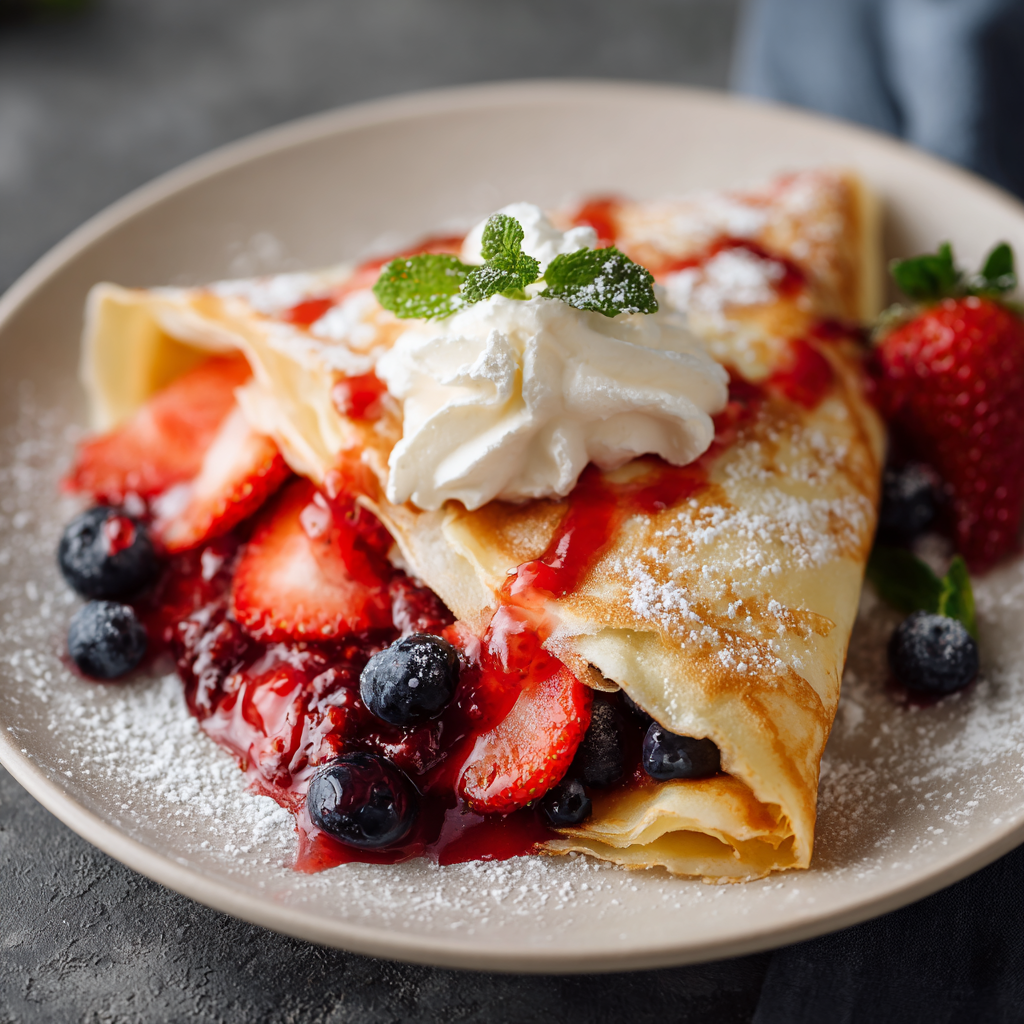
Few breakfast dishes capture elegance and comfort quite like delicate crepes filled with sweet, juicy berries. These tender, paper-thin pancakes wrapped around fresh fruit create a restaurant-quality meal that’s surprisingly simple to master at home. The light, buttery crepes provide the perfect canvas for vibrant strawberries, blueberries, and raspberries, all enhanced with a touch of sweetness and perhaps a dollop of whipped cream. Whether you’re planning a leisurely weekend brunch, celebrating a special occasion, or treating yourself to something extraordinary, this recipe delivers impressive results without demanding professional pastry skills. The contrast between the soft, slightly crispy edges of the crepes and the burst of fresh berry flavor creates an unforgettable breakfast experience. Within just thirty minutes, you’ll be serving gorgeous, Instagram-worthy crepes that taste every bit as amazing as they look, proving that homemade elegance is absolutely within reach for any home cook.
Ingredients
This recipe makes 8 crepes (4 servings).
For the Crepes:
- 1 cup all-purpose flour
- 2 large eggs
- 1½ cups whole milk
- 2 tablespoons granulated sugar
- 2 tablespoons unsalted butter, melted
- 1 teaspoon vanilla extract
- ¼ teaspoon salt
- Additional butter for cooking
For the Berry Filling:
- 2 cups fresh strawberries, hulled and sliced
- 1 cup fresh blueberries
- 1 cup fresh raspberries
- 3 tablespoons granulated sugar
- 1 tablespoon lemon juice
- 1 teaspoon lemon zest
For Serving:
- 1 cup whipped cream or whipped topping
- 2 tablespoons powdered sugar for dusting
- Fresh mint leaves for garnish (optional)
Step-by-Step Instructions
- Combine the flour, eggs, milk, sugar, melted butter, vanilla extract, and salt in a blender, then blend on high speed for 30 seconds until the mixture becomes completely smooth and lump-free.
- Pour the batter into a bowl or pitcher, cover it with plastic wrap, and refrigerate for at least 30 minutes to allow the flour to fully hydrate and create tender crepes.
- Prepare the berry filling by combining all the berries in a medium bowl with sugar, lemon juice, and lemon zest, then gently toss everything together and set aside to macerate.
- Heat an 8-inch nonstick skillet or crepe pan over medium heat, then lightly butter the surface using a paper towel to distribute it evenly.
- Pour approximately ¼ cup of batter into the center of the hot pan, immediately tilting and rotating the pan in a circular motion to spread the batter into a thin, even layer.
- Cook the crepe for about 1 to 2 minutes until the edges begin to lift and the bottom turns light golden brown, watching carefully to prevent burning.
- Flip the crepe using a thin spatula or by carefully lifting it with your fingers, then cook for another 30 seconds on the second side until just set.
- Transfer the cooked crepe to a plate and repeat the process with the remaining batter, stacking the finished crepes between sheets of parchment paper to prevent sticking.
- Place one crepe on a serving plate, spoon about ⅓ cup of the berry mixture onto one half of the crepe, then fold it in half and then in half again to create a triangle shape.
- Add a generous dollop of whipped cream on top, dust with powdered sugar using a fine-mesh sieve, and garnish with fresh mint leaves if desired before serving immediately.
Understanding Crepe Technique
Mastering crepes might seem intimidating at first, but understanding a few key principles makes the process remarkably straightforward. First of all, resting the batter is crucial because it allows the flour particles to fully absorb the liquid, resulting in tender crepes rather than tough, rubbery ones. Additionally, this resting period lets any air bubbles escape, ensuring smooth crepes without unsightly holes or uneven texture.
The thickness of your crepes depends entirely on how quickly you tilt and swirl the pan after adding the batter. Consequently, practice makes perfect here, so don’t worry if your first crepe isn’t flawless—it rarely is, even for experienced cooks. Moreover, the first crepe often serves as a test to ensure your pan temperature is correct and your batter consistency is ideal.

Temperature control plays a vital role in crepe success. If the pan is too hot, the batter will set before you can spread it properly, creating thick, uneven crepes with burnt spots. Conversely, if the pan isn’t hot enough, the crepes will stick and tear when you try to flip them, leading to frustration and wasted batter.
Selecting and Preparing Berries
Fresh, ripe berries make all the difference in this recipe’s final flavor profile. When shopping, look for strawberries that are deep red throughout with fresh green caps and no white shoulders near the stem. Meanwhile, blueberries should be firm, plump, and covered with a silvery bloom that indicates freshness. Raspberries are the most delicate, so check carefully for mold and choose containers where the berries aren’t crushed or leaking.
Before using your berries, rinse them gently under cool water and pat them completely dry with paper towels. However, avoid washing berries until just before use, as excess moisture accelerates spoilage and can make your crepe filling watery. Furthermore, slicing strawberries into uniform pieces ensures even distribution of fruit and consistent texture in every bite.
The maceration process, where you toss the berries with sugar and lemon juice, draws out natural juices and creates a light syrup that flavors the crepes beautifully. Nevertheless, don’t macerate the berries more than an hour in advance, or they’ll become too soft and release excessive liquid that can make your crepes soggy.
Serving and Storing Tips
Serving Tips
Serve these sweet berry crepes immediately after assembly to enjoy the perfect contrast between warm crepes and cool, fresh berries. Additionally, consider offering a variety of accompaniments on the side, such as extra whipped cream, chocolate sauce, or maple syrup for guests who want to customize their experience. For a more indulgent presentation, add a scoop of vanilla ice cream or a drizzle of berry coulis alongside each serving.
These crepes work beautifully for breakfast, brunch, or even dessert, making them incredibly versatile for any time of day. Moreover, they’re elegant enough for special occasions like Mother’s Day, birthday celebrations, or anniversary breakfasts, yet simple enough for a regular weekend morning when you want something special.
Storage Tips
Store leftover crepes by stacking them between sheets of parchment paper in an airtight container, keeping them refrigerated for up to 3 days or frozen for up to 2 months. When ready to use refrigerated crepes, simply bring them to room temperature or warm them gently in a dry skillet for 10 seconds per side.
For frozen crepes, thaw them overnight in the refrigerator or separate them while still frozen and warm individually as needed. The berry filling can be stored separately in an airtight container in the refrigerator for up to 2 days, though the berries will soften considerably and release more liquid over time.
Alternatively, you can prepare the batter up to 24 hours in advance and store it covered in the refrigerator, giving it a quick stir before cooking. This make-ahead option allows you to enjoy fresh crepes without the morning prep work, perfect for busy households or when entertaining guests.
Helpful Notes
Getting the batter consistency right is essential for perfect crepes. The batter should be thin and pourable, similar to heavy cream in texture. If your batter seems too thick after resting, simply whisk in milk one tablespoon at a time until you achieve the proper consistency. Conversely, if it’s too thin and the crepes tear easily, whisk in a tablespoon of flour to thicken it slightly.
Investing in a good nonstick pan makes the crepe-making process significantly easier, though you can certainly use a well-seasoned cast iron skillet or traditional crepe pan if you prefer. In addition, keeping the heat at medium rather than high prevents burning and gives you more control over the cooking process, especially when you’re still learning the technique.
Don’t worry if your first few crepes aren’t perfect—even professional chefs often discard the first one as it helps season the pan and allows you to calibrate the heat. Furthermore, slightly imperfect crepes still taste absolutely delicious, so focus on enjoying the process rather than achieving perfection.
For the smoothest possible batter, make sure all your ingredients are at room temperature before blending. Cold eggs and milk straight from the refrigerator can create a lumpy batter that requires more blending, potentially developing the gluten in the flour and creating tougher crepes.
When flipping crepes, confidence is key. Use a thin, wide spatula to loosen the edges first, then slide it completely under the crepe before flipping in one smooth, quick motion. Alternatively, once you’re comfortable with the technique, you can flip crepes by lifting one edge with your fingers and quickly turning them over.
Chef Tips
Professional chefs often add a splash of sparkling water to their crepe batter just before cooking, which creates lighter, more delicate crepes with a subtle lacey texture that elevates the final presentation. This technique works because the carbonation creates tiny air pockets that make the crepes exceptionally tender.
Another restaurant secret involves browning the butter before adding it to the batter, which imparts a nutty, complex flavor that transforms ordinary crepes into something extraordinary. Simply melt the butter in a small saucepan over medium heat, swirling occasionally until it turns golden brown and smells wonderfully nutty before incorporating it into your batter.
Flavor Variations and Substitutions
While this classic berry combination is undeniably delicious, numerous variations allow you to customize these crepes to your preferences or work with whatever ingredients you have available. For instance, substitute the mixed berries with sliced peaches and cream cheese for a summery twist, or use caramelized bananas with chocolate sauce for a decadent dessert crepe.
Greek yogurt makes an excellent substitution for whipped cream if you prefer something tangier and higher in protein. Meanwhile, coconut cream whipped with a touch of powdered sugar creates a dairy-free option that’s just as luscious as traditional whipped cream. Additionally, mascarpone cheese mixed with a bit of honey offers Italian-inspired richness that pairs beautifully with fresh berries.
For the crepes themselves, you can substitute up to half the all-purpose flour with whole wheat flour for added nutrition and a slightly nutty flavor, though this will create heartier, less delicate crepes. Furthermore, almond milk or oat milk can replace regular milk for those with dairy sensitivities, though the crepes may be slightly less rich and tender.
If fresh berries aren’t available, frozen berries work surprisingly well in this recipe. Simply thaw them completely, drain excess liquid, and proceed with the recipe as written. However, be aware that frozen berries release more liquid than fresh, so you may want to add an extra tablespoon of sugar to help absorb some of that moisture.
Making Crepes for a Crowd
When preparing crepes for multiple people, efficiency becomes important to ensure everyone eats together while the food is fresh. Therefore, set up an assembly line system where you cook multiple crepes at once if you have several pans, or cook all the crepes first and keep them warm in a low oven wrapped in foil.
Alternatively, consider letting guests assemble their own crepes at the table, which turns breakfast into an interactive, fun experience similar to a crepe bar. Set out the stack of crepes, bowls of berries, whipped cream, and various toppings, then let everyone create their perfect combination. This approach also takes pressure off the cook and allows guests to customize their crepes exactly to their liking.
For large gatherings, you can easily double or triple this recipe to feed a crowd. The batter scales perfectly, and once you’re in the rhythm of cooking crepes, you can produce them quite quickly, typically making one every 2 minutes once your technique is solid.
Nutritional Considerations
These sweet berry crepes offer a reasonably balanced breakfast option, especially compared to many other brunch dishes. The berries provide vitamin C, fiber, and antioxidants, while the eggs in the crepes contribute protein. Furthermore, using whole milk rather than skim adds satiety through healthy fats, helping you feel fuller longer.
To make these crepes even more nutritious, consider adding a tablespoon of ground flaxseed or chia seeds to the batter for extra fiber and omega-3 fatty acids. Additionally, you could reduce the sugar in both the batter and the berry mixture by half without significantly affecting the taste, especially if your berries are naturally very sweet.
For a protein boost, spread a thin layer of Greek yogurt on each crepe before adding the berries, or serve them alongside scrambled eggs or turkey sausage to create a more complete meal. This combination ensures you’re getting adequate protein to fuel your morning activities while still enjoying something that feels like a special treat.
Frequently Asked Questions
Can I make the crepe batter the night before? Absolutely, in fact, overnight resting improves the texture by allowing the flour to fully hydrate, just give it a good stir before using and thin with a splash of milk if needed.
Why are my crepes turning out thick and cake-like? Your batter is likely too thick, so whisk in milk one tablespoon at a time until it reaches heavy cream consistency, and make sure you’re swirling the pan quickly after adding batter.
Can I use frozen berries instead of fresh? Yes, but thaw them completely and drain the excess liquid first, keeping in mind that frozen berries are softer and release more juice than fresh ones.
How do I prevent my crepes from sticking to the pan? Ensure your pan is properly preheated and lightly buttered before each crepe, and consider using a well-seasoned nonstick pan specifically designed for delicate cooking.
What’s the best way to reheat leftover crepes? Warm them individually in a dry skillet over low heat for about 10 seconds per side, or microwave them between damp paper towels for 10 to 15 seconds until just warmed through.
The Art of Folding and Presentation
How you fold and present your crepes significantly impacts their visual appeal and eating experience. The classic triangle fold used in this recipe works beautifully because it creates multiple layers that trap the berry filling while still allowing the fruit to peek through attractively. However, you might also try the envelope fold, where you fold in the sides and then roll the crepe into a neat package that’s easier to eat with your hands.
For a more elegant presentation, consider the roll method, where you place filling down the center of the crepe and roll it into a cylinder, then slice it diagonally to reveal the colorful layers inside. This technique works especially well when serving these as dessert or for a more formal brunch setting.
Alternatively, simply fold the crepes in half over the filling for a casual, rustic presentation that’s equally delicious. Regardless of which folding method you choose, always place the most attractive side of the crepe facing up, and arrange them thoughtfully on the plate with attention to color contrast and visual balance.
Troubleshooting Common Issues
If your crepes are tearing when you flip them, the batter might be too thin, the pan might not be hot enough, or you might be trying to flip them too soon before the first side has properly set. Wait until the edges look dry and begin to lift slightly before attempting to flip, and use a wide, thin spatula to support the entire crepe during the turn.
When crepes stick stubbornly to the pan despite proper buttering, the pan likely isn’t hot enough or has developed a buildup that needs cleaning. Additionally, make sure you’re using enough butter and spreading it evenly across the entire cooking surface before adding batter.
Holes in your crepes typically result from air bubbles in the batter that burst during cooking. To prevent this, make sure your batter has rested adequately, and gently stir rather than vigorously whisk the batter before using, which can incorporate excess air.
Beyond Breakfast
While these sweet berry crepes shine at breakfast and brunch, they transition beautifully into dessert with just a few small modifications. For an evening treat, add a splash of Grand Marnier or amaretto to the berry mixture, or serve the crepes with a scoop of vanilla bean ice cream instead of whipped cream.
Consider flambéing the berries with brandy tableside for dramatic presentation at dinner parties, or drizzle dark chocolate sauce over the finished crepes for extra decadence. These simple additions transform a breakfast dish into an elegant dessert that rivals anything you’d find in a fine dining restaurant.
Furthermore, savory crepe variations offer endless possibilities for lunch and dinner. Use the same basic crepe recipe but omit the sugar and vanilla, then fill with ingredients like ham and gruyere, spinach and ricotta, or mushrooms and herbs for sophisticated meals that showcase crepe versatility.
Did you love making these sweet berry crepes? If this recipe brought a touch of elegance to your morning or impressed your loved ones with its restaurant-quality results, please save it to your recipe collection, pin it to your breakfast and brunch boards, and share it with friends who appreciate beautiful, delicious food. Your enthusiasm and support inspire us to continue creating and sharing recipes that make everyday cooking feel special and achievable. We’d be thrilled to see your crepe creations—tag us in your photos and tell us what berries or fillings you tried. Let’s keep the conversation going and the crepes flowing!