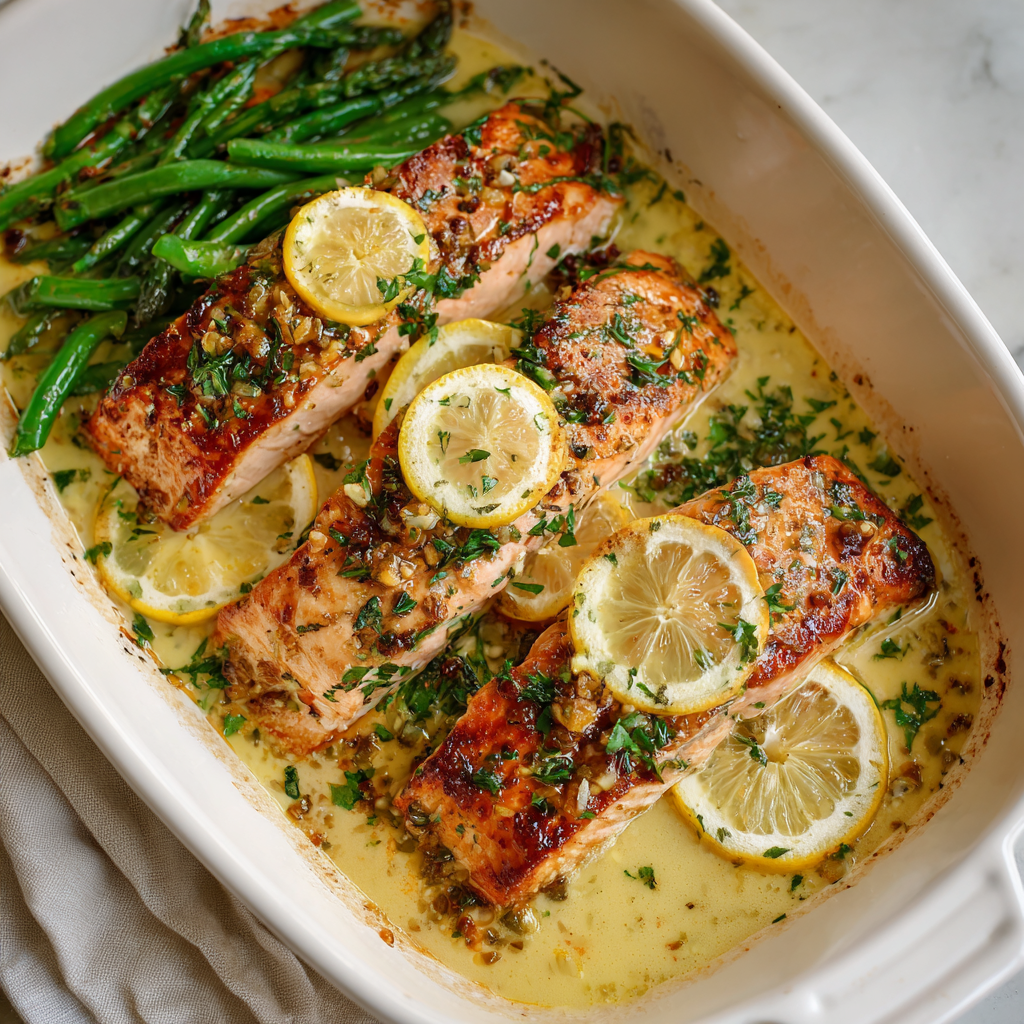
There’s something undeniably elegant about serving a perfectly cooked salmon fillet topped with a silky, luxurious lemon butter cream sauce that tastes like it came straight from an upscale seafood restaurant while remaining remarkably simple and achievable in your own kitchen. This Valentine’s Creamy Lemon Butter Salmon Recipe combines tender, flaky salmon with a sophisticated sauce that balances bright citrus notes with rich, buttery indulgence, creating a dish that feels completely special and genuinely impressive without requiring any complicated techniques or hard-to-find ingredients. What makes this recipe truly extraordinary is how it transforms a few quality ingredients into something that tastes decadent and celebratory while being ready to serve in under thirty minutes, making it absolutely perfect for intimate Valentine’s Day dinners or whenever you want to create something restaurant-quality at home. Whether you’re planning a romantic dinner for two, celebrating an anniversary, or treating someone you love to something spectacular, this creamy lemon butter salmon delivers restaurant-worthy results that will absolutely sweep them off their feet. The combination of perfectly seared salmon with that incredible lemon butter cream sauce creates an eating experience that feels completely luxurious, deeply satisfying, and genuinely achievable for home cooks at any skill level. Your loved one will be absolutely enchanted by the thoughtfulness, impressed by how delicious and elegant something so straightforward can be, and utterly satisfied with every single bite of this absolutely stunning dish.
Ingredients
This recipe serves 2 people with generous portions.
For the Salmon:
- 2 salmon fillets (6 to 8 ounces each), skin on or off based on preference
- 1 teaspoon salt
- ½ teaspoon black pepper
- ½ teaspoon garlic powder
- ½ teaspoon smoked paprika
- 2 tablespoons olive oil
- 1 tablespoon butter
For the Creamy Lemon Butter Sauce:
- 3 tablespoons butter
- 3 cloves garlic, minced
- ½ cup heavy cream, room temperature
- Juice of 2 fresh lemons (approximately ¼ cup)
- Zest of 1 lemon
- ¼ teaspoon salt
- ⅛ teaspoon black pepper
- 1 tablespoon fresh dill, chopped (or ½ teaspoon dried dill)
- ½ teaspoon Dijon mustard
- Pinch of nutmeg
For Serving:
- Fresh parsley for garnish
- Lemon wedges for serving
- Fresh dill sprigs for garnish
- Asparagus, green beans, or your choice of vegetables
- Rice, pasta, or crusty bread
Instructions
Prepare the Salmon Fillets
- Remove the salmon fillets from the refrigerator about 15 minutes before cooking to allow them to come closer to room temperature, which ensures even cooking throughout the fillet.
- Pat the salmon fillets completely dry using paper towels, gently pressing away any surface moisture that would prevent proper searing and browning.
- In a small bowl, combine the salt, black pepper, garlic powder, and smoked paprika, stirring together until the seasonings are evenly distributed and ready for application.
- Sprinkle the seasoning mixture evenly over both the flesh and skin sides of the salmon fillets, gently pressing the seasonings into the fish so they adhere firmly.
- Allow the seasoned salmon to sit for 2 to 3 minutes while you prepare your skillet, which allows the seasonings to begin forming a crust.
Sear the Salmon to Perfection
- Heat the olive oil in a large skillet over medium-high heat, allowing it to become shimmering and hot but not smoking before adding the salmon.
- Carefully place the salmon fillets skin-side up in the hot skillet, allowing them to cook undisturbed for 4 to 5 minutes until the bottom develops a beautiful golden crust.
- Using a spatula or fish turner, gently flip the salmon fillets and cook the flesh side for another 2 to 3 minutes until the flesh is mostly cooked through but still slightly soft in the very center.
- The salmon should flake easily with a fork at this point, indicating that it’s cooked to a safe internal temperature without becoming dry or overdone.
- Add 1 tablespoon of butter to the skillet, allowing it to melt around the salmon and create additional flavor and richness.
- Tilt the skillet slightly and use a spoon to baste the salmon with the melted butter, coating the tops several times to add moisture and flavor.
- Transfer the cooked salmon fillets to warm serving plates and set them aside while you prepare the creamy lemon butter sauce in the same skillet.
Create the Creamy Lemon Butter Sauce
- Reduce the heat to medium and add 3 tablespoons of butter to the same skillet where the salmon cooked, allowing it to melt completely and incorporate the flavorful browned bits.
- Add the minced garlic to the melted butter and cook for about 30 seconds, stirring constantly to prevent the garlic from burning and creating a bitter flavor.
- Pour in the fresh lemon juice slowly while stirring, allowing it to combine with the butter and creating a glossy, aromatic base for your cream sauce.
- Next, stir in the lemon zest, which adds brightness and enhances the citrus flavor without the additional acidity of more lemon juice.
- Whisk in the heavy cream gently, stirring constantly to combine it smoothly with the butter and lemon mixture, creating a luxurious, silky sauce.
- Once the cream is fully incorporated, add the salt, black pepper, fresh dill, Dijon mustard, and nutmeg, stirring until these ingredients are completely combined throughout.
- Allow the sauce to simmer gently over medium heat for 1 to 2 minutes, stirring occasionally, until it thickens slightly and coats the back of a spoon.
- Taste the sauce and adjust the seasonings as desired—add more lemon juice for brightness, more salt for savory depth, or more dill for herbaceous flavor.
Finish and Plate
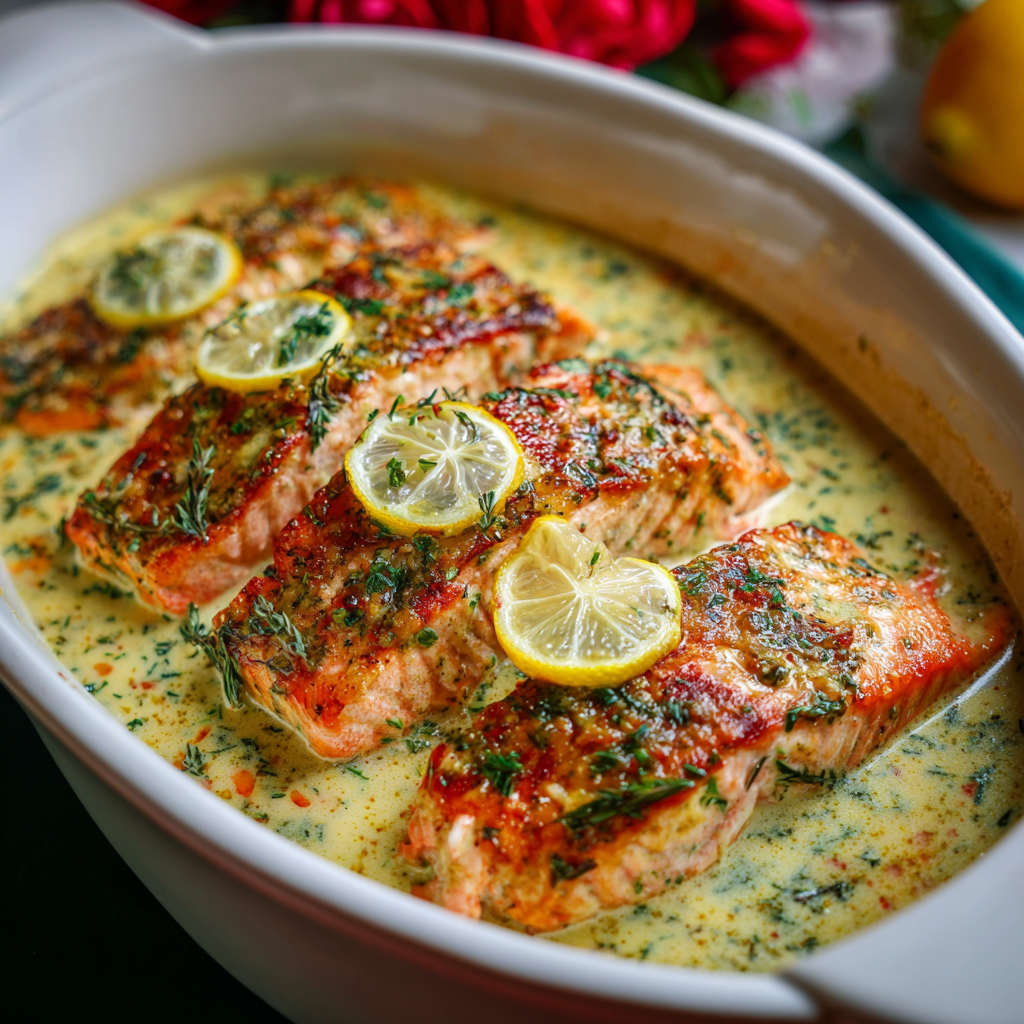
- Spoon the warm creamy lemon butter sauce generously over each salmon fillet, ensuring that every portion of fish is coated with the luxurious sauce.
- Allow the sauce to pool around the salmon on the plate, creating a beautiful presentation that showcases both the beautiful pink salmon and the elegant creamy sauce.
- Arrange your chosen vegetables and side dish around the salmon, creating balance and visual appeal on the plate.
- Garnish each plate with fresh parsley, a sprig of fresh dill, and a lemon wedge for both visual elegance and functional flavor enhancement.
- Serve immediately while the salmon is hot and the sauce is still warm and creamy, creating the perfect sensory experience that celebrates elegance and love.
Serving and Storing Tips
How to Serve This Elegant Seafood Dinner
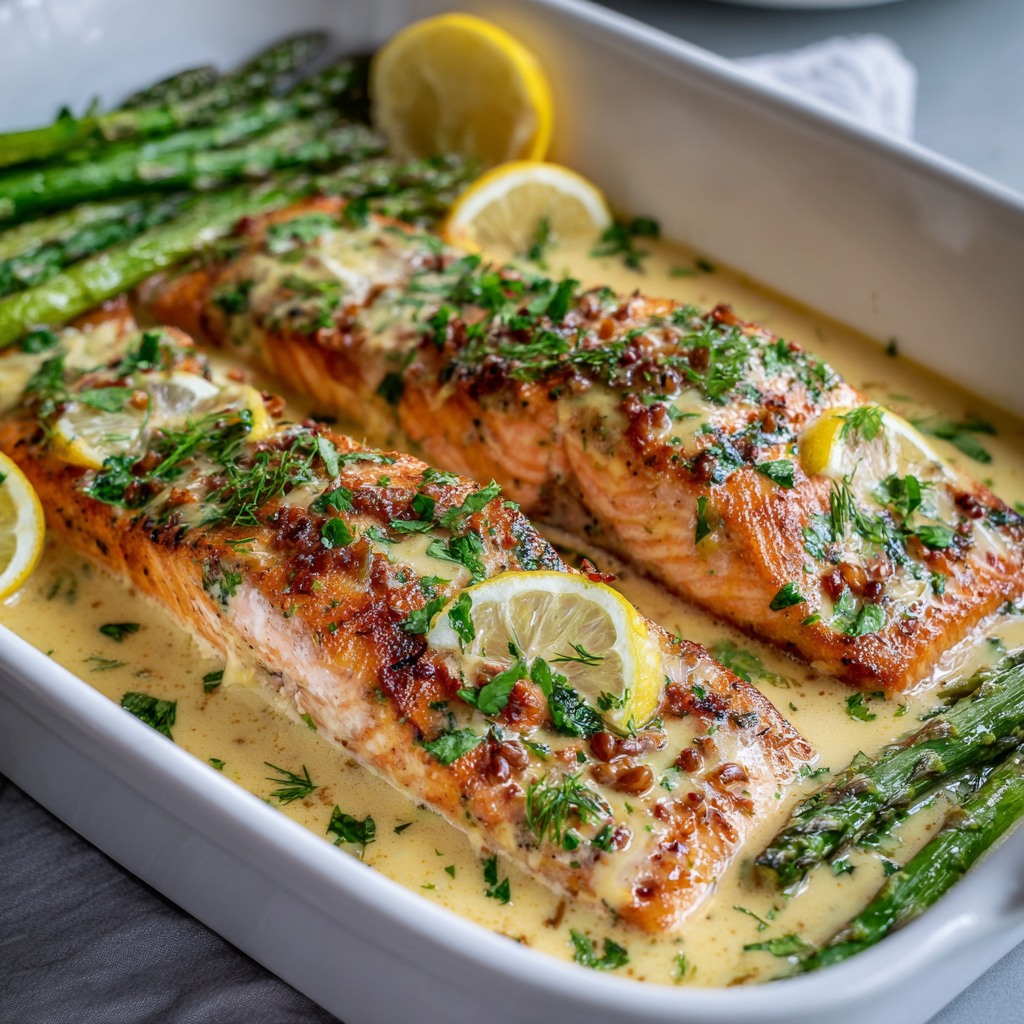
Present each beautifully plated salmon fillet on elegant tableware that complements the pink salmon and cream-colored sauce, creating a restaurant-quality presentation that rivals upscale dining establishments. First, arrange the plate thoughtfully with the salmon positioned prominently, surrounded by vegetables and side dishes that create visual balance. Additionally, pour the creamy sauce around the salmon just before serving, ensuring it’s warm and glossy for optimal appearance and flavor. Meanwhile, consider pairing this dish with a crisp white wine like Sauvignon Blanc, Pinot Grigio, or Chablis, which complements the lemon and salmon beautifully. For extra romance, you might add fresh flowers to your table, light candles, and play soft background music that creates an atmosphere of elegance and intimacy. Furthermore, provide fresh lemon wedges for guests to squeeze over their salmon if they prefer additional brightness and acidity to balance the richness of the sauce.
Storage Instructions for Leftovers
Keep leftover creamy lemon butter salmon in an airtight container in the refrigerator for up to 2 days, storing the salmon and sauce separately if possible to prevent the fish from becoming overly saturated. To reheat, place the salmon gently in a skillet over medium-low heat with a splash of water or broth, cover loosely, and warm for 5 to 7 minutes until heated through, which prevents the fish from drying out. Alternatively, you can reheat in a 300°F oven for 10 to 12 minutes covered loosely with foil, which maintains the texture better than stovetop reheating. For the sauce, gently warm it in a small saucepan over low heat, stirring occasionally until it reaches serving temperature. For longer storage, you can freeze the cooked salmon alone in a freezer-safe container for up to 3 months, though the cream sauce doesn’t freeze as successfully, so it’s better prepared fresh when needed.
Helpful Notes and Pro Tips
Tips for Perfect Salmon Every Time
Start by selecting fresh, high-quality salmon from a reputable fishmonger, as the quality of your starting ingredient directly impacts the final dish’s deliciousness. Additionally, allowing the salmon to reach room temperature before cooking helps it cook evenly throughout without the exterior overcooking while the center remains cold. Never skip the patting dry step, as surface moisture prevents proper searing and browning, which is essential for developing flavor and creating that beautiful golden crust. Furthermore, using a meat thermometer to verify doneness removes any guesswork—salmon is safely cooked at 145°F, and this is easy to verify with a quick temperature check. The key to moist, flaky salmon is not cooking it past medium doneness—it should still have a slight translucency in the very center when removed from heat, as carryover cooking will finish it perfectly. Meanwhile, if your salmon fillets are particularly thick, you might reduce the heat slightly and cook them a minute or two longer to ensure the center reaches the proper temperature without burning the exterior.
Tips for the Perfect Creamy Lemon Butter Sauce
Ensure your heavy cream is at room temperature or slightly warm before adding it to the hot butter mixture, as cold cream can cause the sauce to break or become grainy. Additionally, whisk constantly while adding the cream to create a smooth emulsion rather than a separated, oily sauce that won’t coat the salmon beautifully. The lemon juice is crucial for balance—it brightens the sauce and prevents it from being overly heavy or rich, so don’t skip it even though cream is the main ingredient. Furthermore, the Dijon mustard adds complexity and helps stabilize the emulsion, preventing the sauce from breaking, so this small amount is important despite seeming unnecessary. When simmering the finished sauce, keep the heat at medium rather than high to prevent it from separating or becoming too thick—gentle heat maintains the silky, pourable consistency.
Ingredient Substitutions and Variations
If you prefer a less creamy sauce, you can reduce the heavy cream to ¼ cup and replace it with chicken or vegetable broth, creating a lighter sauce that’s still rich and flavorful. In contrast, for maximum indulgence, you could add an extra tablespoon of butter to the finished sauce for even more richness and silky texture. For a less acidic sauce, reduce the lemon juice to 2 tablespoons and add 1 tablespoon of white wine or dry vermouth for depth and complexity. You could also create a completely different flavor profile by replacing fresh dill with fresh tarragon, chives, or parsley for different herbaceous notes. Alternatively, adding 1 tablespoon of capers or a small amount of freshly grated Parmesan cheese creates interesting flavor variations that appeal to adventurous palates. For a spicier version, add ¼ teaspoon of red pepper flakes or a dash of hot sauce to the finished sauce for additional heat and complexity.
Side Dish and Pairing Ideas
Beyond simple vegetables, this creamy lemon salmon pairs beautifully with creamy mashed potatoes, cauliflower puree, or risotto that can complement the sauce. Additionally, roasted asparagus, haricots verts, or roasted broccoli tossed with garlic and lemon creates a vegetable side that’s light and fresh, balancing the richness of the sauce. You could also serve alongside a simple arugula salad dressed with lemon vinaigrette, which provides freshness and brightness. Meanwhile, pasta like angel hair or linguine offers a classic pairing that’s perfect for catching every drop of the incredible sauce. Crusty bread or dinner rolls are essential for soaking up every last drop of sauce, creating an eating experience that leaves nothing to waste. You might also consider serving with roasted asparagus or green beans for lighter options, or creamed spinach for a more decadent side.
Chef Tips
Professional chefs always cook salmon skin-side up first to render the skin and develop flavor, then finish on the flesh side for just a few minutes, which prevents overcooking while ensuring the skin becomes crispy and flavorful. Additionally, using a fish turner instead of a regular spatula prevents damaging the delicate flesh during flipping and makes handling much easier and more professional-looking.
Frequently Asked Questions
Can I use frozen salmon for this recipe, and will it affect the final result? Yes, frozen salmon works beautifully—simply thaw it overnight in the refrigerator before using, which maintains quality, though fresh salmon is ideal if available.
What should I do if my cream sauce breaks or becomes grainy during cooking? Remove it from heat immediately and whisk in 1 to 2 tablespoons of cold cream slowly while whisking, which often brings the sauce back together into a smooth emulsion.
Can I prepare this entire dish ahead of time for a special Valentine’s Day dinner? You can cook the salmon and prepare the sauce separately ahead, but it’s best to combine them just before serving to maintain optimal temperature and texture.
How do I prevent the lemon butter sauce from becoming too thick if it reduces too much? Simply whisk in a tablespoon or two of milk or cream over low heat to loosen it to your desired consistency, then adjust the seasonings as needed.
Is there a way to make this recipe dairy-free without losing the creaminess and richness of the sauce? You can replace the heavy cream and butter with coconut cream and coconut oil in equal amounts, though the flavor will be different, creating a unique variation rather than a true replacement.
Conclusion
Valentine’s Creamy Lemon Butter Salmon represents the ultimate combination of elegance, sophistication, and genuine deliciousness that transforms an ordinary dinner into something absolutely unforgettable and deeply romantic. This recipe proves that restaurant-quality meals don’t require complicated techniques, expensive ingredients, or hours spent in the kitchen—instead, they simply need fresh salmon, good butter, and proper technique combined with genuine care. Whether you’re celebrating a special occasion, planning an intimate dinner at home, or treating your partner to something absolutely spectacular, this creamy lemon butter salmon delivers on every level. From the moment you begin searing the salmon and those incredible aromas fill your kitchen to the final bite of tender fish coated in that silky golden sauce, every aspect of this experience feels completely luxurious and thoughtfully prepared. The straightforward instructions mean that even inexperienced cooks can create something that looks professionally made and tastes absolutely incredible without any stress or complicated steps. Most importantly, the time and attention you invest in preparing this meal shines through in every bite, reminding your loved one exactly how much they mean to you. This is more than just dinner—it’s an expression of love, care, and genuine affection served on a beautiful plate with elegance and grace.
Did you absolutely love making this Valentine’s Creamy Lemon Butter Salmon as much as we loved sharing this recipe with you? We’d genuinely adore hearing about your elegant dinner experience! Please save this recipe to your favorites, pin it to your Pinterest board, and share it with friends and family who deserve a special, sophisticated seafood dinner they’ll never forget. Your shares, comments, and feedback inspire us to keep developing delicious recipes that bring joy and celebration to your kitchen and table. Don’t forget to tag us on social media if you make this stunning dish—we can’t wait to see your gorgeous plated creations and hear how much your special someone cherished this thoughtful, delicious, and absolutely romantic salmon dinner!