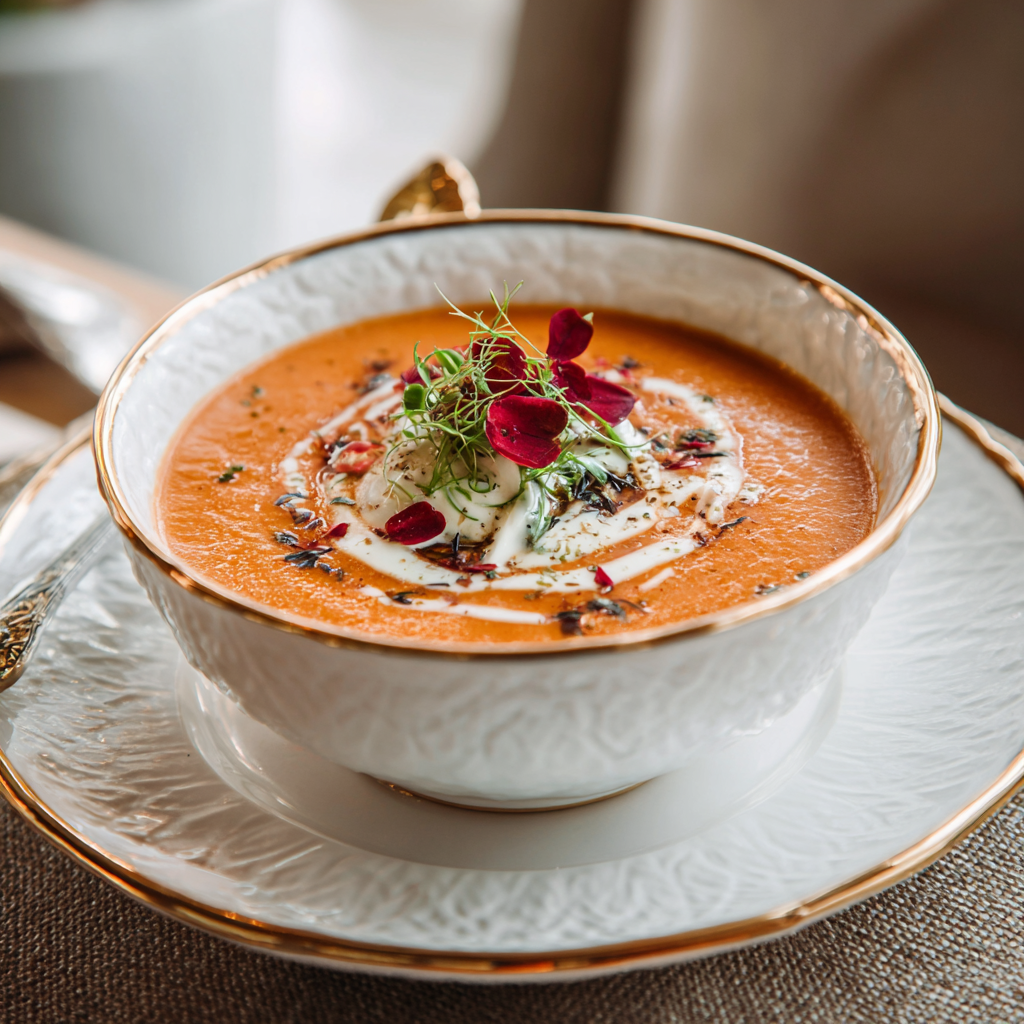
When winter winds blow cold and you need something warm and soothing, nothing comforts quite like a bowl of velvety tomato soup that tastes like liquid sunshine on the dreariest days. This classic comfort food combines rich tomato flavor with luxurious creaminess into a soul-warming dish that feels like a hug in a bowl. What makes this recipe truly exceptional is how it achieves restaurant-quality depth and smoothness using simple ingredients and straightforward techniques that anyone can master in their own kitchen. The combination of roasted tomatoes, aromatic vegetables, fresh herbs, and just the right amount of cream creates layers of flavor that make this soup genuinely crave-worthy rather than just something you eat because it’s healthy. Whether you’re pairing it with grilled cheese sandwiches for the ultimate nostalgic meal, serving it as an elegant first course, or simply enjoying a cozy solo dinner, this tomato soup delivers satisfaction and warmth that makes everything feel better. Best of all, it comes together in about forty-five minutes, makes generous portions perfect for meal prep, and actually tastes even better the next day as the flavors continue melding together.
Ingredients
This recipe makes 6 servings.
- 3 pounds ripe Roma tomatoes, halved
- 1 medium yellow onion, quartered
- 6 cloves garlic, peeled
- 3 tablespoons olive oil
- 1 teaspoon salt
- 1/2 teaspoon black pepper
- 2 tablespoons unsalted butter
- 1 medium carrot, peeled and diced
- 2 celery stalks, diced
- 1 can (28 ounces) crushed tomatoes
- 3 cups vegetable or chicken broth
- 2 tablespoons tomato paste
- 1 teaspoon dried basil
- 1 teaspoon dried oregano
- 1/2 teaspoon dried thyme
- 1 bay leaf
- 1/4 teaspoon red pepper flakes (optional)
- 2 tablespoons sugar (or to taste)
- 3/4 cup heavy cream
- 1/4 cup fresh basil leaves, torn
- 2 tablespoons fresh parsley, chopped
- Extra virgin olive oil for drizzling
- Croutons for serving
- Grated Parmesan cheese for serving
Instructions
- Preheat your oven to 425°F and line a large baking sheet with parchment paper.
- Arrange the halved tomatoes cut-side up on the prepared baking sheet.
- Scatter the quartered onion and peeled garlic cloves around the tomatoes.
- Drizzle everything with olive oil and season generously with salt and pepper.
- Roast in the preheated oven for 30 to 35 minutes until the tomatoes are caramelized and soft.
- Remove from the oven and let cool slightly while you prepare the soup base.
- Meanwhile, melt the butter in a large Dutch oven or stockpot over medium heat.
- Add the diced carrot and celery, sautéing for 6 to 8 minutes until softened.
- Transfer the roasted tomatoes, onion, and garlic to the pot with any accumulated juices.
- Add the crushed tomatoes, vegetable broth, and tomato paste, stirring to combine.
- Stir in the dried basil, oregano, thyme, bay leaf, and red pepper flakes if using.
- Add the sugar to balance the acidity of the tomatoes.
- Bring the soup to a boil over high heat, stirring occasionally.
- Reduce the heat to medium-low and simmer uncovered for 20 to 25 minutes.
- Stir occasionally and let the flavors meld while the soup reduces slightly.
- Remove and discard the bay leaf.
- Remove the pot from heat and let cool for 5 minutes for safer blending.
- Use an immersion blender to puree the soup until completely smooth.
- Alternatively, carefully transfer the soup in batches to a countertop blender and puree until silky.
- Return the pureed soup to the pot over low heat.
- Stir in the heavy cream gradually, mixing until fully incorporated.
- Taste and adjust seasonings, adding more salt, sugar, or pepper as needed.
- Simmer gently for 2 to 3 minutes to warm the cream through.
- Remove from heat and stir in the torn fresh basil and chopped parsley.
- Ladle the hot soup into bowls and drizzle with extra virgin olive oil.
- Garnish with croutons, Parmesan cheese, and additional fresh basil if desired.
- Serve immediately with grilled cheese sandwiches or crusty bread.
The Magic of Roasting Tomatoes
Roasting fresh tomatoes before making soup transforms their flavor through caramelization that creates depth impossible to achieve through simmering alone. High heat triggers the Maillard reaction, developing hundreds of new flavor compounds that make the tomatoes taste sweeter, richer, and more complex. Additionally, roasting concentrates the tomato flavor by evaporating excess moisture, creating more intense taste that forms the foundation of exceptional soup. This technique elevates simple ingredients into something genuinely special.
The combination of fresh roasted tomatoes and canned crushed tomatoes provides the best of both worlds. Fresh tomatoes contribute bright, vibrant flavor and natural sweetness that canned versions can’t match, while canned tomatoes provide consistent quality, rich color, and body that fresh tomatoes alone might lack during winter months. Together, they create balanced flavor that tastes both fresh and deeply satisfying. This hybrid approach delivers restaurant-quality results year-round regardless of tomato season.
Roasting the onion and garlic alongside the tomatoes mellows their sharp bite and creates sweet, caramelized flavors that blend seamlessly into the soup. Raw aromatics would taste too pungent and overwhelming, while roasted ones contribute subtle sweetness and depth that enhances rather than competes with the tomatoes. Furthermore, the roasting juices that accumulate on the baking sheet contain concentrated flavor that shouldn’t be wasted—scraping every bit into the soup pot captures all those delicious caramelized sugars.
Building Aromatic Depth
The sautéed carrot and celery provide aromatic foundation that adds complexity and subtle sweetness to the finished soup. These vegetables contribute natural sugars that balance tomato acidity while adding body and depth that prevents the soup from tasting one-dimensional. Taking time to properly soften these aromatics through gentle cooking releases their flavors and creates a savory base that enriches every spoonful. This classic technique separates exceptional tomato soup from mediocre versions that taste flat.
Tomato paste cooked briefly with the other ingredients concentrates tomato flavor even further while contributing rich color and body. This ingredient contains less moisture than whole or crushed tomatoes, providing intense tomato essence that deepens overall flavor. Additionally, tomato paste contains natural glutamates that create umami richness and make the soup taste more satisfying and complex. Just a couple tablespoons make noticeable difference in final depth and quality.
The herb blend of basil, oregano, and thyme creates classic Italian-inspired flavor that complements tomatoes beautifully. Basil provides sweet, slightly peppery notes that pair naturally with tomatoes, while oregano adds earthy complexity and oregano contributes subtle pine-like freshness. The bay leaf infuses the simmering soup with aromatic depth that’s difficult to identify but noticeably absent when omitted. Together, these herbs create familiar, comforting flavors that define great tomato soup.
Balancing Acidity and Sweetness
Tomatoes contain natural acidity that can make soup taste sharp or harsh without proper balancing. Adding sugar counteracts this acidity and brings out the tomatoes’ natural sweetness, creating more harmonious, rounded flavor. The amount needed varies depending on your tomatoes’ ripeness and natural sweetness—taste as you go and add gradually until the soup tastes balanced rather than tart. This adjustment transforms potentially harsh soup into smooth, pleasant-tasting comfort food.
Some cooks prefer alternative sweeteners like honey, maple syrup, or even grated carrot instead of white sugar. These options contribute their own subtle flavors while providing the necessary sweetness to balance acidity. Honey adds floral notes, maple syrup contributes warmth, and extra carrot provides natural vegetable sweetness. Experiment to discover your preference, keeping in mind that the goal is balanced flavor where no single element dominates.
The heavy cream added at the end serves multiple purposes beyond just creating luxurious texture. Cream’s fat content helps balance acidity while adding richness that makes the soup feel indulgent and satisfying. Additionally, the cream mellows sharp tomato flavors and creates velvety mouthfeel that coats your palate pleasantly. For lighter versions, half-and-half or whole milk work acceptably, though the soup won’t be quite as rich and luxurious as when made with heavy cream.
Achieving Silky-Smooth Texture
Blending the soup until completely smooth creates restaurant-quality texture that’s essential to great tomato soup. An immersion blender offers convenience since you can blend directly in the pot without transferring hot liquid. However, countertop blenders typically create silkier, smoother results because their powerful motors and blade design pulverize everything more thoroughly. If using a regular blender, work in batches and always remove the center cap to allow steam to escape, covering loosely with a towel to prevent splatters.
Letting the soup cool slightly before blending provides important safety advantage—hot liquid expands when blended and can erupt from the blender, causing dangerous burns. Waiting just 5 minutes reduces this risk while still allowing you to blend while the soup is warm. Additionally, starting the blender on low speed and gradually increasing prevents initial splattering that can create messes. These safety precautions ensure smooth blending experience without accidents.
For absolutely silky, restaurant-quality texture, strain the pureed soup through a fine-mesh sieve to remove any seeds, skins, or fibrous bits. This extra step requires patience and creates dishes to wash, but it produces incredibly refined results that feel luxurious on the palate. Most people find properly blended soup smooth enough without straining, though purists and those serving refined dinner parties might appreciate the extra effort that creates flawless velvety texture.
Serving and Storing Tips
Serving Tips
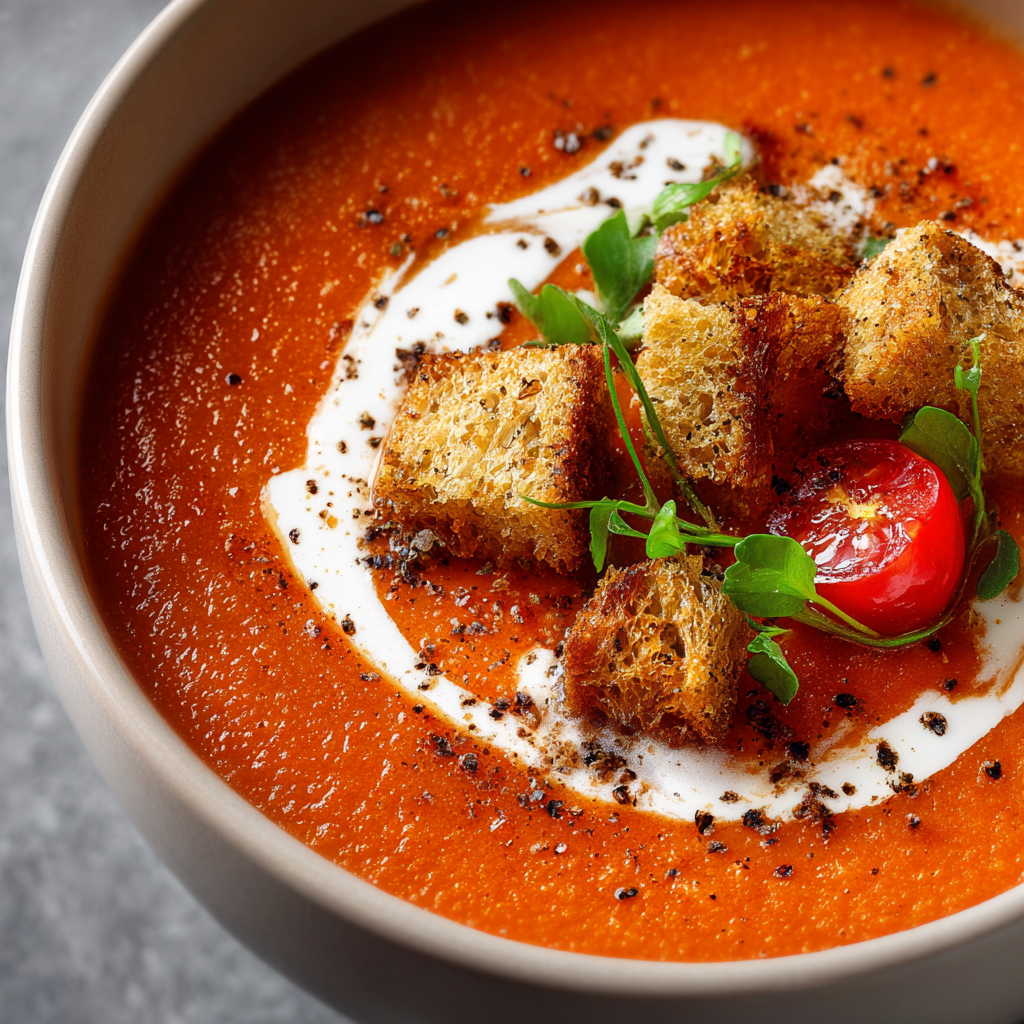
Serve this creamy tomato soup hot in shallow bowls for elegant presentation that showcases its beautiful color and smooth texture. A drizzle of high-quality extra virgin olive oil creates attractive swirl patterns while adding fruity richness that enhances flavor. Garnishing with fresh basil leaves, a sprinkle of Parmesan cheese, and a few crunchy croutons adds visual appeal and textural contrast that makes each bowl more interesting and satisfying.
The classic pairing of tomato soup with grilled cheese sandwiches creates the ultimate comfort food combination that satisfies on every level. The crispy, buttery sandwich provides textural contrast to smooth soup, while the melted cheese adds richness that complements tomato flavors beautifully. For elevated versions, try artisan breads with interesting cheeses like Gruyère, fontina, or sharp white cheddar. Alternatively, serve the soup with crusty bread, oyster crackers, or simple cheese toast.
This soup works wonderfully as a first course for dinner parties or holiday meals, providing warm, elegant start that pleases virtually everyone. Serving in small portions as an appetizer allows room for subsequent courses while still delivering satisfaction. Additionally, tomato soup can be kept warm in a slow cooker for casual gatherings where people serve themselves, making it perfect for buffets or open houses during winter months.
Storage Tips
Store leftover tomato soup in airtight containers in the refrigerator for up to 5 days, where the flavors actually improve as they continue melding together. The soup may thicken considerably during storage as it cools and the starches from the vegetables continue absorbing liquid. When reheating, add splashes of broth, milk, or cream to restore your preferred consistency while stirring gently over medium heat. Alternatively, microwave individual portions in 2-minute intervals, stirring between each burst.
The cream in this soup makes it slightly less stable during storage than cream-free versions, though proper refrigeration prevents any issues. If you’re concerned about cream separating or planning to store soup for several days, consider making the soup without cream and adding it fresh when reheating each portion. This approach provides maximum freshness and allows you to adjust creaminess to your preference each time you enjoy leftovers.
Freezing tomato soup works exceptionally well for up to 4 months and provides incredible convenience for busy weeks. Cool the soup completely before transferring to freezer-safe containers, leaving about an inch of headspace for expansion. For best results, freeze the soup before adding cream, then stir in fresh cream when reheating. This prevents any textural issues that can occur when dairy-containing soups undergo freezing. Thaw frozen soup overnight in the refrigerator before reheating gently on the stovetop.
Helpful Notes
Making tomato soup more weeknight-friendly involves smart shortcuts that save time without sacrificing too much quality. Skip the roasting step and sauté halved cherry tomatoes or use all canned tomatoes for faster preparation. Using high-quality canned San Marzano tomatoes provides excellent flavor without roasting, though the soup won’t have quite the same depth. These modifications reduce active cooking time significantly while still producing satisfying, homemade-tasting soup.
For those wanting to reduce richness while maintaining good flavor, several adjustments create lighter soup that still satisfies. Replace heavy cream with half-and-half, whole milk, or even coconut milk for dairy-free versions. Adding a tablespoon of butter at the end creates richness similar to cream with fewer calories. Increasing the vegetable broth slightly compensates for reduced dairy while maintaining proper consistency. These changes create lighter soup that remains comforting and delicious.
Customizing tomato soup with interesting variations keeps it exciting across multiple preparations. Smoky tomato soup uses smoked paprika and chipotle peppers for depth and heat. Roasted red pepper tomato soup adds sweet peppers for different flavor profile. Tomato tortellini soup incorporates cheese-filled pasta for heartier, more substantial meal. Sun-dried tomatoes, fresh mozzarella, or pesto swirls create gourmet variations. This versatile base adapts to countless creative additions.
Common mistakes that ruin tomato soup include not balancing acidity with sweetness, under-seasoning, or adding cream to boiling soup which can cause curdling. Always taste and adjust both sugar and salt before declaring the soup finished. Remove soup from heat or reduce to gentle simmer before stirring in cream to prevent separation. These simple precautions ensure smooth, well-balanced soup every time rather than disappointing results that taste harsh or look broken.
Chef Tips
Professional chefs know that adding a small amount of baking soda to overly acidic tomato soup instantly neutralizes harsh flavors without adding sweetness. Just 1/4 teaspoon can transform sharp, unpleasant soup into smooth, balanced perfection. The baking soda reacts with the acid, creating carbon dioxide that bubbles briefly before dissipating. This trick works particularly well when using very acidic canned tomatoes or when you’ve accidentally added too much lemon juice or vinegar.
Another expert technique involves enriching the soup with a pat of cold butter stirred in at the very end, a French method called “monter au beurre.” This final butter addition creates glossy, luxurious texture and adds richness that makes the soup taste more indulgent. The cold butter emulsifies into the hot soup, creating velvety mouthfeel that impresses without requiring excessive cream. Just one or two tablespoons make noticeable difference in final quality and richness.
Frequently Asked Questions
Can I make tomato soup without cream? Yes, use whole milk, cashew cream, coconut milk, or simply add extra butter for richness; the soup will be lighter but still delicious.
Why is my tomato soup bitter? The tomatoes may have been too acidic or seeds weren’t removed; add more sugar gradually, or stir in a pinch of baking soda to neutralize acidity.
Can I use fresh tomatoes only without canned? Yes, use 5 pounds of fresh tomatoes and increase cooking time; the soup may need extra tomato paste for body and deeper color.
How do I make tomato soup thicker? Simmer uncovered longer to reduce, add a tablespoon of tomato paste, or blend in a slice of bread which adds body without altering flavor.
What’s the best way to reheat tomato soup? Gently on the stovetop over medium-low heat with added liquid to thin, stirring frequently; avoid boiling which can cause cream to separate or break.
Creating Cozy Winter Rituals
Few things provide comfort on cold winter days quite like a steaming bowl of tomato soup that warms you from the inside out. This recipe represents more than simple sustenance—it’s the kind of food that soothes difficult days, brings families together, and creates those cozy moments that make winter feel magical rather than merely endurable. When you ladle this vibrant, aromatic soup into bowls, you’re offering more than nutrition; you’re providing genuine comfort and care that nourishes both body and spirit.
The practical advantages of homemade tomato soup extend beyond comfort to include remarkable affordability and nutritional value. This dish uses inexpensive, accessible ingredients that are available year-round, making it perfect for feeding families on budgets without sacrificing quality or flavor. Furthermore, tomatoes provide lycopene and vitamins that support health, while the soup’s warm, easy-to-digest nature makes it perfect for anyone feeling under the weather or simply needing gentle, comforting food.
As you make this soup repeatedly through winter months, you’ll develop your own signature touches and family traditions. Perhaps you’ll adjust the herb blend, experiment with different garnishes, or create both classic and adventurous versions depending on your mood. These personal adaptations transform a basic recipe into your family’s tradition—something that becomes anticipated and requested, creating continuity and comfort across cold seasons.
The simple ritual of stirring simmering soup, breathing in its aromatic steam, and ladling it carefully into bowls becomes a meditation on care and nourishment. These small acts of intentional cooking create satisfaction beyond the eating itself, making soup night something special that everyone looks forward to when winter winds howl outside. Tomato soup isn’t just food—it’s liquid comfort that makes everything feel better, one warm spoonful at a time.
Did this Winter Creamy Tomato Soup become your new cold-weather essential? If you loved how smooth and flavorful it turned out, how it paired perfectly with grilled cheese, and how the house smelled amazing while it cooked, we’d be thrilled if you could save this recipe for regular rotation, pin it to your comfort food Pinterest board, or share it with friends who appreciate the classics done right. Your support and enthusiasm inspire us to continue creating and sharing recipes that bring warmth and deliciousness to your table. Tell us in the comments whether you added any creative twists and what you served alongside your soup—we love hearing about your cozy winter meals!